
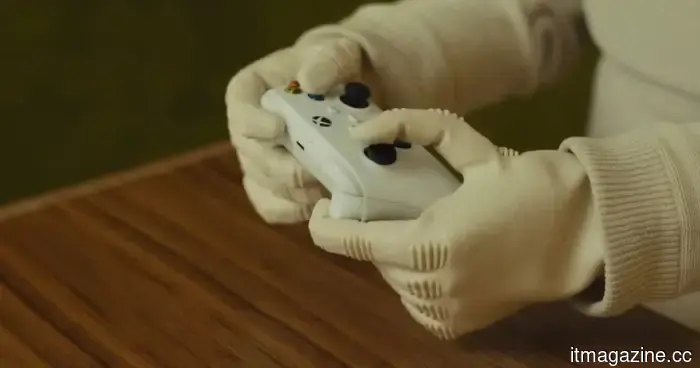
Home robots are capable of walking. The challenging aspect is preventing them from damaging your glassware.
1X's NEO utilizes tactile sensing and force control to manage delicate items, addressing tasks that humanoid robots still find challenging to perform.
A robot might appear convincing as it moves across a stage but still be ineffective in a kitchen setting. Successfully lifting a wet glass requires precision, quick adjustments, and a careful touch to avoid applying too much pressure. 1X is addressing this issue with new tendon-driven hands for its humanoid robot, NEO.
According to 1X, each hand features 25 degrees of freedom, comprising 22 in the fingers and palm, plus an additional three in the wrist. The joints can flex under pressure rather than remaining rigid, enhancing NEO's ability to handle household items without treating every contact as a challenge.
Explaining why delicate tasks reveal poor handling abilities
NEO's tactile skin can sense pressure and lateral movement across its fingers, which helps it detect when an object starts to slip and adjust its grip to prevent dropping it.
1X Technologies
Force control is equally essential as the movement of the fingers. Household items vary in shape and weight unpredictably, unlike factory grippers that work with precisely placed objects. NEO's tendon system is intended to adjust naturally and does not approach every task as if it were repeatedly moving the same cardboard box.
This level of control could determine whether a humanoid robot can manage dishes or laundry without needing constant supervision.
Why adaptability is preferable to brute strength
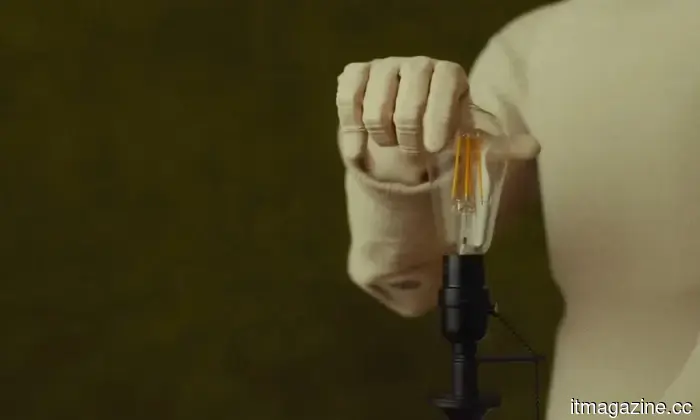
NEO's fingers can bend beyond typical human ranges and can conform to irregular shapes. Its backdrivable joints yield during unexpected contact, rather than forcing through it.
1X ranks the hands as IP68 and claims they are made from food-safe materials. These are practical features for a device expected to operate near sinks, spills, and dining ware. While rapid finger movement might make for an impressive demonstration, waterproofing and regulated force will be more crucial in a real home environment.
1X Technologies
The physical design appears suitable for household tasks, but the software still must validate its capability to utilize those hands effectively.
What remains unproven in demonstrations
Having advanced hands doesn’t automatically translate to effective chores. NEO still needs to recognize an item, select the correct grip, and perform the task repeatedly in a cluttered environment, without prior arrangement.
A successful pick-up showcases the hardware’s capabilities under controlled conditions. Effective home automation requires the robot to replicate that success when items are displaced, wet, or partially hidden.
The next significant demonstration should avoid superfluous finger drumming. NEO must complete a typical household task autonomously, from beginning to end, for one polished clip to serve as evidence of a finished product.
Paulo Vargas is an English major turned journalist turned technical writer, with a career that consistently circles back to...
This small device called Moodi could prevent thumb strain during extended reading sessions.
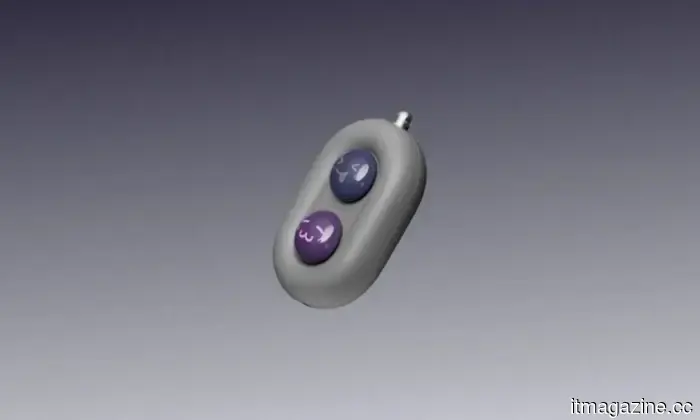
This compact remote believes your finger deserves a break.
Digital reading has become easier with larger screens and e-paper technology, but one minor inconvenience persists: the need to constantly reach out to tap or swipe through each page. DuRoBo claims to have a solution. The company recently introduced Moodi, its first Bluetooth page-turning remote, designed to enhance comfort while reading, browsing, and controlling media across e-readers, tablets, and smartphones.
Unlike traditional page-turners that cater to e-books alone, Moodi also functions as a small Bluetooth remote for scrolling through articles, managing multimedia playback, and navigating lengthy content. The device is geared towards ergonomic accessories intended to minimize repetitive hand movements during prolonged screen use.
Researchers at Nagoya University have innovated a new kind of transparent optical sensor that could drastically decrease the size of camera sensors while enhancing image quality. Published in the journal ACS Nano, the study illustrates how gallium-doped zinc oxide (GZO) nanosheets can capture red, green, and blue (RGB) light within a single pixel, potentially replacing the decades-old Bayer filter that is commonly used in nearly all digital cameras today.
If brought to market, this technology could facilitate thinner smartphone cameras, higher-resolution medical imaging tools, and more compact sensors for automotive and aerospace uses, all while simplifying production.
Researchers have addressed the delicate issue of chip stacking that has been hindering AI memory advancement, yielding significant outcomes.
Whenever you interact with ChatGPT or generate images using AI, a memory chip is operating at high speed behind the scenes. However, this chip currently faces a memory bottleneck challenge, which a research team from Korea may have just resolved.
The scholars at POSTECH (Pohang University of Science and Technology) have created a novel method for stacking over 10 ultrathin semiconductor chips, achieving a memory density about four times higher than the best available commercial chips today (according to TechXplore).


Other articles
 Anthropic discovered a concealed 'workspace' within Claude.
Anthropic's latest Jacobian lens interprets the unvoiced thoughts within Claude's concealed 'workspace', identifying the model's intentions of blackmail before it can even begin to type a word.
Anthropic discovered a concealed 'workspace' within Claude.
Anthropic's latest Jacobian lens interprets the unvoiced thoughts within Claude's concealed 'workspace', identifying the model's intentions of blackmail before it can even begin to type a word.
 You can now verify whether a Google ad was created with AI.
Google is introducing an AI transparency label for advertisements on Search, YouTube, and Discover, allowing you to verify whether an ad was created using generative AI.
You can now verify whether a Google ad was created with AI.
Google is introducing an AI transparency label for advertisements on Search, YouTube, and Discover, allowing you to verify whether an ad was created using generative AI.
 Google has recently updated the way it evaluates the AI models employed in Android development.
Google has updated its Android Bench leaderboard by introducing a new testing framework and adding eight new models.
Google has recently updated the way it evaluates the AI models employed in Android development.
Google has updated its Android Bench leaderboard by introducing a new testing framework and adding eight new models.
 Anthropic reaches a valuation of $1.2 trillion, surpassing OpenAI.
Shares of Anthropic suggest a valuation of $1.2 trillion in secondary markets, surpassing OpenAI's $908 billion. The drawback is that very few are willing to sell.
Anthropic reaches a valuation of $1.2 trillion, surpassing OpenAI.
Shares of Anthropic suggest a valuation of $1.2 trillion in secondary markets, surpassing OpenAI's $908 billion. The drawback is that very few are willing to sell.
 Mercor aims for a $20 billion valuation and acquires Deeptune.
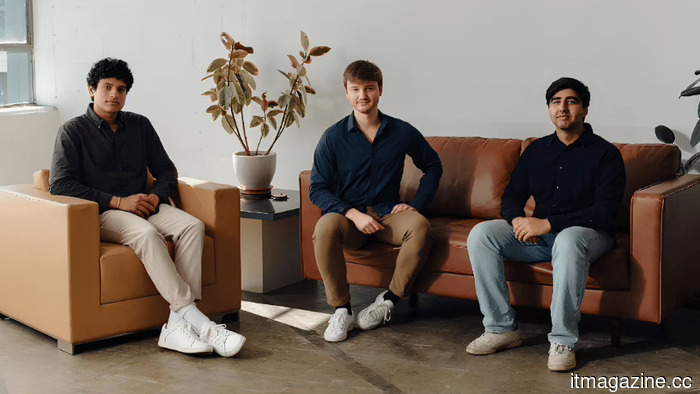
Mercor is negotiating to increase its valuation to $20 billion and has acquired Deeptune, an AI-training startup supported by its own CEO. The details are in the footnotes.
Mercor aims for a $20 billion valuation and acquires Deeptune.
Mercor is negotiating to increase its valuation to $20 billion and has acquired Deeptune, an AI-training startup supported by its own CEO. The details are in the footnotes.
 Big Tech's debt linked to AI reaches $350 billion and moves towards Europe.
Alphabet, Amazon, Meta, Microsoft, and Oracle have increased their debt to $350 billion in order to develop AI, and they are now entering European bond markets, particularly ahead of France.
Big Tech's debt linked to AI reaches $350 billion and moves towards Europe.
Alphabet, Amazon, Meta, Microsoft, and Oracle have increased their debt to $350 billion in order to develop AI, and they are now entering European bond markets, particularly ahead of France.
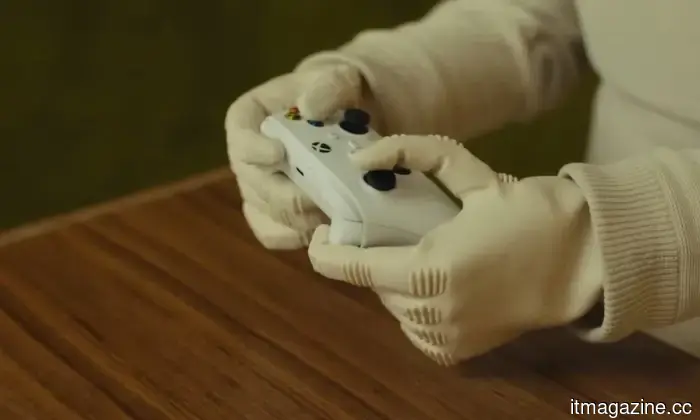
Home robots are capable of walking. The challenging aspect is preventing them from damaging your glassware.
1X's NEO home robot features tendon-driven hands equipped with tactile sensing, force control, and water resistance. However, despite its impressive hardware, it still requires dependable autonomy to manage everyday tasks.