
MiniMax secures $2 billion as its CEO waives salary until AGI is achieved.
The letter resembles a declaration of beliefs from a founder, while the accompanying share sale presents a more challenging narrative. The MiniMax founder has informed employees that he will forgo any salary until the Chinese AI company achieves artificial general intelligence (AGI). On the same day, MiniMax sought to raise up to $2 billion from investors, with its shares plummeting by approximately 80% since March.
Yan Junjie, who serves as the chief executive, chairman, and chief technology officer, conveyed this commitment in an internal memo on Friday. The South China Morning Post received a copy of the note, which was subsequently shared in full on X by a company executive.
“Effective today, and until we achieve AGI, I will not accept any salary from the company,” Yan stated in the memo. He signs off internally as “IO.”
His promise extends beyond merely a salary reduction. Over the next four years, Yan committed to distributing shares equivalent to 4% of the company from his personal holdings to reward employees. Additionally, 1% will be allocated to establish a fund for open-source projects. “We will continue until we reach our goal,” concludes the letter.
The gesture, while moving, is primarily symbolic. A founder’s wealth is tied up in equity rather than a regular paycheck; thus, sacrificing his salary imposes minimal cost on Yan. Dedicating 5% of his stake is a more substantial commitment and serves as a retention strategy amid aggressive recruitment of Chinese AI talent.
The timing is significant. The memo coincided with a large, discounted fundraising effort, characteristic of companies in need of capital to stabilize anxiety. The optimism is directed inward toward employees witnessing a drop in the share price.
As for the fundraising itself, the situation is less inspiring. MiniMax is issuing 35.6 million new shares priced at HK$268 each—approximately $1.2 billion—at nearly a 10% discount from Thursday’s closing price, as reported by Bloomberg. This is coupled with HK$6.5 billion in zero-coupon convertible bonds maturing in 2027, arranged by Morgan Stanley and UBS.
The stock fell by nearly 10% on Friday. The introduction of new shares dilutes an already swelling float, following the expiration of a six-month lock-up for early investors. Retail shareholders who purchased shares near their peak are feeling the impact.
The decline in stock value stems from MiniMax's listing in Hong Kong in January and its pursuit of a second listing in Shanghai. However, the company struggled to maintain momentum. Its flagship model, M3, released in early June, failed to attract developers. The company even halved the price of its most advanced model a week after its release, which was perceived as a sign of weakness rather than strategy.
Competitors capitalized on this void. Models from Zhipu (GLM-5.2), DeepSeek (V4), and Moonshot AI gained the attention that MiniMax lost. As a result, MiniMax continues to develop ambitious open models while losing pricing power in a market already embroiled in an intense price war.
This situation matters because MiniMax is not operating in isolation; numerous Chinese tech companies are competing for AI investment. Zhipu recently raised $4 billion this week, marking one of the year’s largest share sales in Hong Kong. Despite punishing underperformers, investors remain keen on Chinese AI. Not everyone has a pessimistic outlook; Goldman Sachs expressed increased optimism on Friday, deeming the valuation attractive and the business model efficient.
Ultimately, the key test is not Yan's salary or idealistic statements but whether the $2 billion raised will provide MiniMax enough time to deliver a model that developers find appealing before being overtaken by another Chinese competitor. While the letter speaks of perseverance until AGI is reached, the market is focused on a more immediate query: what have you delivered recently?
Other articles
 Anthropic discovered a concealed 'workspace' within Claude.
Anthropic's latest Jacobian lens interprets the unvoiced thoughts within Claude's concealed 'workspace', intercepting the model's plans for blackmail before it can generate any text.
Anthropic discovered a concealed 'workspace' within Claude.
Anthropic's latest Jacobian lens interprets the unvoiced thoughts within Claude's concealed 'workspace', intercepting the model's plans for blackmail before it can generate any text.
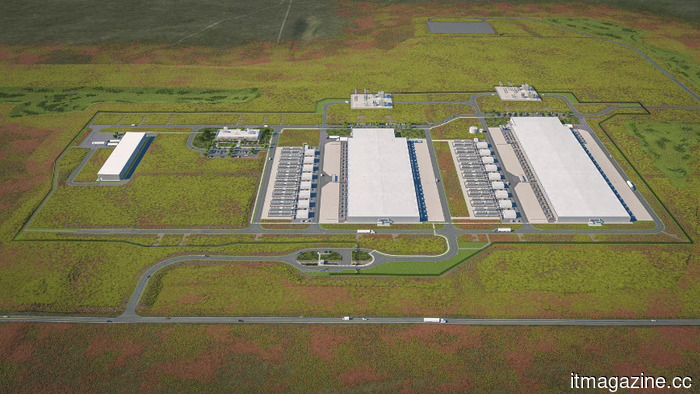 Big Tech's debt linked to AI reaches $350 billion and moves towards Europe.
Alphabet, Amazon, Meta, Microsoft, and Oracle have increased their debt to $350 billion in order to develop AI, and they are now entering European bond markets, particularly ahead of France.
Big Tech's debt linked to AI reaches $350 billion and moves towards Europe.
Alphabet, Amazon, Meta, Microsoft, and Oracle have increased their debt to $350 billion in order to develop AI, and they are now entering European bond markets, particularly ahead of France.
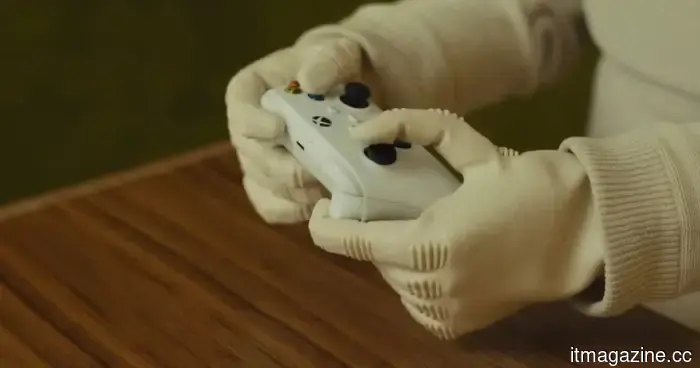 Home robots are capable of walking. The challenging aspect is preventing them from damaging your glassware.
1X's NEO home robot features tendon-driven hands equipped with tactile sensing, force control, and water resistance. However, despite its impressive hardware, it still requires dependable autonomy to manage everyday tasks.
Home robots are capable of walking. The challenging aspect is preventing them from damaging your glassware.
1X's NEO home robot features tendon-driven hands equipped with tactile sensing, force control, and water resistance. However, despite its impressive hardware, it still requires dependable autonomy to manage everyday tasks.
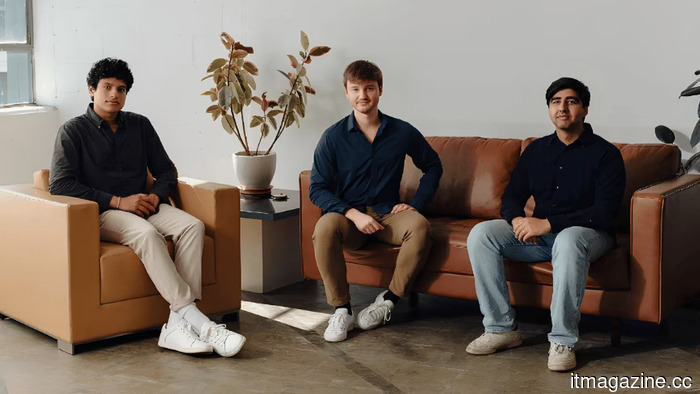 Mercor targets a $20 billion valuation and acquires Deeptune.
Mercor is in discussions to increase its valuation to $20 billion and has acquired Deeptune, an AI training startup that was supported by its own CEO. The details are found in the footnotes.
Mercor targets a $20 billion valuation and acquires Deeptune.
Mercor is in discussions to increase its valuation to $20 billion and has acquired Deeptune, an AI training startup that was supported by its own CEO. The details are found in the footnotes.
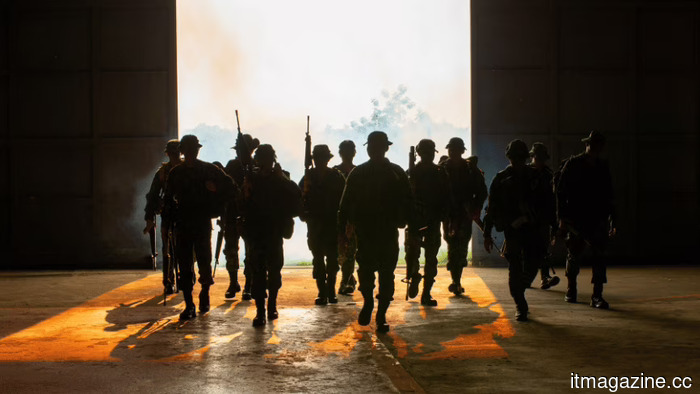 The UK has established a £2 billion AI 'Combat Laboratory' for the British Army.
Britain's new £2 billion AI 'Combat Laboratory' is set to train 60,000 soldiers annually. A US company is at the forefront of this initiative, while Germany's Rheinmetall holds nearly 50% of the project.
The UK has established a £2 billion AI 'Combat Laboratory' for the British Army.
Britain's new £2 billion AI 'Combat Laboratory' is set to train 60,000 soldiers annually. A US company is at the forefront of this initiative, while Germany's Rheinmetall holds nearly 50% of the project.
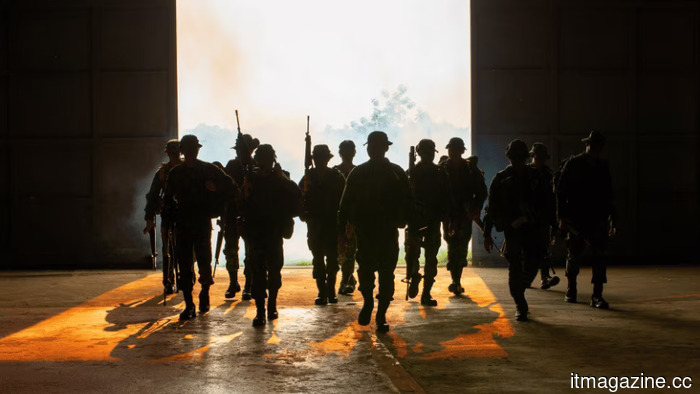 The British Army's £2 billion AI 'Combat Laboratory' in the UK
Britain's new £2 billion AI 'Combat Laboratory' will prepare 60,000 soldiers annually. A US company is at the forefront of the initiative, while Germany's Rheinmetall secures almost half of it.
The British Army's £2 billion AI 'Combat Laboratory' in the UK
Britain's new £2 billion AI 'Combat Laboratory' will prepare 60,000 soldiers annually. A US company is at the forefront of the initiative, while Germany's Rheinmetall secures almost half of it.
MiniMax secures $2 billion as its CEO waives salary until AGI is achieved.
MiniMax is seeking to raise as much as $2 billion following an 80% decline, with founder Yan Junjie declaring he will forgo his salary until artificial general intelligence (AGI) is achieved and promising 5% of his shares to employees and for open-source initiatives.