

The UN's digital agency has introduced a program aimed at ensuring the reliability of AI agents.
The digital agency of the United Nations has acknowledged that AI agents are progressing at a pace that exceeds society's trust in them, and intends to take action. On July 9, the International Telecommunication Union (ITU) launched an initiative during its AI for Good Summit in Geneva, aimed at ensuring that increasingly autonomous AI systems remain identifiable, accountable, and under effective human supervision.
The initiative employs a focus group, which is the ITU's standard approach for consulting experts prior to the establishment of formal standards. The group's mission will be to create frameworks that allow AI agents to be recognized for their identities, trusted to operate within specific boundaries, and held accountable to the individuals they represent.
The motivation behind this initiative is particularly grounded. AI agents are created to operate independently on behalf of users, engaging in tasks ranging from simple scheduling to intricate business functions. This independence raises issues of impersonation and decision-making without explicit authorization. According to the ITU, as the number of agents increases, the lack of common regulations for their identification and limitations poses a systemic risk.
This concern isn't exclusive to Geneva; the broader industry has realized over the past year that agent security remains largely unresolved, with many organizations unsure of the total number of agents in operation or their specific permissions.
The ITU aims to address what companies have been handling through improvised measures by establishing international standards. The group will comprise technical, policy, and legal experts, reflecting the ITU's commitment to consensus among various stakeholders rather than imposing top-down regulations.
The objective is to unify a fragmented regulatory environment where different jurisdictions are creating inconsistent rules for the same technology, often simultaneously. This fragmentation is evident, as China has already implemented national standards governing how agents present themselves and interact, amidst a broader tightening of its regulations on agents, while other governments and regions are pursuing varied strategies. A UN entity striving for harmonization in this field recognizes that the current disjointed system is unsustainable.
The focus group will operate on a planned schedule, with its first meeting set for November in Paris and a subsequent one in January in Geneva, anticipating that the outcome will likely consist of technical recommendations rather than enforceable regulations.
The ITU establishes standards but does not enforce them, relying on industry and government adoption for its influence. This presents a built-in limitation. A focus group is inherently a slow-moving mechanism, while AI agents are evolving rapidly. By the time the group eventually produces recommendations, the technology will likely have advanced, and companies may establish their own de facto standards, as seen with agent identity.
Nonetheless, standardization is often the source of interoperability, and identity is the kind of issue that thrives on a shared technical framework. For AI agents from various vendors to operate and transact with each other and humans, there must be a common method for verifying an agent's identity and its accountability. The ITU is banking on its ability to help establish that framework before the market solidifies suboptimal solutions.
While the ITU is a fitting, if imperfect, platform for this effort, it is the same organization that spent years developing standards for telephone networks, radio frequencies, and the foundational structures of the internet—essential agreements that enable systems from different nations to communicate. Adapting this system to AI agents is a logical progression, even as the rapid development of technology poses challenges.
For the time being, this initiative is merely a preliminary step. No standard has been released, no company has made commitments, and the first meeting is still months away. The ITU has, however, marked a significant issue that the industry continues to postpone, inviting all stakeholders to participate before autonomous systems begin to dictate the terms themselves.
Other articles
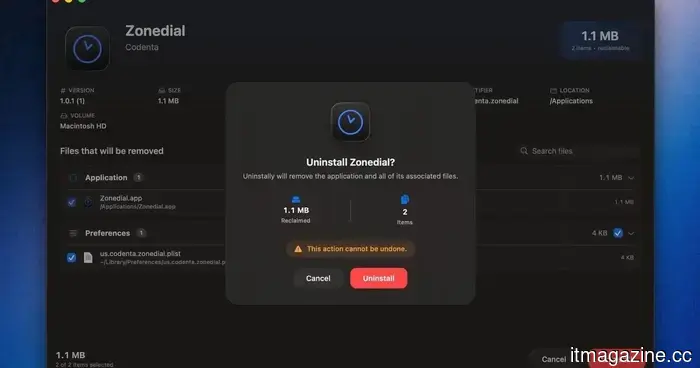 This open-source application for Mac detects the leftover junk files from the apps you've uninstalled.
This native macOS application can detect remnants of uninstalled applications and transfer user-domain files to the Trash for a more secure cleanup.
This open-source application for Mac detects the leftover junk files from the apps you've uninstalled.
This native macOS application can detect remnants of uninstalled applications and transfer user-domain files to the Trash for a more secure cleanup.
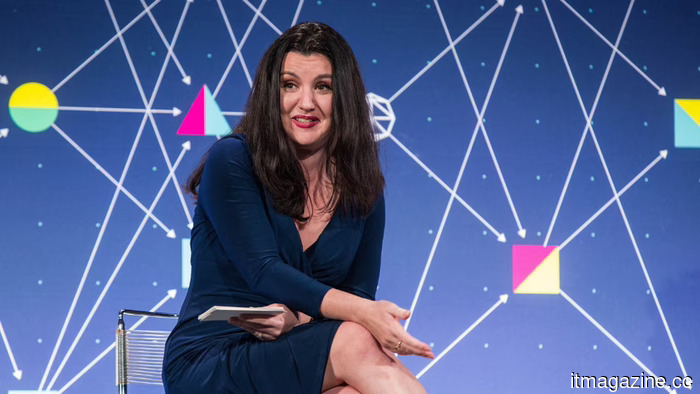 Fidji Simo resigns from her position as the second-in-command at OpenAI.
Fidji Simo, the head of applications at OpenAI, is transitioning to a part-time advisory position following a worsening of a chronic illness during her medical leave.
Fidji Simo resigns from her position as the second-in-command at OpenAI.
Fidji Simo, the head of applications at OpenAI, is transitioning to a part-time advisory position following a worsening of a chronic illness during her medical leave.
 GIGABYTE delights gamers with a new WOLED monitor.
The company GIGABYTE, which usually keeps hardware enthusiasts entertained, has announced the launch of its new gaming monitor GO27Q24G. This 27-inch beauty is frameless and aims to fulfill all the needs of the modern esports player.
GIGABYTE delights gamers with a new WOLED monitor.
The company GIGABYTE, which usually keeps hardware enthusiasts entertained, has announced the launch of its new gaming monitor GO27Q24G. This 27-inch beauty is frameless and aims to fulfill all the needs of the modern esports player.
 Fraimic's E Ink art frame creates artwork based on your voice and does so in a stunning manner.
Fraimic's voice-to-art E Ink canvas allows you to vocalize a prompt, create AI-generated artwork using GPT Image 2.0, and showcase it in a paper-like Spectra 6 frame, all without needing a subscription.
Fraimic's E Ink art frame creates artwork based on your voice and does so in a stunning manner.
Fraimic's voice-to-art E Ink canvas allows you to vocalize a prompt, create AI-generated artwork using GPT Image 2.0, and showcase it in a paper-like Spectra 6 frame, all without needing a subscription.
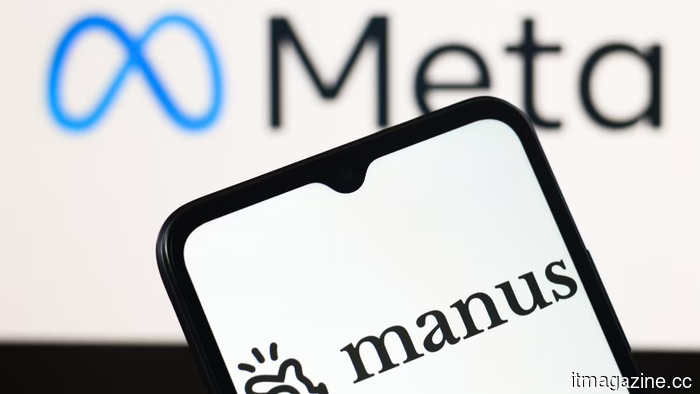 Tencent is negotiating to become the largest shareholder of Manus.
Tencent is discussing acquiring the largest stake in the AI agent startup Manus as Chinese investors seek to reverse Meta’s obstructed $2 billion acquisition.
Tencent is negotiating to become the largest shareholder of Manus.
Tencent is discussing acquiring the largest stake in the AI agent startup Manus as Chinese investors seek to reverse Meta’s obstructed $2 billion acquisition.
 OpenAI introduces ChatGPT Work, an agent designed to complete tasks.
OpenAI has introduced ChatGPT Work, an agent powered by GPT-5.6 that operates across your applications and files, executes scheduled tasks, and can remain engaged with a project for extended periods.
OpenAI introduces ChatGPT Work, an agent designed to complete tasks.
OpenAI has introduced ChatGPT Work, an agent powered by GPT-5.6 that operates across your applications and files, executes scheduled tasks, and can remain engaged with a project for extended periods.
The UN's digital agency has introduced a program aimed at ensuring the reliability of AI agents.
The ITU is establishing a focus group aimed at ensuring AI agents remain identifiable and under human oversight, which was initiated at the AI for Good Summit held in Geneva.