
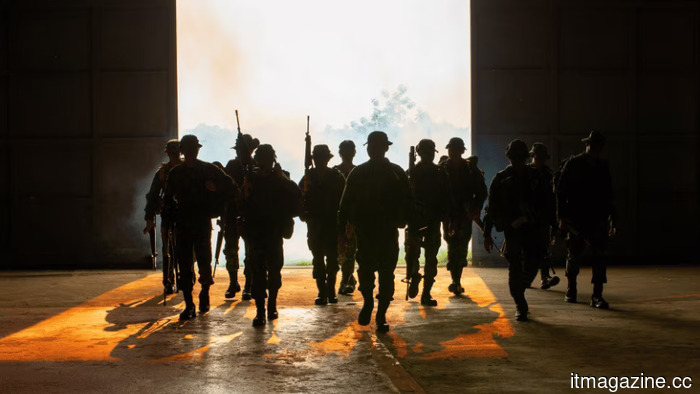
The British Army's £2 billion AI 'Combat Laboratory' in the UK
Britain is investing £2bn to train its military using a simulation. The task has been assigned to an American defense company, with a German firm involved as well.
The UK has entered into a £2bn ($2.7bn) agreement to utilize artificial intelligence for soldier training. The contract, announced by the Ministry of Defence on Friday, spans 15 years and is awarded to a consortium led by the US firm Raytheon UK.
At the core of this project is what the ministry refers to as a Combat Laboratory. This is a digital platform that employs AI, analytics, and virtual environments to replicate the complexities of contemporary warfare. The goal is to allow both commanders and soldiers to train anywhere and at any time.
As many as 60,000 soldiers will utilize this system each year, participating in exercises that vary from teams of 100 to formations of 50,000. This system merges simulations, live drills, and data analysis, enabling the army to identify trends, evaluate performance, and make quicker decisions, drawing direct lessons from the situation in Ukraine.
The entity responsible for building it
The contract has been awarded to Omnia Training, a consortium of five UK-based companies: Raytheon UK, Capita, Cervus, Rheinmetall UK, and Skyral. Raytheon established this consortium over three years ago and it is supported by a supply chain of 44 British businesses.
One notable participant is Rheinmetall, the German company that has become Europe's most active arms manufacturer, which is involved in a contract that the government insists is sovereign. Its UK division provides training infrastructure, system setup, and logistics, expanding its presence on the Isle of Wight and in Southampton.
Rheinmetall has indicated that its share is valued at just under €1bn ($1.14bn), nearly half of the total sum, according to Bloomberg.
The rationale and political context
The emphasis is on employment and military preparedness. This contract will create approximately 400 jobs across the UK, comprising 270 skilled positions and 100 apprenticeships with Wiltshire College and the University of Staffordshire. Much of the work will take place in Wiltshire, specifically in Warminster, a garrison town.
The government aims for the British Army to be ten times more effective by 2035—a goal it frequently reiterates, supported by a £298bn investment plan over four years. Defence Secretary Dan Jarvis stated that the new system would provide soldiers with “the quality training they need to keep us safe.”
A largely sovereign capability
Two members of the consortium, Skyral and Cervus, developed their software in the UK, backed by over £2m in government innovation funding. The ministry emphasizes that the intellectual property remains under UK control, which is significant as European governments express caution about reliance on foreign technology that is not under their control.
Britain has been striving to establish its own sovereign AI capability for this reason. However, the largest portion of this “sovereign” training contract has been awarded to a German prime under the leadership of an American company. This highlights the complexities of European defense, which continues to evolve as the continent modernizes its military capabilities.
Context of the agreement
This deal comes at a time of significant developments in AI for military applications. NATO is creating an AI “kill web” along its eastern border, Germany has turned to Helsing for combat software, and Europe has recently produced a new defense unicorn in Kraken. American autonomous vehicles have already been actively involved in combat in Ukraine.
Training represents the quieter aspect of this transformation, yet it may be the most crucial. It is at this stage that an army formulates its strategic thinking before any new weaponry is deployed. Implementation of the training system is set to begin this summer.
Other articles
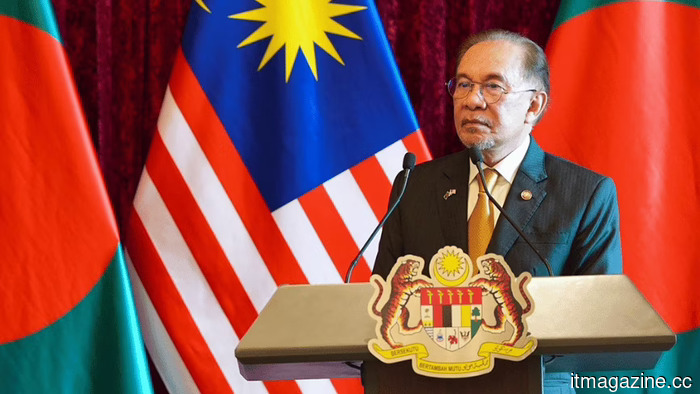 The Prime Minister of Malaysia is initiating the development of an AI version of himself.
Anwar Ibrahim's administration is set to introduce PMX AI, an interactive avatar modeled on his speeches, designed to communicate in his style and guide citizens through government services.
The Prime Minister of Malaysia is initiating the development of an AI version of himself.
Anwar Ibrahim's administration is set to introduce PMX AI, an interactive avatar modeled on his speeches, designed to communicate in his style and guide citizens through government services.
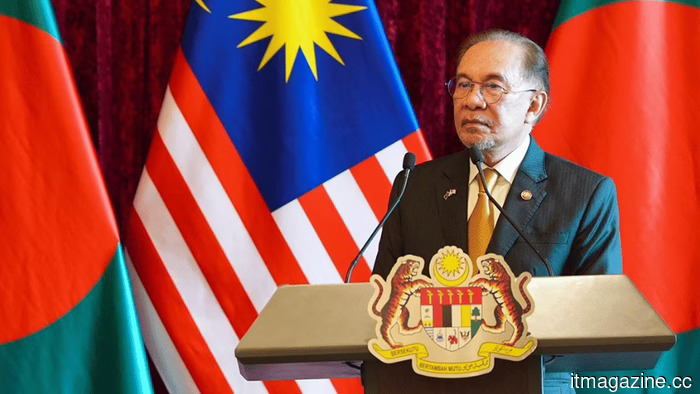 The Prime Minister of Malaysia is introducing an AI replica of himself.
Anwar Ibrahim's administration will soon launch PMX AI, an avatar designed to mimic his speech, which will assist citizens in navigating government services.
The Prime Minister of Malaysia is introducing an AI replica of himself.
Anwar Ibrahim's administration will soon launch PMX AI, an avatar designed to mimic his speech, which will assist citizens in navigating government services.
 Mercor targets a $20 billion valuation and acquires Deeptune.
Mercor is in discussions to increase its valuation to $20 billion and has acquired Deeptune, an AI training startup that was supported by its own CEO. The details are found in the footnotes.
Mercor targets a $20 billion valuation and acquires Deeptune.
Mercor is in discussions to increase its valuation to $20 billion and has acquired Deeptune, an AI training startup that was supported by its own CEO. The details are found in the footnotes.
 Anthropic reaches a valuation of $1.2 trillion, surpassing OpenAI.
Shares of Anthropic suggest a valuation of $1.2 trillion in secondary markets, surpassing OpenAI's $908 billion. The downside: very few are ready to sell.
Anthropic reaches a valuation of $1.2 trillion, surpassing OpenAI.
Shares of Anthropic suggest a valuation of $1.2 trillion in secondary markets, surpassing OpenAI's $908 billion. The downside: very few are ready to sell.
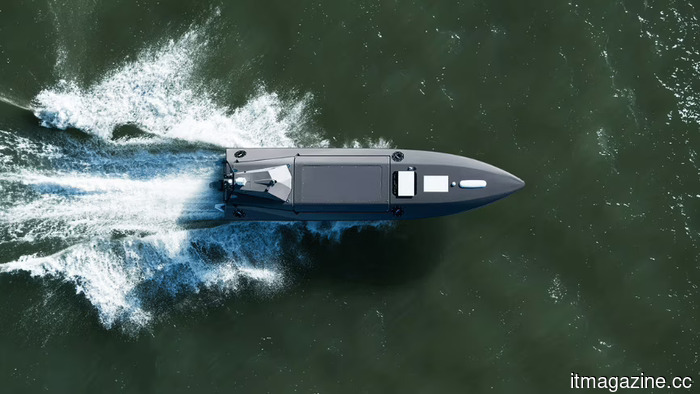 Kraken secures $175 million to achieve unicorn status in maritime defense.
The British company Kraken secured $175 million (€152.9 million), with DTCP leading the round, achieving a valuation of $1 billion to develop uncrewed war boats for NATO, the United States, and the United Kingdom.
Kraken secures $175 million to achieve unicorn status in maritime defense.
The British company Kraken secured $175 million (€152.9 million), with DTCP leading the round, achieving a valuation of $1 billion to develop uncrewed war boats for NATO, the United States, and the United Kingdom.
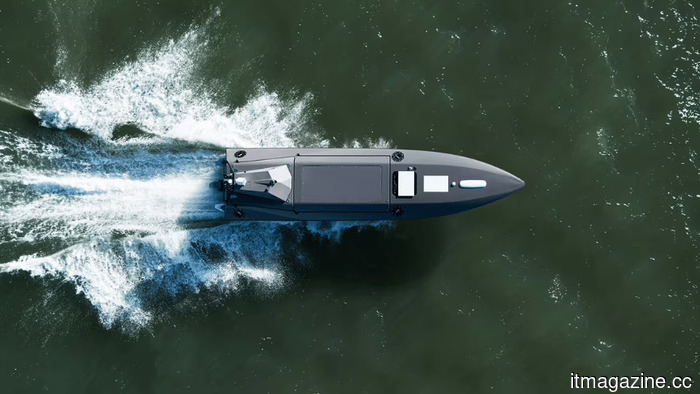 Kraken secures $175 million to achieve unicorn status in maritime defense.
The British company Kraken secured $175 million (€152.9 million), with DTCP at the helm, achieving a valuation of $1 billion to develop unmanned warboats for NATO, the United States, and the United Kingdom.
Kraken secures $175 million to achieve unicorn status in maritime defense.
The British company Kraken secured $175 million (€152.9 million), with DTCP at the helm, achieving a valuation of $1 billion to develop unmanned warboats for NATO, the United States, and the United Kingdom.
The British Army's £2 billion AI 'Combat Laboratory' in the UK
Britain's new £2 billion AI 'Combat Laboratory' will prepare 60,000 soldiers annually. A US company is at the forefront of the initiative, while Germany's Rheinmetall secures almost half of it.