
MiniMax secures $2 billion as its CEO suspends salary until AGI is achieved.
The letter resembles a founder’s declaration of principles, while the accompanying share sale reveals a more difficult situation. The founder of MiniMax has informed employees that he will not accept a salary until the Chinese AI company achieves artificial general intelligence. On that same day, MiniMax sought to raise up to $2 billion from investors. Since March, its shares have lost approximately 80% of their value.
Yan Junjie, who serves as the chief executive, chairman, and chief technology officer, conveyed this commitment in an internal memo on Friday. The South China Morning Post reviewed the message, which was subsequently shared in full on X by a company executive.
“Effective today, and until the day we achieve AGI, I will no longer accept any salary from the company,” Yan stated. He signs off internally as "IO."
He pledged more than just a pay reduction. Over the next four years, Yan announced he would distribute shares representing 4% of the company from his own holdings to reward employees. Additionally, another 1% will fund open-source initiatives. “We will keep going until we get there,” the letter concludes.
The gesture and the financial implications
The promise is inspiring, yet largely symbolic. A founder’s wealth is tied to equity rather than a regular paycheck; thus, for Yan, forgoing his salary incurs minimal cost. Donating 5% of his stake signifies a true commitment and also serves as a retention strategy amidst fierce competition for Chinese AI talent.
The timing is telling. The memo was released concurrently with a substantial, discounted fundraising effort, typical for companies needing liquidity and to reassure stakeholders. The optimism is directed internally, aimed at staff observing the declining share price.
What the fundraising entails
The financial details tell a different story. MiniMax is issuing 35.6 million new shares at HK$268 each, roughly $1.2 billion, at a nearly 10% discount compared to Thursday’s close, according to Bloomberg. Additionally, it’s raising $6.5 billion Hong Kong dollars through zero-coupon convertible bonds maturing in 2027. Morgan Stanley and UBS are overseeing the arrangement.
The stock dropped nearly 10% on Friday. The newly issued shares dilute a float that had just expanded after a six-month lock-up on early investors concluded. For retail shareholders who purchased near the peak, the fundraising is particularly painful.
Reasons for the stock decline
MiniMax debuted on the Hong Kong stock exchange in January and is pursuing a second listing in Shanghai. However, momentum has stalled. Its flagship M3, launched in early June, faced challenges in attracting developers. A week post-launch, the company halved the price of its leading model, a move that appeared as a sign of weakness rather than a strategic decision.
Competitors seized the opportunity. Models from Zhipu, DeepSeek, and Moonshot AI have garnered the attention that MiniMax has lost. Consequently, the company, which continues to develop ambitious open models, is experiencing diminishing pricing power within a market embroiled in intense price competition.
Significance of the situation
MiniMax is not raising funds in isolation; Chinese tech firms are inundating the market for AI investments. Zhipu raised $4 billion this week, marking one of the year's largest share offerings in Hong Kong. Investors remain eager to invest in Chinese AI despite punishing underperformers. Not all sentiment is negative.
Goldman Sachs became more optimistic on Friday, highlighting the attractive valuation and cost-effective model. Thus, the ultimate test goes beyond salary or messaging; it hinges on whether the $2 billion will provide MiniMax sufficient time to deliver a model that developers select, before another Chinese competitor overtakes it.
The letter vows to persist until achieving AGI, but the market poses a more immediate question: what have you developed recently?
Other articles
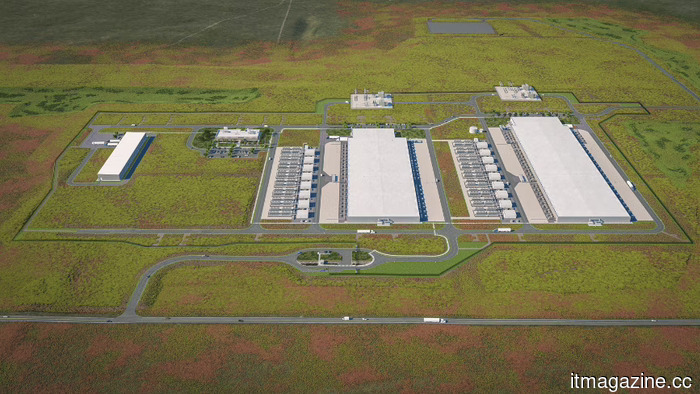 The debt of Big Tech in relation to AI has reached $350 billion and is making its way to Europe.
Alphabet, Amazon, Meta, Microsoft, and Oracle have increased their debt to $350 billion to invest in AI, and are currently entering European bond markets, starting with France.
The debt of Big Tech in relation to AI has reached $350 billion and is making its way to Europe.
Alphabet, Amazon, Meta, Microsoft, and Oracle have increased their debt to $350 billion to invest in AI, and are currently entering European bond markets, starting with France.
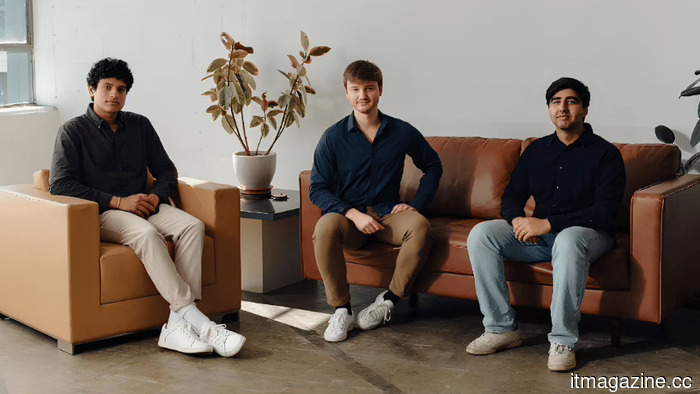 Mercor aims for a $20 billion valuation and acquires Deeptune.
Mercor is negotiating to increase its valuation to $20 billion and has acquired Deeptune, an AI-training startup supported by its own CEO. The details are in the footnotes.
Mercor aims for a $20 billion valuation and acquires Deeptune.
Mercor is negotiating to increase its valuation to $20 billion and has acquired Deeptune, an AI-training startup supported by its own CEO. The details are in the footnotes.
 Google has recently updated the way it evaluates the AI models employed in Android development.
Google has updated its Android Bench leaderboard by introducing a new testing framework and adding eight new models.
Google has recently updated the way it evaluates the AI models employed in Android development.
Google has updated its Android Bench leaderboard by introducing a new testing framework and adding eight new models.
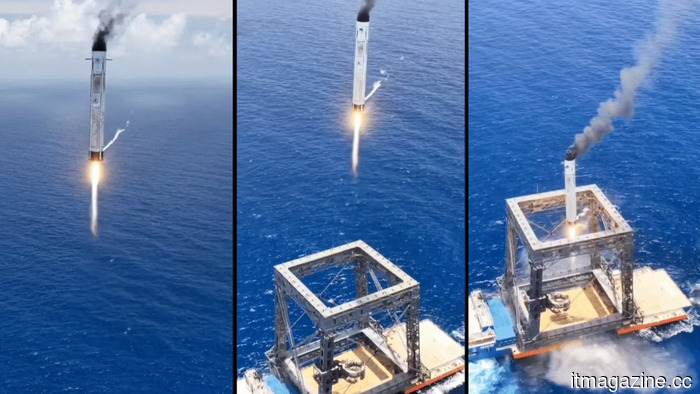 China successfully lands a reusable rocket booster for the first time.
China successfully captured a Long March-10B booster in a net at sea, marking its initial recovery of a reusable rocket. This places it alongside SpaceX and Blue Origin, though it significantly lags behind them.
China successfully lands a reusable rocket booster for the first time.
China successfully captured a Long March-10B booster in a net at sea, marking its initial recovery of a reusable rocket. This places it alongside SpaceX and Blue Origin, though it significantly lags behind them.
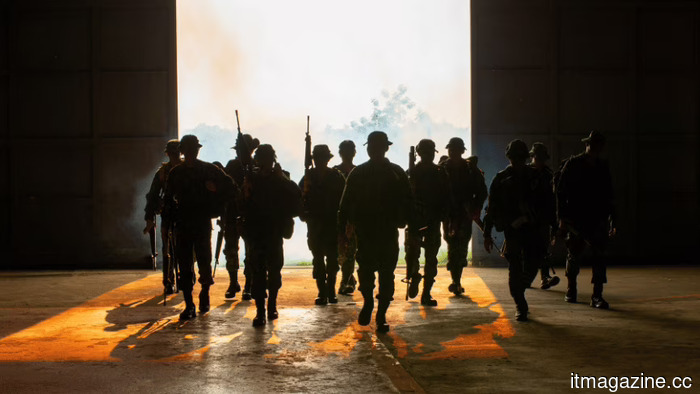 The UK has established a £2 billion AI 'Combat Laboratory' for the British Army.
Britain's new £2 billion AI 'Combat Laboratory' is set to train 60,000 soldiers annually. A US company is at the forefront of this initiative, while Germany's Rheinmetall holds nearly 50% of the project.
The UK has established a £2 billion AI 'Combat Laboratory' for the British Army.
Britain's new £2 billion AI 'Combat Laboratory' is set to train 60,000 soldiers annually. A US company is at the forefront of this initiative, while Germany's Rheinmetall holds nearly 50% of the project.
MiniMax secures $2 billion as its CEO suspends salary until AGI is achieved.
MiniMax is seeking to raise as much as $2 billion following an 80% decline, with founder Yan Junjie promising to forgo his salary until AGI is achieved and committing 5% of his shares to employees and open source initiatives.