
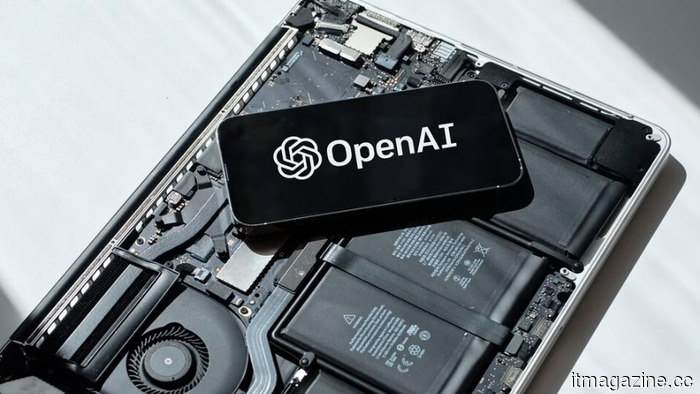
Media organizations request that the judge impose sanctions on OpenAI in the copyright lawsuit.
A coalition of news publishers has requested that a federal judge impose sanctions on OpenAI. The New York Times, Daily News, and other outlets claim that the creator of ChatGPT is withholding evidence critical to their copyright case, as reported by the Associated Press.
A motion filed on Thursday in Manhattan federal court asserts that OpenAI has “chosen obstruction” instead of providing datasets and ChatGPT logs. These documents could reveal how copyrighted news content was utilized in training the system.
The publishers accuse OpenAI of “discovery misconduct,” citing a recent deposition of an OpenAI employee that allegedly contradicts the company's previous assertions. Daily News attorney Steven Lieberman stated that OpenAI had spent two years “making misrepresentations” regarding its ability to access its training data.
The motion seeks to penalize OpenAI for concealing and destroying evidence, according to Lieberman. OpenAI has not yet responded to a request for commentary.
The implications extend beyond this single filing. In late 2023, the Times filed a lawsuit against OpenAI and Microsoft, which has since seen participation from a number of other newspapers, along with Ziff Davis and the Center for Investigative Reporting.
At the core of the dispute is a straightforward question that lacks a definitive answer. OpenAI contends that using public writing to train AI falls under copyright’s “fair use” doctrine, a defense currently being challenged in multiple lawsuits from artists, authors, and music labels.
The Times presents a different viewpoint, arguing it's a case of unfair competition. The Times alleges that AI companies are benefiting from its expensive journalism by creating “substitutive” products that provide answers to readers without redirecting them or advertising revenue back to the original source.
This concern intensified when AI-generated search results began diminishing traffic to publishers. Courts are just beginning to weigh in, with a German court ruling that found Google liable for its AI Overviews.
The litigation is costly. The Times claims to have expended more than $28 million combatting AI companies, including a separate lawsuit against Perplexity, and now seeks to have OpenAI cover costs related to the pursuit of withheld evidence.
There is a reference point for the potential costs of losing a lawsuit. Anthropic agreed to compensate book authors $1.5 billion, equating to about $3,000 per work, a significant amount that still represents just a fraction of its valuation.
Not every organization is pursuing legal action, however. Many media outlets have entered licensing agreements with AI companies, and even Getty Images has reached a deal with a firm it once sued, while regulators are exploring their own solutions, such as France's €250 million fine against Google.
The decision to either sue or license represents the industry’s key gamble regarding its future. A ruling for sanctions against OpenAI would not resolve the copyright issue, but it could provide publishers with leverage they have struggled to obtain thus far.
Other articles
 Palo Alto CEO: Prices of AI tokens need to decrease by as much as 90%
Nikesh Arora states that the costs of AI tokens must decrease by as much as 90% to achieve widespread enterprise adoption, describing OpenAI's 54% efficiency increase as merely "a good start."
Palo Alto CEO: Prices of AI tokens need to decrease by as much as 90%
Nikesh Arora states that the costs of AI tokens must decrease by as much as 90% to achieve widespread enterprise adoption, describing OpenAI's 54% efficiency increase as merely "a good start."
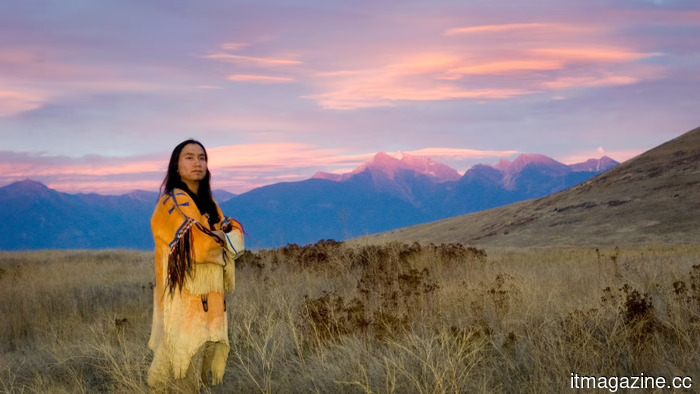 The surge for data centers in the AI industry extends to Native reservations.
Developers of AI data centers are targeting tribal land due to its availability of space, water, and power, creating a divide within Native communities over the potential for economic benefits and concerns about "data colonialism."
The surge for data centers in the AI industry extends to Native reservations.
Developers of AI data centers are targeting tribal land due to its availability of space, water, and power, creating a divide within Native communities over the potential for economic benefits and concerns about "data colonialism."
 What AI companies are seeking for their midterm gains
AI super PACs supported by OpenAI and a16z are inundating the 2026 midterm elections to thwart state AI regulations and penalize legislators who advocate for them.
What AI companies are seeking for their midterm gains
AI super PACs supported by OpenAI and a16z are inundating the 2026 midterm elections to thwart state AI regulations and penalize legislators who advocate for them.
 The Windows 11 Search feature is expanding, albeit by just 4 pixels.
Following enhancements to Windows 11 Search in recent updates, Microsoft might be getting ready to implement a minor design adjustment for the Search box.
The Windows 11 Search feature is expanding, albeit by just 4 pixels.
Following enhancements to Windows 11 Search in recent updates, Microsoft might be getting ready to implement a minor design adjustment for the Search box.
 INIU SnapGo Air review: A multifunctional power bank that I don't mind bringing along every day.
I became fed up with heavy chargers, but INIU came to my rescue. The SnapGo Air is a sleek, lightweight 10,000mAh magnetic power bank featuring fast Qi2.2 charging and a built-in cable that you will genuinely want to take with you daily.
INIU SnapGo Air review: A multifunctional power bank that I don't mind bringing along every day.
I became fed up with heavy chargers, but INIU came to my rescue. The SnapGo Air is a sleek, lightweight 10,000mAh magnetic power bank featuring fast Qi2.2 charging and a built-in cable that you will genuinely want to take with you daily.
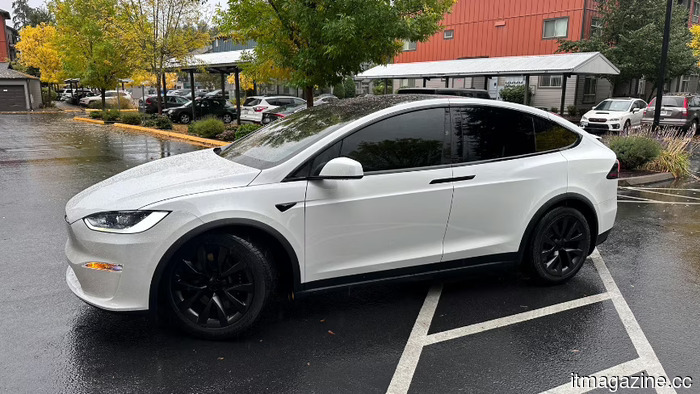 New Jersey's robotaxi legislation may prohibit Tesla due to its use of lidar.
New Jersey requires that driverless vehicles be equipped with both lidar and cameras. As a result, Tesla's camera-only Robotaxi would be excluded unless it modifies its hardware.
New Jersey's robotaxi legislation may prohibit Tesla due to its use of lidar.
New Jersey requires that driverless vehicles be equipped with both lidar and cameras. As a result, Tesla's camera-only Robotaxi would be excluded unless it modifies its hardware.
Media organizations request that the judge impose sanctions on OpenAI in the copyright lawsuit.
The New York Times, Daily News, and other outlets are accusing OpenAI of concealing evidence in their copyright lawsuit and are requesting that a judge impose sanctions in a case that has the potential to redefine journalism.