
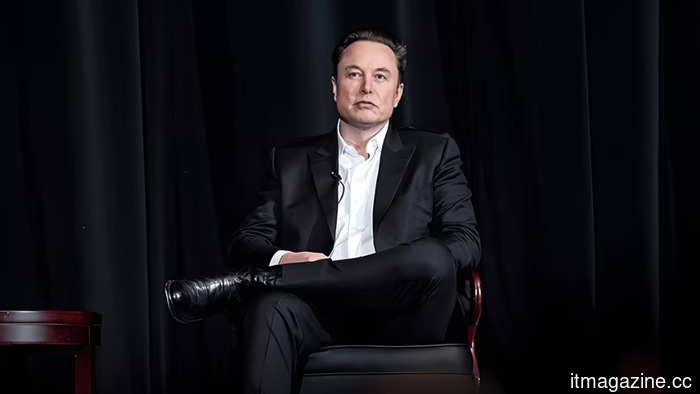
Musk: The SpaceX IPO created millions for thousands of employees.
Elon Musk mentioned on The Sean Hannity Show that SpaceX’s significant IPO has likely created “several thousand” millionaires among his employees, highlighting years of stock grants as a strategic choice to enable staff to benefit from the company's success. Estimates suggest around 4,400 new millionaires and over 400 centimillionaires, with the group including welders and machinists, not just executives. However, the stock has already decreased from a post-IPO high of above $200 to below $148, and lockup periods keep much of the wealth as mere paper gains, while Musk maintains 82% voting control.
Musk remarked that the IPO has possibly turned thousands of his employees into millionaires. When asked about a former welder whose stock surpassed $1 million, he indicated that this experience is not isolated. “It’s not just one welder, it’s several thousand people in production,” Musk noted, suggesting that those who joined early likely have stock now valued at over a million dollars. He presented this structure as a longstanding policy, stating that everyone at SpaceX should "share in the upside."
“It’s beneficial for aligning incentives,” he elaborated, indicating that as the company succeeds, its employees do as well. SpaceX did not provide immediate comments on the matter.
The figures supporting this assertion are substantial. Prior to the listing on June 12, one pre-IPO trading platform estimated that the offering would create approximately 4,400 new millionaires and over 400 centimillionaires.
The mechanism behind this is years of equity. A former employee recounted receiving stock options upon joining, during annual reviews, and with promotions, alongside biannual liquidity events allowing staff to sell some of their shares while SpaceX was still private.
While the windfall is substantial, the timing is not favorable. SpaceX was priced at $135 and surged past $200 shortly after its debut on Nasdaq, only to drop back below $148 within a few days.
This fluctuation serves as a reminder that stock value does not equate to liquid assets. Lockup agreements also dictate when employees can sell their shares, resulting in much of the newfound wealth remaining on paper for the time being.
The financial backdrop raises concerns as well. SpaceX incurred losses of $4.94 billion in 2025, with only Starlink consistently profitable, implying that its approximately $2 trillion valuation heavily relies on future expectations.
The employee windfall exists within a much larger context. The same IPO temporarily positioned Musk as the world’s first trillionaire, and he maintains significant control of the company.
Employees received financial benefits but not power, as Musk holds about 82% of the voting rights due to a dual-class structure, despite owning roughly 42% of the equity. This means the insiders continue to exercise control regardless of how many employees cash in on their stock.
Some of the benefits are being intentionally distributed. President Gwynne Shotwell and her husband donated around $300 million worth of SpaceX stock to the government’s Trump Accounts program for newborns, a gesture publicly commended by Donald Trump.
Meanwhile, Musk connected the financial gains to his usual vision, promoting plans for a Moon base and crewed missions to Mars in the coming years. For thousands of SpaceX employees, the science-fiction promise has translated into a tangible, albeit condition-laden, seven-figure payoff.
Other articles
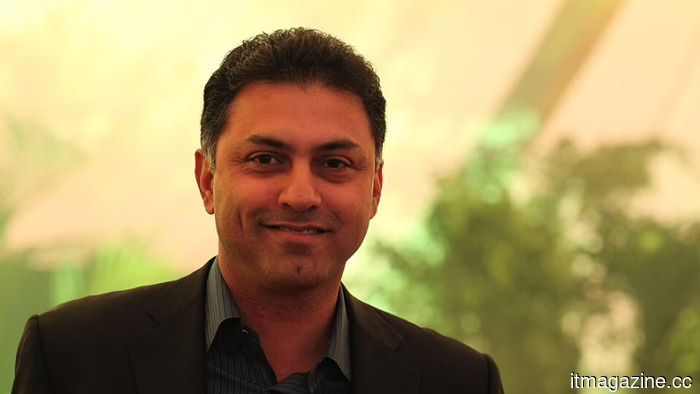 Palo Alto CEO: AI token values need to drop by as much as 90%.
Nikesh Arora highlights that the costs of AI tokens must decrease by as much as 90% for widespread enterprise adoption, stating that OpenAI's 54% efficiency improvement is merely "a good start."
Palo Alto CEO: AI token values need to drop by as much as 90%.
Nikesh Arora highlights that the costs of AI tokens must decrease by as much as 90% for widespread enterprise adoption, stating that OpenAI's 54% efficiency improvement is merely "a good start."
 What Factors Should You Consider When Choosing an Online Payment Platform for Your Business?
This message is presented to you in collaboration with QuickBooks. QuickBooks Payments often ranks among the top results when searching for an online payment solution, alongside well-known names like Stripe, Square, and PayPal, among others, all of which pledge the same two benefits: faster payments and retaining more of your revenue.
What Factors Should You Consider When Choosing an Online Payment Platform for Your Business?
This message is presented to you in collaboration with QuickBooks. QuickBooks Payments often ranks among the top results when searching for an online payment solution, alongside well-known names like Stripe, Square, and PayPal, among others, all of which pledge the same two benefits: faster payments and retaining more of your revenue.
 If you're feeling exhausted from supervising ChatGPT, the new GPT-5.6 models could be the solution you need.
OpenAI has introduced GPT-5.6 Sol, Terra, and Luna, a new series of AI models designed to enhance workflow speed, reduce costs, and minimize the need for subsequent prompts.
If you're feeling exhausted from supervising ChatGPT, the new GPT-5.6 models could be the solution you need.
OpenAI has introduced GPT-5.6 Sol, Terra, and Luna, a new series of AI models designed to enhance workflow speed, reduce costs, and minimize the need for subsequent prompts.
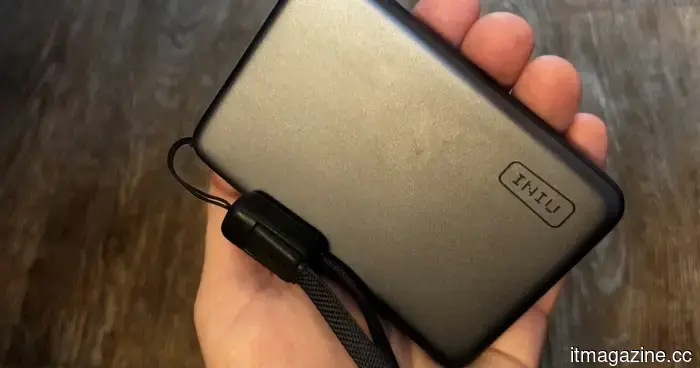 INIU SnapGo Air review: A multifunctional power bank that I don’t mind carrying on a daily basis.
I became weary of cumbersome chargers, but INIU came to my aid. The SnapGo Air is a sleek, lightweight 10,000mAh magnetic power bank featuring fast Qi2.2 charging and a built-in cable that you'll genuinely want to take with you every day.
INIU SnapGo Air review: A multifunctional power bank that I don’t mind carrying on a daily basis.
I became weary of cumbersome chargers, but INIU came to my aid. The SnapGo Air is a sleek, lightweight 10,000mAh magnetic power bank featuring fast Qi2.2 charging and a built-in cable that you'll genuinely want to take with you every day.
 INIU SnapGo Air review: A convenient power bank that I'm comfortable taking with me every day.
I became fed up with bulky chargers, but INIU came to my rescue. The SnapGo Air is a sleek, lightweight 10,000mAh magnetic power bank featuring fast Qi2.2 charging and an integrated cable that you'll genuinely want to take with you every day.
INIU SnapGo Air review: A convenient power bank that I'm comfortable taking with me every day.
I became fed up with bulky chargers, but INIU came to my rescue. The SnapGo Air is a sleek, lightweight 10,000mAh magnetic power bank featuring fast Qi2.2 charging and an integrated cable that you'll genuinely want to take with you every day.
 What AI companies are seeking for their midterm millions
AI super PACs supported by OpenAI and a16z are inundating the 2026 midterm elections to prevent state AI regulations and penalize legislators who advocate for them.
What AI companies are seeking for their midterm millions
AI super PACs supported by OpenAI and a16z are inundating the 2026 midterm elections to prevent state AI regulations and penalize legislators who advocate for them.
Musk: The SpaceX IPO created millions for thousands of employees.
Elon Musk states that SpaceX's record initial public offering probably turned thousands of employees, including welders, into millionaires, although a declining share price is putting that fortune to the test.