

What AI companies are seeking for their midterm millions
Companies involved in AI and their investors are investing significant amounts into the 2026 US midterms through super PACs, notably Leading the Future (backed by Andreessen Horowitz’s Marc Andreessen and Ben Horowitz, as well as OpenAI’s Greg Brockman) and the newer Innovation Council Action. Their main objective is to establish a single, national AI framework that would prevent varying regulations at the state level, while also aiming to defeat lawmakers advocating for stricter rules. This initiative follows the Senate's decision to eliminate a federal preemption clause, prompting concerns about "dark money" from oversight groups, although the industry does not present a unified stance (for instance, Anthropic’s contributions focus solely on policy education).
AI firms and their supporters are contributing vast resources to the 2026 US midterm elections through super PACs, with expenditures reportedly hitting the hundreds of millions. Their primary demand is uniform national regulations for AI, asserting that a variety of state laws would hinder progress and put the US at a disadvantage compared to China.
The leading initiative is the Leading the Future super PAC network, established in 2025. Reports indicate that co-founders Marc Andreessen and Ben Horowitz contributed $25 million each, in addition to a similar amount from OpenAI president Greg Brockman. The organization endorses candidates who promote a "responsible national framework" and opposes those who challenge it. It has already invested tens of millions into various races across states like Texas, Georgia, Illinois, and Montana.
Moreover, the newer pro-deregulation group Innovation Council Action has committed around $100 million, with its funding reportedly coming from sources in both the crypto and AI sectors, including the Winklevoss twins and Elon Musk’s xAI network.
The timing of these financial flows is strategic. After Washington's unsuccessful attempt to halt state-level AI regulations—which culminated in the Senate stripping a preemption provision by a vote of 99 to 1—those in the industry are now focusing on influencing the electoral process. This effort aligns with ongoing White House negotiations to exchange state preemption for federal online-safety regulations, a deal that remains unresolved.
In contrast, states are advancing legislation, having introduced over a thousand AI-related bills in 2025 alone. The disparity between stagnant federal actions and the active state legislative environment is precisely what these funds aim to address.
It's important to note that not all AI companies share the same approach to regulation. For example, Anthropic has reportedly contributed $20 million, but limited to public education on AI policy rather than direct political campaigning, advocating instead for governmental authority to restrict harmful AI technologies.
This division is significant because "pro-AI" funding does not uniformly oppose regulations. Microsoft’s Brad Smith has voiced concerns that the US lacks clear regulations surrounding AI, highlighting a regulatory void that this financial backing seeks to fill.
Critics express deeper concerns beyond typical lobbying, labeling this surge "dark money" and cautioning against corporations attempting to sway regulations before the implications of the technology are fully understood. Conversely, supporters argue that political contributions are legal, partially disclosed, and comparable to other sectors defending their interests. The debate is intensified by a public increasingly skeptical of AI, as evidenced by grassroots opposition to data-centre initiatives.
Ultimately, the investment aims to do more than just fund advertisements; it seeks to establish the narrative that AI regulations should be national, lenient, and formulated with industry input. The ability of voters to accept this narrative will be the true test of these millions spent.
Other articles
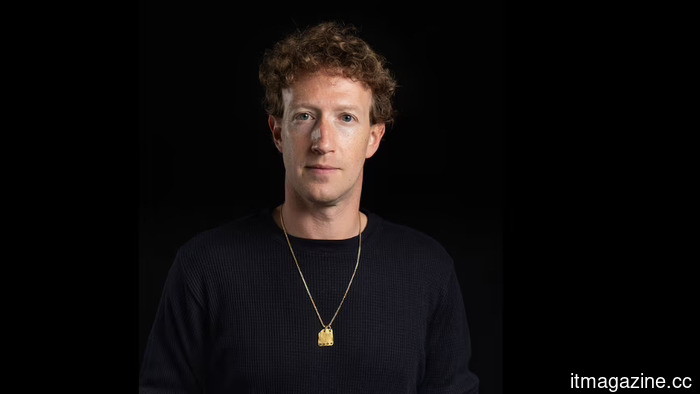 Zuckerberg: an AI cloud venture for Meta 'is logical'
Mark Zuckerberg has confirmed that Meta is investigating the possibility of selling AI computing resources, a strategy that would compete with AWS and Azure and pose a challenge to emerging cloud providers such as CoreWeave.
Zuckerberg: an AI cloud venture for Meta 'is logical'
Mark Zuckerberg has confirmed that Meta is investigating the possibility of selling AI computing resources, a strategy that would compete with AWS and Azure and pose a challenge to emerging cloud providers such as CoreWeave.
 EXCLUSIVE: The producer of The Mandela Catalogue reveals fresh insights about the forthcoming horror adaptation.
Producer Aaron B. Koontz discusses with Digital Trends the adaptation of The Mandela Catalogue alongside Steven Spielberg, why creator Alex Kister was the ideal director, and what audiences can look forward to in the forthcoming horror film.
EXCLUSIVE: The producer of The Mandela Catalogue reveals fresh insights about the forthcoming horror adaptation.
Producer Aaron B. Koontz discusses with Digital Trends the adaptation of The Mandela Catalogue alongside Steven Spielberg, why creator Alex Kister was the ideal director, and what audiences can look forward to in the forthcoming horror film.
 Slate’s new electric truck colors resemble those from a Crayola box.
Slate Auto has teamed up with Crayola to introduce five vibrant wrap kits for its budget-friendly electric truck, representing the crayon manufacturer's inaugural partnership with an automotive company.
Slate’s new electric truck colors resemble those from a Crayola box.
Slate Auto has teamed up with Crayola to introduce five vibrant wrap kits for its budget-friendly electric truck, representing the crayon manufacturer's inaugural partnership with an automotive company.
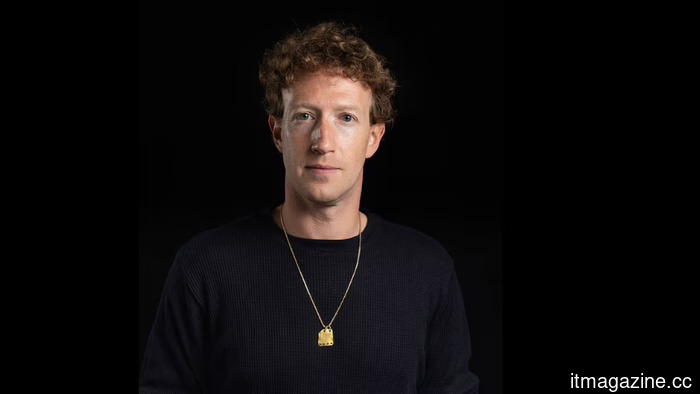 Zuckerberg: an AI cloud venture is logical for Meta.
Mark Zuckerberg has stated that Meta is looking into the possibility of selling AI computing services, a step that would compete with AWS and Azure and pose a challenge to emerging cloud providers like CoreWeave.
Zuckerberg: an AI cloud venture is logical for Meta.
Mark Zuckerberg has stated that Meta is looking into the possibility of selling AI computing services, a step that would compete with AWS and Azure and pose a challenge to emerging cloud providers like CoreWeave.
 Dell’s latest Alienware monitors offer increased brightness, improved sharpness, and are more affordable than anticipated for an OLED upgrade.
Dell has introduced three new Alienware gaming monitors, highlighted by a brighter and quicker 34-inch QD-OLED model that comes with a price tag of $799.99.
Dell’s latest Alienware monitors offer increased brightness, improved sharpness, and are more affordable than anticipated for an OLED upgrade.
Dell has introduced three new Alienware gaming monitors, highlighted by a brighter and quicker 34-inch QD-OLED model that comes with a price tag of $799.99.
 What AI companies are seeking for their midterm gains
AI super PACs supported by OpenAI and a16z are inundating the 2026 midterm elections to thwart state AI regulations and penalize legislators who advocate for them.
What AI companies are seeking for their midterm gains
AI super PACs supported by OpenAI and a16z are inundating the 2026 midterm elections to thwart state AI regulations and penalize legislators who advocate for them.
What AI companies are seeking for their midterm millions
AI super PACs supported by OpenAI and a16z are inundating the 2026 midterm elections to prevent state AI regulations and penalize legislators who advocate for them.