

Europe's reduction of bureaucratic regulations has satisfied very few people.
Twenty months into the EU’s initiative to reduce red tape, many businesses that advocated for it remain unimpressed. Firms informed Politico that the “simplification” effort is progressing too slowly, is too expensive, and appears overly complex.
Politico interviewed 17 companies, consultancies, and trade organizations from different sectors. A prevalent complaint was that an institution designed to create laws is not well-equipped to dismantle them. Richard Longden from INEOS mentioned to the outlet that the EU is “hardwired” to produce rules but struggles with their removal. Martynas Barysas from BusinessEurope noted that the effort to reduce burdens is “drowning in the inertia” of discussions at the working level.
This frustration contrasts sharply with late 2024, when Ursula von der Leyen promised to reduce the burden on businesses, which was met with enthusiasm from the industry. Since February 2025, the Commission has proposed roughly a dozen “omnibus” bills across various sectors, including defense, energy, chemicals, agriculture, and technology, claiming billions in potential savings.
The Commission defended its record, describing the progress as “unprecedented” and highlighting that the proposed cuts require the agreement of 27 member states and Parliament. It has increasingly pointed fingers at national governments for not implementing the necessary changes.
In the tech sector, the most significant aspect of this initiative is the Digital Omnibus, which revisits the GDPR, the AI Act, and other digital regulations under the banner of competitiveness, as part of a broader effort to revise Europe’s regulatory framework to catch up with the US and China.
In June, Parliament and the Council approved the AI Omnibus, which softened the AI Act while introducing a ban on nudification apps. This package postpones high-risk AI obligations, establishes new grounds for training AI on personal data, and removes an AI-literacy requirement. This is exactly the kind of relaxation that many in the tech industry had been lobbying for, as companies claimed the AI Act and GDPR were stifling European startups in comparison to their less restricted competitors.
However, the changes have largely left no one satisfied. Privacy and civil rights groups criticize the Digital Omnibus as a rollback of crucial protections, disguised as tidying up, which undermines rights to promote the AI industry. On the other hand, the industry contends that the modifications are continually diluted during negotiations, with more reporting obligations being added instead of removed. Even the adjustments to the AI Act were viewed by observers as mere procedural changes rather than substantive alterations, indicating strain on all sides, as evidenced by collapsed negotiations after just 12 hours.
Some companies are now advocating for a pause, seeking a “predictability wave” of five to ten stable years rather than continued upheaval. Others argue that red tape was never truly the core issue, highlighting energy costs and carbon pricing as more significant concerns.
At the heart of the discontent lies a real dilemma that the Commission cannot easily navigate. It is attempting to strike a balance between industry’s desire for fewer regulations and warnings that dismantling such rules could negatively impact privacy, health, and the environment.
This tension is unlikely to dissipate, with some claiming that Europe’s strength lies in properly calibrating the rules rather than merely eliminating them. The underlying debate is whether reliable regulation serves as a valuable asset or a burdensome constraint. Currently, Europe has ignited its bonfire but has pleased few of those who gathered around it. The emerging lesson from Brussels is that repeal of laws may prove to be just as challenging and contentious as their creation.
Other articles
 My old Pixel continues to receive AI features that Apple requires a newer iPhone to access.
My Pixel 8a continues to receive AI tools, while Apple's latest model is falling behind the standard iPhone 17, and this disparity speaks volumes about the level of long-term support.
My old Pixel continues to receive AI features that Apple requires a newer iPhone to access.
My Pixel 8a continues to receive AI tools, while Apple's latest model is falling behind the standard iPhone 17, and this disparity speaks volumes about the level of long-term support.
 DuRoBo's Krono e-reader and its page-turning companion Moodi are now accessible worldwide.
DuRoBo's Krono and Moodi are now available for purchase worldwide, providing a streamlined reading environment and a portable Bluetooth page-turner compatible with Kindle, Kobo, and Play Books.
DuRoBo's Krono e-reader and its page-turning companion Moodi are now accessible worldwide.
DuRoBo's Krono and Moodi are now available for purchase worldwide, providing a streamlined reading environment and a portable Bluetooth page-turner compatible with Kindle, Kobo, and Play Books.
 This application transforms your text and voice messages into animated AI characters.
Are you weary of just sending plain text and voice notes? Pixi Garden allows you to send animated AI characters that enter chats, perform, and convey your message. It integrates with Apple's Messages app, and support for WhatsApp and other platforms is anticipated soon.
This application transforms your text and voice messages into animated AI characters.
Are you weary of just sending plain text and voice notes? Pixi Garden allows you to send animated AI characters that enter chats, perform, and convey your message. It integrates with Apple's Messages app, and support for WhatsApp and other platforms is anticipated soon.
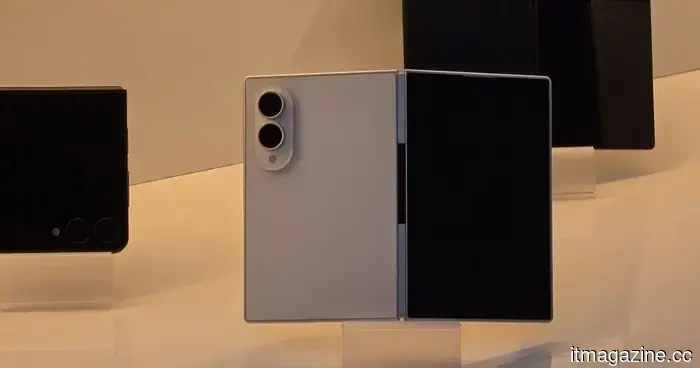 This image could be your first genuine glimpse of the Galaxy Z Fold 8.
A photo being shared on Reddit purportedly displays Samsung's Galaxy Z Fold 8, Fold 8 Ultra, and Flip 8 in real life, weeks before the Unpacked event scheduled for July 22.
This image could be your first genuine glimpse of the Galaxy Z Fold 8.
A photo being shared on Reddit purportedly displays Samsung's Galaxy Z Fold 8, Fold 8 Ultra, and Flip 8 in real life, weeks before the Unpacked event scheduled for July 22.
 This application transforms your written and spoken messages into dynamic AI characters.
Are you weary of sending just text and voice messages? Pixi Garden allows you to send animated AI characters that enter chats, perform, and convey your message. It currently operates within Apple's Messages app, with plans for integration into WhatsApp and other platforms in the future.
This application transforms your written and spoken messages into dynamic AI characters.
Are you weary of sending just text and voice messages? Pixi Garden allows you to send animated AI characters that enter chats, perform, and convey your message. It currently operates within Apple's Messages app, with plans for integration into WhatsApp and other platforms in the future.
 The initial flights of the US air-taxi program transported organs.
Beta, supported by Amazon, conducted the initial missions of Trump's eVTOL pilot program, transporting medical supplies, marking a significant step that indicates the dream of flying taxis is still several years away.
The initial flights of the US air-taxi program transported organs.
Beta, supported by Amazon, conducted the initial missions of Trump's eVTOL pilot program, transporting medical supplies, marking a significant step that indicates the dream of flying taxis is still several years away.
Europe's reduction of bureaucratic regulations has satisfied very few people.
The EU's push for deregulation is undermining the GDPR and postponing the AI Act, while the industry claims the process is too sluggish, and digital rights organizations argue that it is excessive.