
The initial flights of the US air-taxi program transported organs.
TL;DR
Beta Technologies, backed by Amazon, has conducted the inaugural flights under the US government's eVTOL Integration Pilot Program, initiated by an executive order from Trump. Notably, these first missions transported manufactured organs for United Therapeutics between Maryland and Virginia (approximately 275 nautical miles), rather than carrying passengers. The program includes eight projects across 26 states (with Beta participating in seven), but certification is still projected for 2027-28 amidst a challenging environment for the sector.
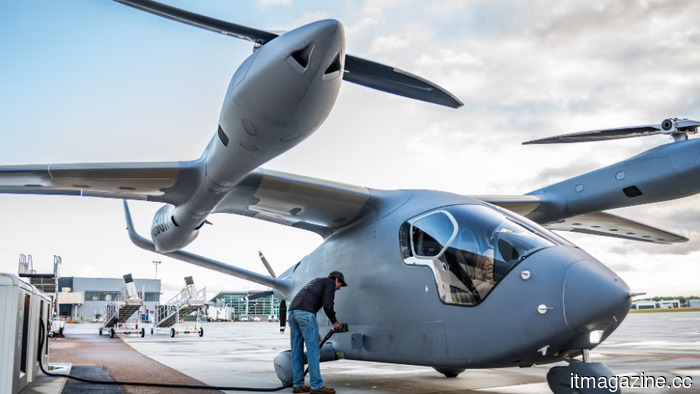
Beta Technologies has successfully executed the first flights in the US government's electric air-taxi pilot program, as reported by CNBC. These flights did not carry passengers; they were utilized to move manufactured organs for United Therapeutics between airports in Maryland and Virginia, covering around 275 nautical miles.
Launched by a Trump executive order last year, the eVTOL Integration Pilot Program encompasses eight projects across 26 states, with Beta being the most active participant involved in seven of them.
Political support for the program is evident, as Transportation Secretary Sean Duffy became the first individual in that position to fly on a next-generation vertical-takeoff aircraft produced by Beta. Other notable companies, including Joby, Archer, and Wisk, are also part of the initiative, which has been approved for eight pilot projects by the FAA.
Starting with the transport of organs instead of commuters is significant. Delivering high-value, time-sensitive medical cargo offers a lower-risk opportunity to demonstrate the aircraft's capabilities and airspace regulations before introducing paying passengers into the mix.
The challenge of integrating quiet electric aircraft into a busy national airspace system is central to this initiative. Operators are working on software to manage eVTOL traffic, which is why the program is characterized as “integration” rather than just a launch.
The infrastructure required is still in its early stages, with dedicated take-off and landing pads beginning to emerge, such as the world’s first vertiport in the UK. A passenger network will need many such facilities, which are still mostly nonexistent.
The realities of the sector underscore how early it is in the development process. Beta anticipates certification for its eVTOL by 2028, with a conventional-takeoff version expected a year earlier. The landscape has proven harsh, with several previously-promising competitors facing collapses or delays due to certification challenges, highlighting the disparity between flashy demonstrations and the reality of creating viable, large-scale aircraft.
Current players are still incurring significant expenses on the lengthy path to approval, while European contenders like Vertical Aerospace continue to test new prototypes. Ultimately, the winners will be those who achieve certification with the financial resources to sustain their operations.
At present, the US program has yielded tangible results with actual flights performing valuable work. Though the air taxi is not yet available, the aircraft potentially capable of service has successfully delivered its first cargo.
Other articles
 Your Google AI Studio applications can now feature refined and professional web links.
Google AI Studio now allows users to assign custom ai.studio addresses to full-stack web applications deployed via Cloud Run.
Your Google AI Studio applications can now feature refined and professional web links.
Google AI Studio now allows users to assign custom ai.studio addresses to full-stack web applications deployed via Cloud Run.
 DuRoBo's Krono e-reader and its page-turning companion Moodi are now accessible worldwide.
DuRoBo's Krono and Moodi are now available for purchase worldwide, providing a streamlined reading environment and a portable Bluetooth page-turner compatible with Kindle, Kobo, and Play Books.
DuRoBo's Krono e-reader and its page-turning companion Moodi are now accessible worldwide.
DuRoBo's Krono and Moodi are now available for purchase worldwide, providing a streamlined reading environment and a portable Bluetooth page-turner compatible with Kindle, Kobo, and Play Books.
 This application transforms your text and voice messages into animated AI characters.
Are you weary of just sending plain text and voice notes? Pixi Garden allows you to send animated AI characters that enter chats, perform, and convey your message. It integrates with Apple's Messages app, and support for WhatsApp and other platforms is anticipated soon.
This application transforms your text and voice messages into animated AI characters.
Are you weary of just sending plain text and voice notes? Pixi Garden allows you to send animated AI characters that enter chats, perform, and convey your message. It integrates with Apple's Messages app, and support for WhatsApp and other platforms is anticipated soon.
 Meta’s engaging design of Instagram and Facebook might result in billions of dollars in fines and a compelled redesign.
The European Commission has stated that Meta did not adequately safeguard users, particularly teenagers, from the addictive nature of Instagram and Facebook's design, and the company may face significant penalties.
Meta’s engaging design of Instagram and Facebook might result in billions of dollars in fines and a compelled redesign.
The European Commission has stated that Meta did not adequately safeguard users, particularly teenagers, from the addictive nature of Instagram and Facebook's design, and the company may face significant penalties.
 Europe's reduction of bureaucratic regulations has satisfied very few people.
The EU's push for deregulation is undermining the GDPR and postponing the AI Act, while the industry claims the process is too sluggish, and digital rights organizations argue that it is excessive.
Europe's reduction of bureaucratic regulations has satisfied very few people.
The EU's push for deregulation is undermining the GDPR and postponing the AI Act, while the industry claims the process is too sluggish, and digital rights organizations argue that it is excessive.
 Dimming the sun may seem irrational, but a recent study on El Niño presents a surprisingly strong argument in favor of it.
Intentionally brightening clouds in the Pacific might reduce the most severe impacts of a Super El Niño by as much as 40%, as indicated by a study that is capturing the attention of even skeptical scientists.
Dimming the sun may seem irrational, but a recent study on El Niño presents a surprisingly strong argument in favor of it.
Intentionally brightening clouds in the Pacific might reduce the most severe impacts of a Super El Niño by as much as 40%, as indicated by a study that is capturing the attention of even skeptical scientists.
The initial flights of the US air-taxi program transported organs.
Beta, supported by Amazon, conducted the initial missions of Trump's eVTOL pilot program, transporting medical supplies, marking a significant step that indicates the dream of flying taxis is still several years away.