
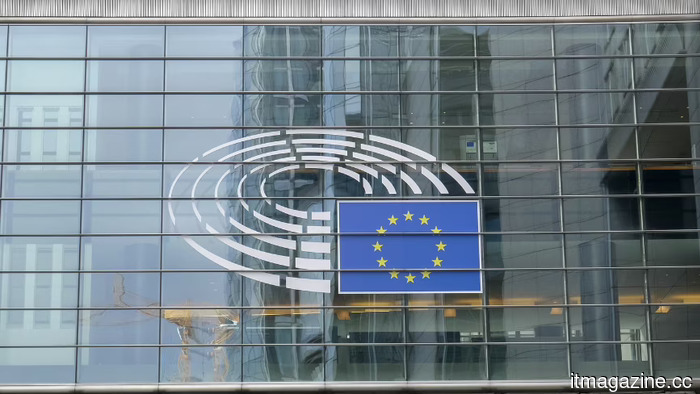
EU Parliament brings back legislation on child-abuse detection.
The European Parliament has voted to move forward with a bill that would allow tech companies to legally search for child sexual abuse material. On Thursday in Strasbourg, lawmakers forwarded the proposal to EU member states for their approval, according to Politico.
Interestingly, Parliament had previously rejected this same bill in March. It was brought back to life following a push from the center-right European People’s Party, which encouraged EU capitals to resume negotiations.
This measure serves as a temporary solution, granting platforms the legal ability to voluntarily scan for abusive material. This was necessary due to a legal gap that emerged when a prior exemption expired, while a different and much more controversial permanent law, commonly referred to as Chat Control, remains mired in negotiations.
Opponents were unable to gather the 361 votes required to defeat the bill outright. Only 314 members voted against it, while 276 voted in favor and 17 abstained, allowing the bill to progress.
Lawmakers also included an amendment that exempts end-to-end encrypted services like WhatsApp and Signal from the scanning requirements. This exception addresses a major concern that mandated scanning could create a backdoor into encrypted messaging.
Both sides left the discussion dissatisfied. Lena Düpont from the EPP desired a “clear cut” return with no amendments and expressed dissatisfaction on behalf of her group. Liberal lawmaker Irena Joveva, who opposed the scanning proposal and supported an amendment, expressed her “deep disappointment” that the vote was forced at all. The tech lobby group DOT Europe claimed that the amendments, regardless of their good intentions, merely postpone the solution that companies need.
Child rights organizations framed the issue differently. ECLAG’s Nathalie Meurens argued that the vote was about addressing a legal gap that “continues to put children at risk,” a stance long maintained by those who caution that inaction leaves abuse unseen.
The process to revive the bill was almost as contentious as the bill itself. The Council brought it back to life using a procedure that is official but rarely employed, which facilitates passing a law rather than blocking it.
The plenary session was chaotic and confusing, with members unclear about what they were voting on. One reportedly approached a vice-president simply to say, “We don’t know what we’re voting on.”
Top conservatives exerted significant pressure, with EPP leader Manfred Weber and four European commissioners urging lawmakers in advance. This resulted in a strong support base from EPP votes, while liberal and social-democratic groups were divided.
The battle is far from over. The privacy implications are why this issue does not fade away easily. Both client-side and message scanning have alarmed security experts since Apple abandoned its plan to scan every iPhone photo, and proponents of encryption view any weakening as a critical boundary.
Meredith Whittaker, president of Signal and a staunch critic of backdoors, has stated that the app would withdraw from the EU rather than compromise its encryption. The exemption added on Thursday directly addresses this concern.
For now, the temporary bill moves on to member states, while the permanent regulation continues to face delays. The vote resolved few issues, except that the most intense privacy-versus-protection debate in Europe remains very much active.
Other articles
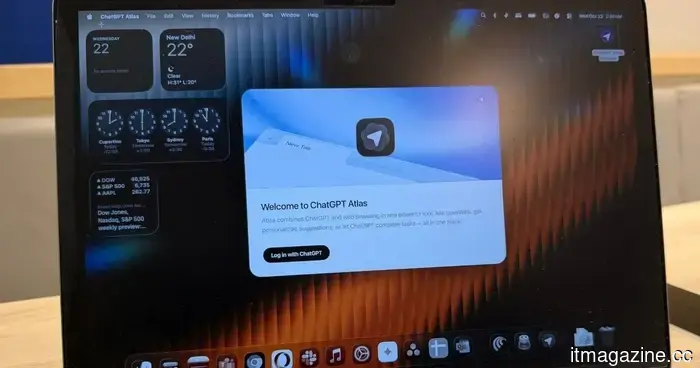 OpenAI is discontinuing the ChatGPT Atlas browser. I enjoyed it, but it was a challenging journey to succeed.
OpenAI is phasing out the ChatGPT Atlas browser less than a year after its launch, redirecting its attention to ChatGPT Work.
OpenAI is discontinuing the ChatGPT Atlas browser. I enjoyed it, but it was a challenging journey to succeed.
OpenAI is phasing out the ChatGPT Atlas browser less than a year after its launch, redirecting its attention to ChatGPT Work.
 Palo Alto CEO: AI token values need to drop by as much as 90%.
Nikesh Arora highlights that the costs of AI tokens must decrease by as much as 90% for widespread enterprise adoption, stating that OpenAI's 54% efficiency improvement is merely "a good start."
Palo Alto CEO: AI token values need to drop by as much as 90%.
Nikesh Arora highlights that the costs of AI tokens must decrease by as much as 90% for widespread enterprise adoption, stating that OpenAI's 54% efficiency improvement is merely "a good start."
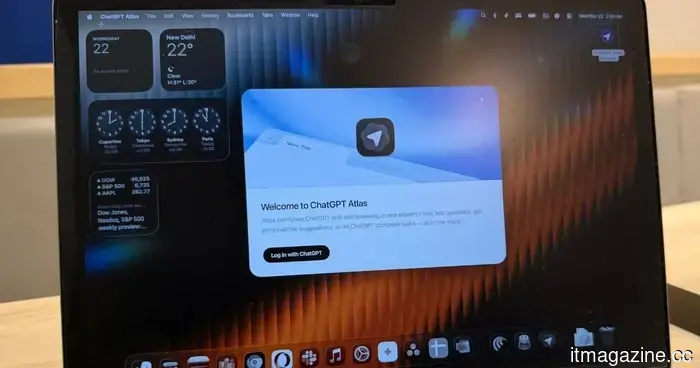 OpenAI is discontinuing the ChatGPT Atlas browser. I really enjoyed it, but it felt like a challenging journey to reach the top.
OpenAI is terminating the ChatGPT Atlas browser less than a year after its launch, as the company redirects its attention to ChatGPT Work.
OpenAI is discontinuing the ChatGPT Atlas browser. I really enjoyed it, but it felt like a challenging journey to reach the top.
OpenAI is terminating the ChatGPT Atlas browser less than a year after its launch, as the company redirects its attention to ChatGPT Work.
 New Jersey's robotaxi legislation may prohibit Tesla due to its use of lidar.
New Jersey requires that driverless vehicles be equipped with both lidar and cameras. As a result, Tesla's camera-only Robotaxi would be excluded unless it modifies its hardware.
New Jersey's robotaxi legislation may prohibit Tesla due to its use of lidar.
New Jersey requires that driverless vehicles be equipped with both lidar and cameras. As a result, Tesla's camera-only Robotaxi would be excluded unless it modifies its hardware.
 INIU SnapGo Air review: A multifunctional power bank that I don't mind bringing along every day.
I became fed up with heavy chargers, but INIU came to my rescue. The SnapGo Air is a sleek, lightweight 10,000mAh magnetic power bank featuring fast Qi2.2 charging and a built-in cable that you will genuinely want to take with you daily.
INIU SnapGo Air review: A multifunctional power bank that I don't mind bringing along every day.
I became fed up with heavy chargers, but INIU came to my rescue. The SnapGo Air is a sleek, lightweight 10,000mAh magnetic power bank featuring fast Qi2.2 charging and a built-in cable that you will genuinely want to take with you daily.
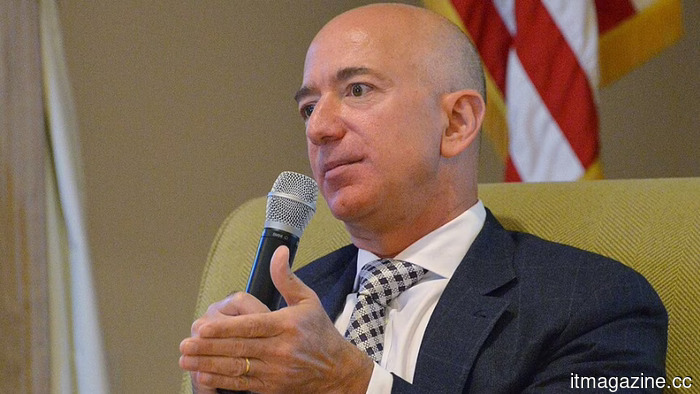 Bezos finally allows external investors into Blue Origin.
Jeff Bezos is securing approximately $10 billion for Blue Origin at a valuation of $130 billion, marking the conclusion of 26 years of self-financing as the space race surpasses even his financial capacity.
Bezos finally allows external investors into Blue Origin.
Jeff Bezos is securing approximately $10 billion for Blue Origin at a valuation of $130 billion, marking the conclusion of 26 years of self-financing as the space race surpasses even his financial capacity.
EU Parliament brings back legislation on child-abuse detection.
The European Parliament proceeded with a renewed CSAM-scanning bill through an unusual process, featuring an encryption exemption that pleased neither party.