
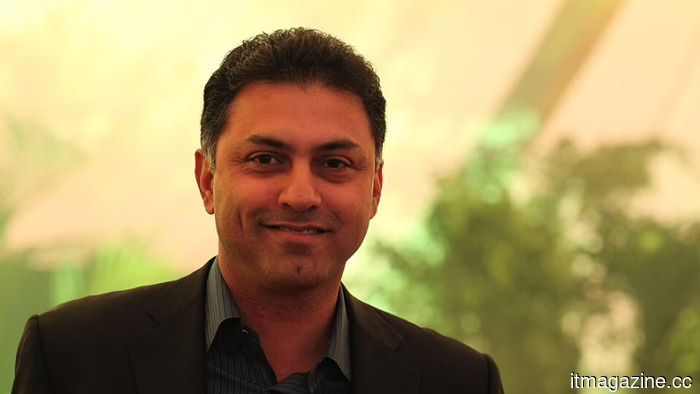
Palo Alto CEO: AI token values need to drop by as much as 90%.
Palo Alto Networks CEO Nikesh Arora expressed to CNBC that for widespread enterprise adoption of AI to occur, token prices might need to decrease by as much as 90%. He described OpenAI’s assertion of a 54% improvement in token efficiency with its GPT-5.6 model as “a good start” but insufficient. Arora emphasized that the demand for AI is "infinite" and that costs “will rationalize over time.” His statement presents a notable paradox: although per-token prices have significantly dropped, total enterprise AI expenses continue to rise, largely due to agentic usage.
During Thursday's interview with CNBC, Arora highlighted the necessity for dramatic reductions in AI operational costs before businesses can effectively implement AI on a large scale. He responded to OpenAI's announcement regarding its GPT-5.6 model's improved efficiency, stating, “I think 54% is a good start," but made it clear that much more is needed.
Arora hopes for continued advancements in efficiency over the coming years, believing that only then will mass enterprise adoption become financially feasible. Despite the current high costs, he remains optimistic about demand, asserting it is “infinite” and predicting that costs “will rationalize over time.” His perspective indicates that the market will either expand to accommodate spending or press prices downward. He suggested that as the technology becomes more efficient, budgets will likely become more manageable.
The underlying issue Arora highlights reflects a genuine challenge in enterprise AI: while per-token prices have fallen dramatically, overall costs are still increasing. In fact, prices dropped by 98%, yet enterprise AI costs have tripled. This phenomenon is attributed to agentic AI, which repeatedly calls a model to complete tasks. A single ambitious project can incur exorbitant costs; for instance, one developer had their agents accumulate a $1.3 million token bill within a month.
Consequently, lower headline prices do not necessarily equate to reduced expenses. The growth in usage often surpasses the decline in prices, resulting in higher bills regardless.
Buyers are feeling the pressure, leading to changes in behavior, including some companies imposing limits on the amount of AI usage by staff as costs escalate. From the buyer's perspective, Arora articulates a common frustration shared by many enterprises.
On a positive note for Arora, a price war is currently in progress, with DeepSeek offering a permanent 75% discount and competitors striving to keep pace. Numerous startups are also pursuing more affordable inference solutions to maximize output from their technology.
Whether these developments will achieve Arora's envisioned 90% reduction is uncertain, given that efficiency improvements could be offset by increased usage. Nonetheless, he bets that scaling will ultimately prevail, and the economics will stabilize.
At this moment, the CEO of a major cybersecurity firm is essentially conveying to AI vendors that their offerings remain too costly for the extent of usage he envisions. This message, originating from such a significant customer, is likely to resonate with the model creators.
Other articles
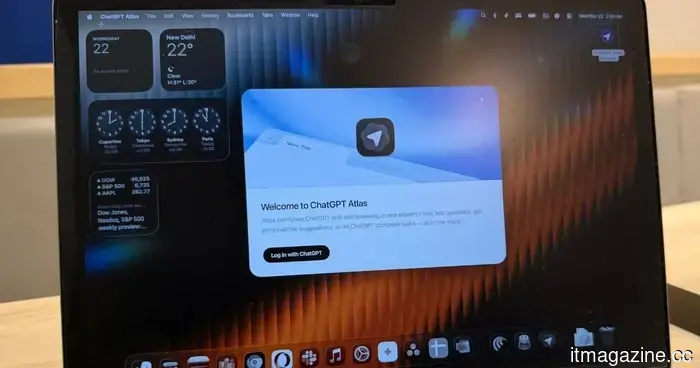 OpenAI is discontinuing the ChatGPT Atlas browser. I really enjoyed it, but it felt like a challenging journey to reach the top.
OpenAI is terminating the ChatGPT Atlas browser less than a year after its launch, as the company redirects its attention to ChatGPT Work.
OpenAI is discontinuing the ChatGPT Atlas browser. I really enjoyed it, but it felt like a challenging journey to reach the top.
OpenAI is terminating the ChatGPT Atlas browser less than a year after its launch, as the company redirects its attention to ChatGPT Work.
 INIU SnapGo Air review: A convenient power bank that I'm comfortable taking with me every day.
I became fed up with bulky chargers, but INIU came to my rescue. The SnapGo Air is a sleek, lightweight 10,000mAh magnetic power bank featuring fast Qi2.2 charging and an integrated cable that you'll genuinely want to take with you every day.
INIU SnapGo Air review: A convenient power bank that I'm comfortable taking with me every day.
I became fed up with bulky chargers, but INIU came to my rescue. The SnapGo Air is a sleek, lightweight 10,000mAh magnetic power bank featuring fast Qi2.2 charging and an integrated cable that you'll genuinely want to take with you every day.
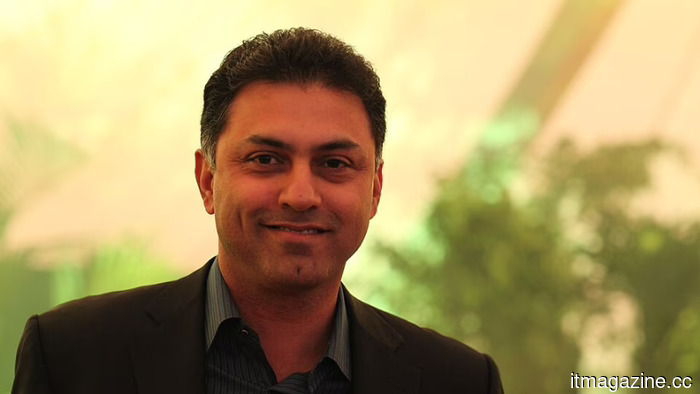 Palo Alto CEO: Prices of AI tokens need to decrease by as much as 90%
Nikesh Arora states that the costs of AI tokens must decrease by as much as 90% to achieve widespread enterprise adoption, describing OpenAI's 54% efficiency increase as merely "a good start."
Palo Alto CEO: Prices of AI tokens need to decrease by as much as 90%
Nikesh Arora states that the costs of AI tokens must decrease by as much as 90% to achieve widespread enterprise adoption, describing OpenAI's 54% efficiency increase as merely "a good start."
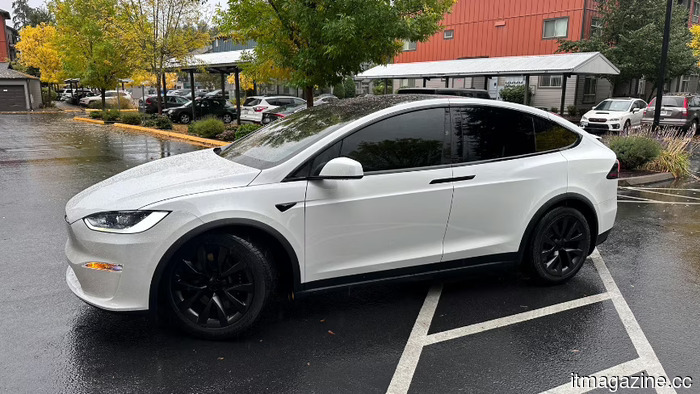 New Jersey's robotaxi legislation may prohibit Tesla due to its use of lidar.
New Jersey requires that driverless vehicles be equipped with both lidar and cameras. As a result, Tesla's camera-only Robotaxi would be excluded unless it modifies its hardware.
New Jersey's robotaxi legislation may prohibit Tesla due to its use of lidar.
New Jersey requires that driverless vehicles be equipped with both lidar and cameras. As a result, Tesla's camera-only Robotaxi would be excluded unless it modifies its hardware.
 If you're feeling exhausted from supervising ChatGPT, the new GPT-5.6 models could be the solution you need.
OpenAI has introduced GPT-5.6 Sol, Terra, and Luna, a new series of AI models designed to enhance workflow speed, reduce costs, and minimize the need for subsequent prompts.
If you're feeling exhausted from supervising ChatGPT, the new GPT-5.6 models could be the solution you need.
OpenAI has introduced GPT-5.6 Sol, Terra, and Luna, a new series of AI models designed to enhance workflow speed, reduce costs, and minimize the need for subsequent prompts.
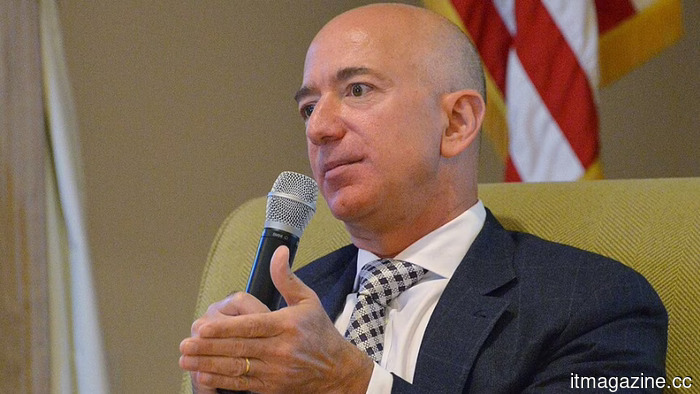 Bezos finally allows external investors into Blue Origin.
Jeff Bezos is securing approximately $10 billion for Blue Origin at a valuation of $130 billion, marking the conclusion of 26 years of self-financing as the space race surpasses even his financial capacity.
Bezos finally allows external investors into Blue Origin.
Jeff Bezos is securing approximately $10 billion for Blue Origin at a valuation of $130 billion, marking the conclusion of 26 years of self-financing as the space race surpasses even his financial capacity.
Palo Alto CEO: AI token values need to drop by as much as 90%.
Nikesh Arora highlights that the costs of AI tokens must decrease by as much as 90% for widespread enterprise adoption, stating that OpenAI's 54% efficiency improvement is merely "a good start."