
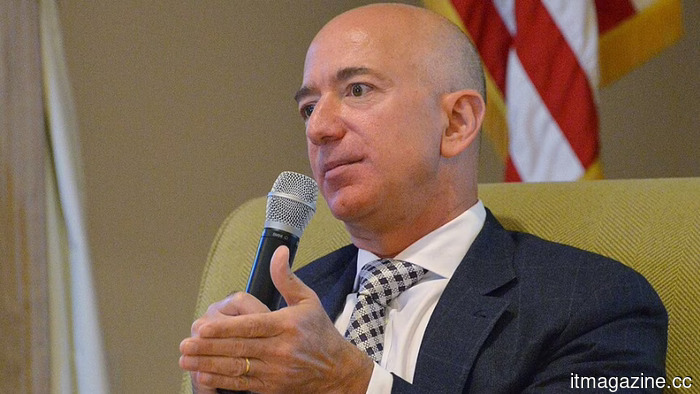
Bezos finally allows external investors into Blue Origin.
Jeff Bezos is opening Blue Origin to outside investors for the first time since its inception in 2000. The rocket company is aiming to raise around $10 billion in new funding at a pre-money valuation of $130 billion, as reported by CNBC.
For 26 years, Bezos funded the company personally, selling billions worth of Amazon stock instead of allowing shared ownership. This period of self-funding has now come to an end.
However, he is not completely withdrawing, as reports indicate that he plans to invest approximately $2 billion in this funding round. Hedge fund Coatue Management is anticipated to contribute around $4 billion, with significant interest from other institutional investors for the remainder.
The pressing question is what has prompted this shift. The straightforward answer is that maintaining a competitive position in the space race has exceeded even the resources of one of the world’s wealthiest individuals.
Blue Origin is engaged in multiple costly initiatives at the same time. It is recovering from a failed static-fire test of the New Glenn rocket, which resulted in the destruction of a launch pad, while also attempting to ramp up production of that heavy-lift rocket.
The New Glenn is essential for Blue Origin's plans for lunar and national-security missions. CEO Dave Limp has pledged to return it to flight by the end of 2026, with planned launches for NASA, Amazon's Leo satellite network, and AST SpaceMobile.
This combination of recovery efforts and production scaling, rather than the actions of any specific competitor, underscores the urgency of the funding. The wealth of the founder alone cannot sustain costs at this accelerated pace.
The context involves SpaceX, which recently achieved the largest IPO in history, reportedly raising nearly $86 billion at a valuation of around $2 trillion, while Elon Musk retains significant voting control.
SpaceX's success is attributed to its reusable rockets, Starlink, and government contracts, including a $2.29 billion contract with the Space Force. Competing for lunar and defense launches now entails spending tens of billions, not just relying on a founder's financial backing.
Following SpaceX’s IPO, investor interest in the space sector has surged, as funds that were previously directed towards SpaceX alternatives are now pursuing the actual company. Competitors like Stoke Space and Firefly have also benefited from this investment wave.
Previously, Blue Origin has received limited external funding, including a 2021 grant and a 2022 acquisition, and it has not shared a timeline for closing this funding round. Whether the $10 billion investment will help close the gap with SpaceX or simply provide temporary relief will depend much less on the funding itself and more on one critical factor: successfully returning New Glenn to the launch pad and completing its first flight.
Other articles
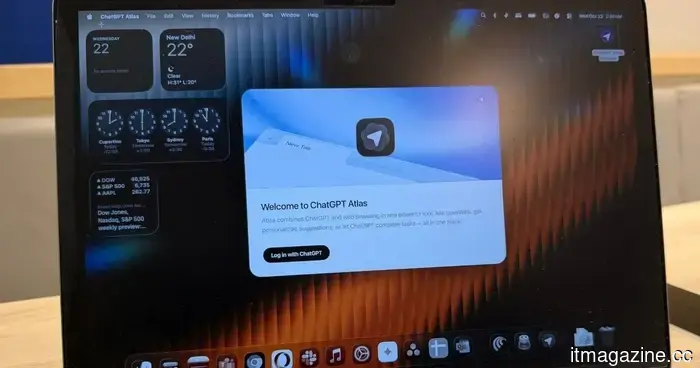 OpenAI is discontinuing the ChatGPT Atlas browser. I enjoyed it, but it was a challenging journey to succeed.
OpenAI is phasing out the ChatGPT Atlas browser less than a year after its launch, redirecting its attention to ChatGPT Work.
OpenAI is discontinuing the ChatGPT Atlas browser. I enjoyed it, but it was a challenging journey to succeed.
OpenAI is phasing out the ChatGPT Atlas browser less than a year after its launch, redirecting its attention to ChatGPT Work.
 INIU SnapGo Air review: A convenient power bank that I'm comfortable taking with me every day.
I became fed up with bulky chargers, but INIU came to my rescue. The SnapGo Air is a sleek, lightweight 10,000mAh magnetic power bank featuring fast Qi2.2 charging and an integrated cable that you'll genuinely want to take with you every day.
INIU SnapGo Air review: A convenient power bank that I'm comfortable taking with me every day.
I became fed up with bulky chargers, but INIU came to my rescue. The SnapGo Air is a sleek, lightweight 10,000mAh magnetic power bank featuring fast Qi2.2 charging and an integrated cable that you'll genuinely want to take with you every day.
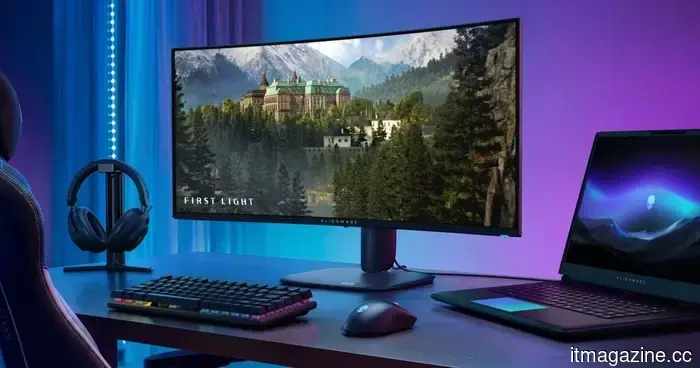 Dell’s latest Alienware monitors offer increased brightness, improved sharpness, and are more affordable than anticipated for an OLED upgrade.
Dell has introduced three new Alienware gaming monitors, highlighted by a brighter and quicker 34-inch QD-OLED model that comes with a price tag of $799.99.
Dell’s latest Alienware monitors offer increased brightness, improved sharpness, and are more affordable than anticipated for an OLED upgrade.
Dell has introduced three new Alienware gaming monitors, highlighted by a brighter and quicker 34-inch QD-OLED model that comes with a price tag of $799.99.
 Palo Alto CEO: AI token values need to drop by as much as 90%.
Nikesh Arora highlights that the costs of AI tokens must decrease by as much as 90% for widespread enterprise adoption, stating that OpenAI's 54% efficiency improvement is merely "a good start."
Palo Alto CEO: AI token values need to drop by as much as 90%.
Nikesh Arora highlights that the costs of AI tokens must decrease by as much as 90% for widespread enterprise adoption, stating that OpenAI's 54% efficiency improvement is merely "a good start."
 Slate’s new electric truck colors resemble those from a Crayola box.
Slate Auto has teamed up with Crayola to introduce five vibrant wrap kits for its budget-friendly electric truck, representing the crayon manufacturer's inaugural partnership with an automotive company.
Slate’s new electric truck colors resemble those from a Crayola box.
Slate Auto has teamed up with Crayola to introduce five vibrant wrap kits for its budget-friendly electric truck, representing the crayon manufacturer's inaugural partnership with an automotive company.
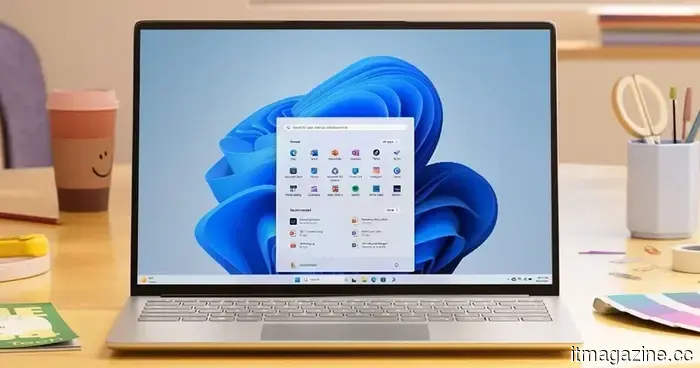 The Windows 11 Search feature is expanding, albeit by just 4 pixels.
Following enhancements to Windows 11 Search in recent updates, Microsoft might be getting ready to implement a minor design adjustment for the Search box.
The Windows 11 Search feature is expanding, albeit by just 4 pixels.
Following enhancements to Windows 11 Search in recent updates, Microsoft might be getting ready to implement a minor design adjustment for the Search box.
Bezos finally allows external investors into Blue Origin.
Jeff Bezos is securing approximately $10 billion for Blue Origin at a valuation of $130 billion, marking the conclusion of 26 years of self-financing as the space race surpasses even his financial capacity.