

Meta plans to construct a C$13 billion data center in Alberta, marking its inaugural facility in Canada.
Meta is set to establish its inaugural data centre in Canada, a 1-gigawatt facility in central Alberta, which the company estimates at C$13 billion (approximately US$9 billion), continuing its extensive expansion efforts similar to the $200 billion Hyperion campus in Louisiana.
The centre will be constructed in Sturgeon County, located northeast of Edmonton, marking Meta's 33rd data centre globally. Company executives announced the project in Calgary on Wednesday, alongside Alberta Premier Danielle Smith, whose administration has long courted Silicon Valley in the hopes of attracting a significant investment to the oil-and-gas province.
Meta has labeled this site as its largest outside the U.S., aligning with the growing capital expenditures currently transforming the industry. The construction is anticipated to take two to three years, providing jobs for over 3,000 construction workers at its peak. Additionally, Meta has committed to investing in local infrastructure and supporting area nonprofits, a common package included in large data-centre agreements, addressing criticism regarding the limited permanent job creation post-construction.
A key challenge is the provision of power, which is central to this announcement. When fully operational, the campus will require electricity equivalent to that of 800,000 homes, making electricity supply a critical issue for new AI facilities globally. To meet this demand, Meta has teamed up with Alberta-based Pembina Pipeline, which plans to develop the Greenlight Electricity Centre, a natural-gas power generation facility in Sturgeon County.
Pembina anticipates that this facility will be operational by late 2030, with the data centre expected to use around 150 million cubic feet of natural gas daily. This dependence on gas reflects a broader trend, mirrored by a Chevron gas agreement for a Texas campus and the turbine networks Meta is establishing across the U.S. The availability of inexpensive, plentiful gas in Alberta is a major reason the province aggressively promoted itself, although the timing for the plant suggests a phased operational ramp-up.
For Meta, the Alberta site represents a relatively small investment within a capital-expenditure budget approaching $145 billion for 2026. The company is urgently seeking computing resources for its Superintelligence Labs initiative, which, according to Mark Zuckerberg, aims at achieving personal superintelligence, while also exploring options to offset costs, including renting out excess capacity to other companies.
Provincial officials have described the arrangement in grand terms, with Sturgeon County highlighting it as the largest private investment in its history. Premier Smith has connected Alberta’s economic appeal to its abundant energy resources and a more lenient regulatory environment compared to neighboring regions, positioning the province as a desirable location for tech companies needing substantial computing power.
The financial landscape is part of a global increase in grid investments, with utilities pledging over a trillion dollars to meet the growing AI demand through the decade's end. However, concerns regarding water usage and impacts on the local grid—issues that have plagued data-centre projects from Utah to Louisiana—remain largely unaddressed for the Alberta site.
Meta has indicated that it will provide more information about the design and environmental impact of the campus as planning progresses, and provincial regulators will need to approve the Greenlight plant before it can be constructed. Currently, the initial phase is still years away, with the natural-gas facility not expected to be operational until late 2030.
The success of Alberta’s long-term negotiations will hinge on how swiftly Meta develops the site and whether the anticipated jobs and local investments are realized according to the timeline outlined on Wednesday. For a province focused on its energy economy, a hyperscaler willing to utilize its gas in large quantities is nearly the perfect client.
Other articles
 Recruiters pursue specialized AI positions as their own roles face potential risks.
Confronted with tools capable of screening and shortlisting in mere seconds, staffing agencies are shifting their focus to the limited and difficult-to-fill positions in the AI economy to maintain their relevance.
Alchemab secures £25 million from the British Business Bank in a groundbreaking investment in life sciences.
Cambridge biotech firm Alchemab has expanded its Series A financing by securing a £25 million investment from the British Business Bank, marking the lender's largest contribution to a life sciences company.
Recruiters pursue specialized AI positions as their own roles face potential risks.
Confronted with tools capable of screening and shortlisting in mere seconds, staffing agencies are shifting their focus to the limited and difficult-to-fill positions in the AI economy to maintain their relevance.
Alchemab secures £25 million from the British Business Bank in a groundbreaking investment in life sciences.
Cambridge biotech firm Alchemab has expanded its Series A financing by securing a £25 million investment from the British Business Bank, marking the lender's largest contribution to a life sciences company.
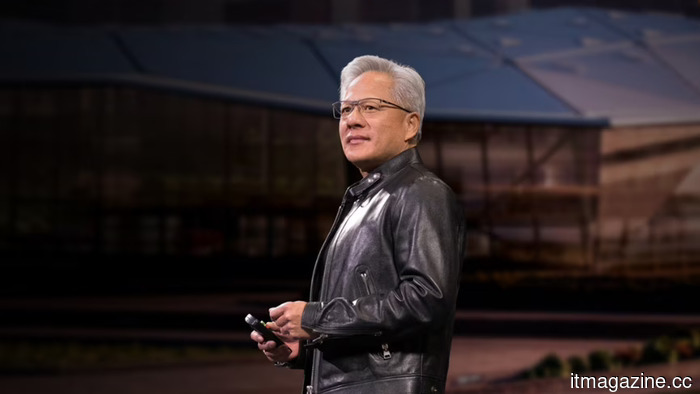 Jensen Huang mentioned that his engineers prefer creating agents to writing code.
Nvidia's CEO Jensen Huang stated that all of his engineers favor developing AI agents over coding in Python, asserting that AI is generating jobs rather than eliminating them.
Alchemab secures £25 million from the British Business Bank in a historic investment in life sciences.
Cambridge-based biotech company Alchemab has expanded its Series A funding with a £25 million investment from the British Business Bank, marking the lender's largest contribution to a life sciences firm.
Jensen Huang mentioned that his engineers prefer creating agents to writing code.
Nvidia's CEO Jensen Huang stated that all of his engineers favor developing AI agents over coding in Python, asserting that AI is generating jobs rather than eliminating them.
Alchemab secures £25 million from the British Business Bank in a historic investment in life sciences.
Cambridge-based biotech company Alchemab has expanded its Series A funding with a £25 million investment from the British Business Bank, marking the lender's largest contribution to a life sciences firm.
 A survey reveals that fifty percent of parents are concerned that their children depend excessively on AI.
A Deloitte survey conducted with 1,150 parents regarding back-to-school concerns reveals that half of them are worried their child depends too heavily on AI, while many also believe schools do not teach enough AI skills.
A survey reveals that fifty percent of parents are concerned that their children depend excessively on AI.
A Deloitte survey conducted with 1,150 parents regarding back-to-school concerns reveals that half of them are worried their child depends too heavily on AI, while many also believe schools do not teach enough AI skills.
 According to reports, Xbox has canceled the sequel to Avowed in order to prioritize a new Fallout game directed by the creator of New Vegas.
Bloomberg states that Obsidian Entertainment has redirected its focus to a new Fallout game, with Josh Sawyer, the director of Fallout: New Vegas, at the helm, leading to the cancellation of the anticipated Avowed sequel.
According to reports, Xbox has canceled the sequel to Avowed in order to prioritize a new Fallout game directed by the creator of New Vegas.
Bloomberg states that Obsidian Entertainment has redirected its focus to a new Fallout game, with Josh Sawyer, the director of Fallout: New Vegas, at the helm, leading to the cancellation of the anticipated Avowed sequel.
Meta plans to construct a C$13 billion data center in Alberta, marking its inaugural facility in Canada.
Meta is set to construct its inaugural data centre in Canada, a C$13 billion, 1-gigawatt facility located in Sturgeon County, Alberta, which will be powered by a new natural gas plant.