

New research warns that Europe’s aspirations for sovereign AI may be impeded by limitations on data centres.
Europe's pursuit of sovereignty in AI has rarely seemed more pressing; however, the necessary infrastructure to support this initiative may not be fully prepared. As the U.S. restricts access to its top-tier models and Brussels intensifies its push for European AI independence, a new survey by Onnec indicates that the continent’s aspirations could be hindered by the fundamental challenges of constructing and powering data centers.
The tighter constraints from the U.S. on advanced AI models have increased the demand for domestic alternatives, prompting European operators to regard sovereign cloud as a viable commercial opportunity instead of merely a policy discussion. Onnec's findings suggest that this change in perspective is already reflected in the industry's expectations.
The infrastructure specialist noted that 74% of data center operators see sovereign cloud as a significant opportunity for European operators within the next three years. This conclusion stems from a survey of 300 senior decision-makers—150 from the UK, 50 from Ireland, and 100 from the Nordics—carried out for Onnec by Sapio Research between May 27 and June 12, 2026. All participants were engaged in the design, management, or operation of data center facilities.
The demand supporting this optimism is tangible. Gartner projects that European expenditure on sovereign infrastructure-as-a-service will increase by 83% in 2026, rising from $6.9 billion to $12.6 billion, as part of a global sovereign cloud IaaS market valued at $80 billion this year.
Policy developments are aligned with this trend. The EU’s proposed Cloud and AI Development Act, adopted by the Commission on June 3, aims to at least triple the bloc's data center capacity within five to seven years. In tandem, the EU’s AI gigafactory initiative is anticipated to boost the demand for facilities necessary to train and operate advanced models.
Public funding is also being allocated. In April, the European Commission awarded a €180 million framework to four European providers, enabling EU institutions to procure sovereign cloud services and indicating that Brussels intends to support its statements with tangible contracts rather than mere discussions.
However, Onnec highlights a significant challenge in actual delivery. Surveyed operators cited power availability, planning delays, escalating construction costs, supply chain issues, and skills shortages as the primary barriers between demand and completed capacity. Additionally, they noted the added challenge of retrofitting active facilities to accommodate the denser racks required for AI workloads without the option of stopping operations during the upgrade process.
“Operators must transition from viewing sovereignty as merely a policy concern to recognizing it as an infrastructure challenge,” stated Matt Salter, global head of data centers at Onnec. “Sovereign cloud and AI will only become viable if the underlying infrastructure is delivered at scale.” Salter emphasized that power supply, planning, skills, and live-site upgrades would ultimately impact Europe’s ability to meet sovereign cloud demand.
These pressures are far from theoretical; some operators have already stalled UK projects due to energy costs and regulatory issues. Salter believes that new capacity cannot rely solely on greenfield sites. “New builds require time for planning, approval, powering, and construction; hence, Europe must also optimize the utilization of existing facilities,” he explained, portraying the current infrastructure as an underutilized asset.
However, retrofitting presents greater challenges. Upgrading an operational data center for AI is intricate because it cannot be simply powered down and rebuilt. Yet Onnec views this process as essential for the region to transform its ambitions into secure, scalable, and resilient capacity.
All of this occurs within a bloc striving to reduce its dependence on American infrastructure, a theme that is central to the EU’s recent tech sovereignty proposals. According to Onnec, the political determination is established; the critical question remains whether Europe can quickly establish new infrastructure, secure grid connections, and train engineers to keep pace with these ambitions.
Altri articoli
 The French antitrust investigation into Nvidia is approaching its conclusion, according to the regulator.
France's competition authority has announced that its extensive antitrust investigation into Nvidia is nearing completion, bringing the AI chip leader closer to an official decision.
The French antitrust investigation into Nvidia is approaching its conclusion, according to the regulator.
France's competition authority has announced that its extensive antitrust investigation into Nvidia is nearing completion, bringing the AI chip leader closer to an official decision.
 Thick phone or depleted nervous system?
Imagine you are in an unfamiliar city, a bill rustles in your pocket, but the smartphone screen is dead, like a mammoth. A power outlet is a myth, the power bank was left at home. For 48.7% of Russians, this nightmare is comparable in stress level to having no money at all.
Thick phone or depleted nervous system?
Imagine you are in an unfamiliar city, a bill rustles in your pocket, but the smartphone screen is dead, like a mammoth. A power outlet is a myth, the power bank was left at home. For 48.7% of Russians, this nightmare is comparable in stress level to having no money at all.
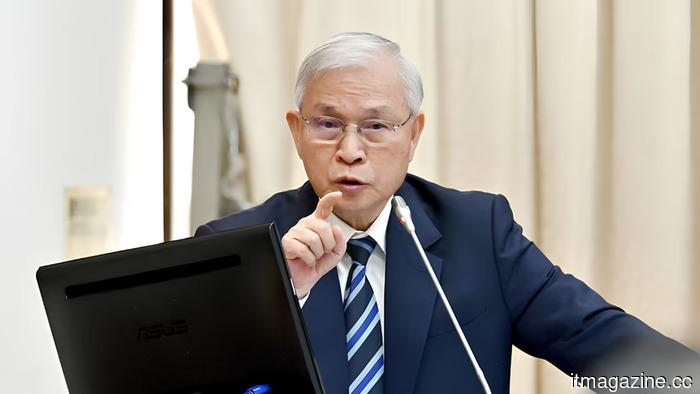 The head of Taiwan's central bank emphasizes the need for prudence regarding leverage as the AI stock surge intensifies.
Governor Yang Chin-long cautioned Taiwan investors about the dangers of excessive borrowing to invest in AI-driven stocks, while downplaying concerns regarding systemic risk.
The head of Taiwan's central bank emphasizes the need for prudence regarding leverage as the AI stock surge intensifies.
Governor Yang Chin-long cautioned Taiwan investors about the dangers of excessive borrowing to invest in AI-driven stocks, while downplaying concerns regarding systemic risk.
 Quant fund Qube is bringing on human stock pickers to work alongside its algorithms.
Qube Research & Technologies, one of the largest quantitative investment funds in London, is assembling an internal team of human stock pickers under the leadership of Stephen Irvine.
Quant fund Qube is bringing on human stock pickers to work alongside its algorithms.
Qube Research & Technologies, one of the largest quantitative investment funds in London, is assembling an internal team of human stock pickers under the leadership of Stephen Irvine.
 Quant fund Qube is recruiting human stock selectors to work alongside its algorithms.
Qube Research & Technologies, one of the largest quantitative funds in London, is assembling an internal team of human stock selectors under the leadership of Stephen Irvine.
Quant fund Qube is recruiting human stock selectors to work alongside its algorithms.
Qube Research & Technologies, one of the largest quantitative funds in London, is assembling an internal team of human stock selectors under the leadership of Stephen Irvine.
 A new study indicates that your child isn't the only one with a phone addiction.
A recent study published in Frontiers in Psychology indicates that excessive smartphone usage by parents may diminish emotional connections with their children, potentially resulting in lasting developmental and psychological impacts.
A new study indicates that your child isn't the only one with a phone addiction.
A recent study published in Frontiers in Psychology indicates that excessive smartphone usage by parents may diminish emotional connections with their children, potentially resulting in lasting developmental and psychological impacts.
New research warns that Europe’s aspirations for sovereign AI may be impeded by limitations on data centres.
An Onnec survey reveals that 74% of operators view sovereign cloud as a significant opportunity, although challenges related to power, planning, and retrofitting may hinder progress.