

The French antitrust investigation into Nvidia is approaching its conclusion, according to the regulator.
France’s competition authority has indicated that its extensive investigation into Nvidia is nearing completion, bringing the world’s leading chipmaker closer to a formal assessment regarding its influence over the artificial intelligence hardware market. The company has long been expected to face antitrust allegations in France, and any ruling could establish an early European precedent for regulating AI chips.
“We are approaching the conclusion of the investigation,” Umberto Berkani, general rapporteur of the Autorité de la concurrence, informed reporters on Thursday, according to comments shared by Reuters. He did not provide a specific timeline for a decision.
The inquiry began in September 2023 when French authorities searched Nvidia’s local offices as part of a broader investigation into competition within the cloud computing sector. This search eventually evolved into a specific antitrust case focused on the chipmaker.
In mid-2024, the authority released a market study on competition in generative AI, highlighting concerns regarding the industry’s reliance on Nvidia’s CUDA software, which serves as the programming interface linking developers to its graphics processors. Later that year, Reuters reported that the regulator was preparing to charge the company, potentially making France the first jurisdiction to do so.
The investigation is centered on two main issues. One pertains to the dependence on CUDA, the only toolkit fully compatible with the GPUs that are now crucial for training large AI models. The other concerns Nvidia’s investments in AI cloud providers like CoreWeave, raising concerns that this could further concentrate power in an already dominated market. Nvidia reportedly holds over 70% of AI accelerator sales, a share that analysts anticipate will increase with each new generation of chips.
This dominance has attracted attention from regulators beyond France, with oversight bodies in the United States, the European Union, and China examining various aspects of Nvidia’s conduct. It has also contributed to broader worries about European AI sovereignty and the continent’s significant reliance on U.S. hardware.
The pace of the French case has been intentionally slow, reflecting the challenges of applying long-standing competition laws to a burgeoning market that barely existed when these regulations were established. Should a statement of objections be issued, it would not imply guilt; rather, it would serve as a formal charge that the company can contest, and such cases typically take over a year to resolve from that point.
Under French legislation, a company found to have abused its dominant position could face fines of up to 10% of its global annual revenue, potentially amounting to billions of dollars given Nvidia’s scale. The authority also has the option to impose behavioral remedies or accept binding commitments that do not involve financial penalties.
Moving forward, the process will become procedural. If the case is deemed strong, the investigative team will issue a formal statement of objections detailing its claims, after which Nvidia will have the opportunity to respond both in writing and at an oral hearing. A separate panel, referred to as the authority’s college, would then evaluate the evidence and determine whether an infringement occurred and what, if any, penalties should be applied. Berkani did not confirm whether charges were inevitable, only noting that the investigative stage was nearly finished.
Nvidia has previously asserted that it adheres to competition regulations and competes based on the quality of its technology. The company did not provide immediate public commentary on Thursday’s statements.
For Europe, the implications extend beyond a solitary fine. Policymakers in the region are increasingly concerned about the heavy dependence on a singular chip supplier, which has fed into the EU’s broader push for technological sovereignty. A ruling from France against Nvidia, regardless of the outcome, would represent one of the first significant tests of whether antitrust regulations can effectively influence the AI supply chain.
Other articles
 The Halide 3.1 update introduces improved photo straightening, a warmer appearance, and enhanced focus tapping features.
Halide 3.1 introduces perspective correction, a fresh Scarlet color look, raw-only shooting capability, and improved focus taps, arriving just six weeks after the release of Mark III.
The Halide 3.1 update introduces improved photo straightening, a warmer appearance, and enhanced focus tapping features.
Halide 3.1 introduces perspective correction, a fresh Scarlet color look, raw-only shooting capability, and improved focus taps, arriving just six weeks after the release of Mark III.
 The recent update for Google Home simplifies the process of initiating automations.
Google Home version 4.20 introduces pre-configured automations that can be activated with a simple tap, simplifying one of the app's most beneficial features for users new to automation.
The recent update for Google Home simplifies the process of initiating automations.
Google Home version 4.20 introduces pre-configured automations that can be activated with a simple tap, simplifying one of the app's most beneficial features for users new to automation.
 DuckDuckGo's browser has now started blocking the YouTube ads that users dislike.
DuckDuckGo's browser is now capable of blocking most video advertisements on YouTube, although users might experience increased buffering times or occasional glitches.
DuckDuckGo's browser has now started blocking the YouTube ads that users dislike.
DuckDuckGo's browser is now capable of blocking most video advertisements on YouTube, although users might experience increased buffering times or occasional glitches.
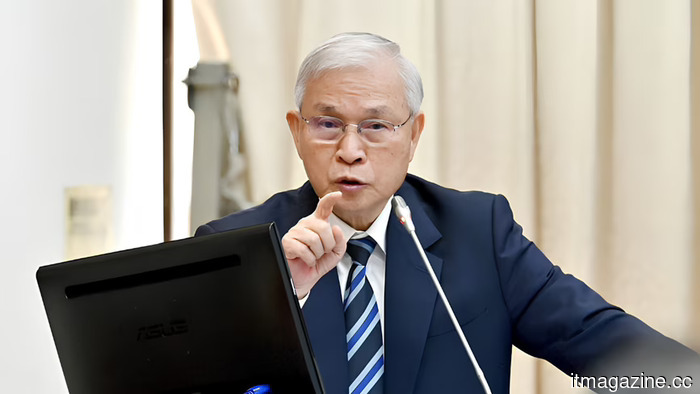 The head of Taiwan's central bank calls for carefulness regarding leverage as the surge in AI stocks continues to gain momentum.
Governor Yang Chin-long cautioned Taiwanese investors about the dangers of over-leveraging to pursue AI-driven stocks, while also downplaying concerns about systemic risk.
The head of Taiwan's central bank calls for carefulness regarding leverage as the surge in AI stocks continues to gain momentum.
Governor Yang Chin-long cautioned Taiwanese investors about the dangers of over-leveraging to pursue AI-driven stocks, while also downplaying concerns about systemic risk.
 X might soon notify you when a post you liked or shared is subjected to fact-checking.
X is developing a new feature that will alert users directly when a post they have liked, replied to, or reposted receives a Community Note.
X might soon notify you when a post you liked or shared is subjected to fact-checking.
X is developing a new feature that will alert users directly when a post they have liked, replied to, or reposted receives a Community Note.
 Apple supplier Luxshare sees a decline in its record debut on the Hong Kong stock exchange.
Luxshare dropped by as much as 9.6% on its debut after securing $3.1 billion in Hong Kong's largest listing of 2026, marking a lackluster start for the Apple supplier.
Apple supplier Luxshare sees a decline in its record debut on the Hong Kong stock exchange.
Luxshare dropped by as much as 9.6% on its debut after securing $3.1 billion in Hong Kong's largest listing of 2026, marking a lackluster start for the Apple supplier.
The French antitrust investigation into Nvidia is approaching its conclusion, according to the regulator.
France's competition authority has announced that its extensive antitrust investigation into Nvidia is nearing completion, bringing the AI chip leader closer to an official decision.