

The French antitrust investigation into Nvidia is approaching its conclusion, according to the regulatory authority.
France’s competition authority has indicated that its prolonged investigation into Nvidia is nearing completion, bringing the world’s leading chipmaker closer to a formal assessment regarding its influence in the artificial intelligence hardware market. The company has long been expected to confront antitrust charges in France, and any outcome could establish a preliminary European standard for the regulation of AI chips.
“We are approaching the conclusion of the investigation,” stated Umberto Berkani, the general rapporteur of the Autorité de la concurrence, during a press conference on Thursday, as reported by Reuters. He did not specify a timeline for a ruling.
This case originated in September 2023, when French authorities conducted a raid on Nvidia’s local offices as part of a wider investigation into competition within the cloud computing industry. This initial search later evolved into a focused antitrust case involving the chipmaker itself.
In mid-2024, the authority released a market analysis on competition in generative AI, expressing concerns about the industry’s reliance on Nvidia’s CUDA software, which serves as the programming layer that connects developers to its graphics processors. Later that year, Reuters reported that the regulator was preparing to charge the company, which would mark France as the first authority to do so internationally.
Two central issues are being examined in the investigation. The first is the dependence on CUDA, which is currently the sole toolkit that is fully compatible with GPUs necessary for training large AI models. The second pertains to Nvidia’s network of investments in AI cloud providers like CoreWeave, which regulators fear could further concentrate an already dominated market in its favor. Estimates suggest Nvidia holds over 70% of the AI accelerator market share, a proportion that some analysts expect to increase with each new generation of chips.
This dominance has caught the attention of regulators beyond France, with authorities in the United States, the European Union, and China scrutinizing various aspects of its business practices. This situation has also raised broader concerns about European AI sovereignty and the continent’s heavy reliance on American-made hardware.
The French investigation has progressed slowly by intention, highlighting the challenges of applying long-established competition laws to a market that barely existed when these regulations were formulated. A statement of objections, if issued, would not constitute a declaration of wrongdoing but would serve as a formal accusation that the company can contest; such cases often require a year or more to resolve after reaching that stage.
Under French law, a company found guilty of abusing a dominant market position can face fines up to 10% of its global annual revenue, a figure that could amount to billions of dollars considering Nvidia’s size. The authority also has the option to impose behavioral remedies or accept binding commitments that avoid penalties.
The next steps are procedural. If the case is deemed robust, the authority’s investigative team would release a formal statement of objections detailing its accusations, after which Nvidia would be afforded time to respond both in writing and at an oral hearing. A separate group, the authority’s college, would then evaluate the evidence and determine if an infringement occurred and what penalties, if any, should be applied. Berkani did not confirm whether charges were imminent, stating only that the investigative phase is nearly finished.
Nvidia has previously asserted its compliance with competition regulations and its competitive edge lying in the quality of its technology. The company did not immediately respond publicly to Berkani’s comments made on Thursday.
For Europe, the implications extend beyond a single financial penalty. Policymakers throughout the region have become increasingly concerned about the continent’s reliance on a single chip supplier, a worry that has contributed to the EU’s broader push for technological sovereignty. A ruling against Nvidia in France, regardless of the outcome, would provide one of the first concrete assessments of whether antitrust measures can effectively influence the AI supply chain.
Other articles
 Is the Galaxy Z Flip 8 potentially Samsung's final compact foldable? A recent leak suggests that it could be.
The Galaxy Z Flip 8 hasn't arrived yet, but a new rumor has fans speculating that Samsung's popular compact foldable may be coming to an end.
Is the Galaxy Z Flip 8 potentially Samsung's final compact foldable? A recent leak suggests that it could be.
The Galaxy Z Flip 8 hasn't arrived yet, but a new rumor has fans speculating that Samsung's popular compact foldable may be coming to an end.
 New research warns that Europe’s aspirations for sovereign AI may be impeded by limitations on data centres.
An Onnec survey reveals that 74% of operators view sovereign cloud as a significant opportunity, although challenges related to power, planning, and retrofitting may hinder progress.
New research warns that Europe’s aspirations for sovereign AI may be impeded by limitations on data centres.
An Onnec survey reveals that 74% of operators view sovereign cloud as a significant opportunity, although challenges related to power, planning, and retrofitting may hinder progress.
 X might soon notify you when a post you liked or shared is subjected to fact-checking.
X is developing a new feature that will alert users directly when a post they have liked, replied to, or reposted receives a Community Note.
X might soon notify you when a post you liked or shared is subjected to fact-checking.
X is developing a new feature that will alert users directly when a post they have liked, replied to, or reposted receives a Community Note.
 Apple supplier Luxshare experiences a decline in its historic debut on the Hong Kong stock market.
Luxshare dropped by as much as 9.6% on its debut following its $3.1 billion raise in the largest listing in Hong Kong for 2026, marking a subdued beginning for the Apple supplier.
Apple supplier Luxshare experiences a decline in its historic debut on the Hong Kong stock market.
Luxshare dropped by as much as 9.6% on its debut following its $3.1 billion raise in the largest listing in Hong Kong for 2026, marking a subdued beginning for the Apple supplier.
 The Halide 3.1 update introduces improved photo straightening, a warmer appearance, and enhanced focus tapping features.
Halide 3.1 introduces perspective correction, a fresh Scarlet color look, raw-only shooting capability, and improved focus taps, arriving just six weeks after the release of Mark III.
The Halide 3.1 update introduces improved photo straightening, a warmer appearance, and enhanced focus tapping features.
Halide 3.1 introduces perspective correction, a fresh Scarlet color look, raw-only shooting capability, and improved focus taps, arriving just six weeks after the release of Mark III.
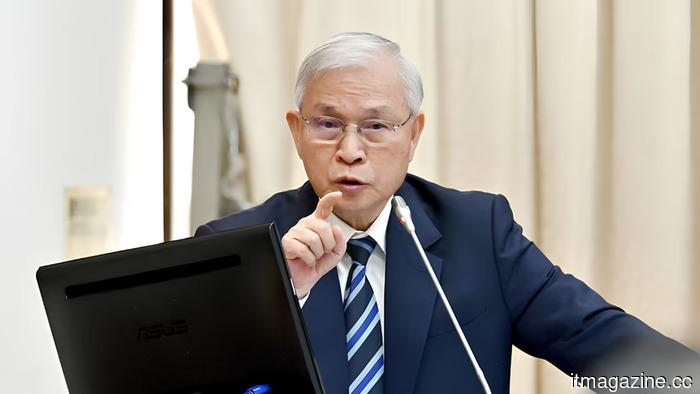 The head of Taiwan's central bank emphasizes the need for prudence regarding leverage as the AI stock surge intensifies.
Governor Yang Chin-long cautioned Taiwan investors about the dangers of excessive borrowing to invest in AI-driven stocks, while downplaying concerns regarding systemic risk.
The head of Taiwan's central bank emphasizes the need for prudence regarding leverage as the AI stock surge intensifies.
Governor Yang Chin-long cautioned Taiwan investors about the dangers of excessive borrowing to invest in AI-driven stocks, while downplaying concerns regarding systemic risk.
The French antitrust investigation into Nvidia is approaching its conclusion, according to the regulatory authority.
France's competition authority has announced that its extended antitrust investigation into Nvidia is nearing completion, bringing the AI chip leader closer to an official decision.