

Thick phone or depleted nervous system?
Imagine you are in an unfamiliar city, a bill rustling in your pocket, but the smartphone screen is dead, like a mammoth. A power outlet is a myth, and the power bank was left at home. For 48.7% of Russians, this nightmare is comparable in stress level to having no money at all.
This is no joke about "oh, the battery died." These are the results of a recent survey conducted by the brand realme, which paints a portrait of the average user who is in a permanent struggle for battery percentage.
The bridge between dream and reality is 1000 mAh
The main paradox of our time lies in the numbers. On one hand, almost two-thirds of respondents (63.7%) carry smartphones with batteries smaller than 6000 mAh. Some squeeze into the 4000–4999 mAh range, while the most desperate have a battery "like a brick from the noughties," less than 4000 mAh.
However, when people were asked: "What if you could have a larger capacity without the extra weight, thickness, and cost?" — that's when the imagination ran wild. Almost 60% of the votes went for batteries of 7000 mAh and above. If rounded, 76% dream of a threshold of 6000 mAh. Only 17% of respondents have such a resilient nervous system that they are satisfied with the current state of affairs. It turns out that most of us want to live large but are currently settling for what we have, all while feeling anxious.
A day without charging is a feat
Formally, many have enough charge until the evening, but the survey revealed a harsh truth. Only one in five (22.3%) ends the day with a comfortable energy reserve. The rest are people who look at 2% by evening as if it were the dollar rate before the weekend. They either save every milliamp or frantically search for an outlet.
This is confirmed by charging statistics. Almost half of the respondents (46.6%) plug their phone into a charger twice a day or more. "Surviving until evening" in this context sounds less like an achievement and more like a sentence. This is not life, but a dance with a tambourine around percentages.
Power bank as a new family member
Dependency on the power grid has turned into a background mode of existence. You might be surprised, but 71% of respondents use power banks in one way or another. Some carry them all the time (12.2%), some take them along like an umbrella, "just in case" (31.4%), while a third simply keep one in their bag for peace of mind, using it almost never. Only 29% of proud loners do not use external batteries at all, apparently preferring to live on the edge.
The anxiety when the charge drops is particularly telling. Most start to panic already at 10–30%, and only 22.5% show remarkable patience, waiting for the red icon. Additionally, 67% occasionally charge their phone "just in case," even when it still has power. This is pure psychosomatic behavior regarding charging.
Battery aging is no joy
Battery degradation is something manufacturers prefer to remain silent about, but users feel it in their bones. More than two-thirds (67.3%) have encountered the issue that after a couple of years, their smartphone can no longer handle the load. And you know how the problem is solved? Almost half (45.2%) go and buy a new phone. This is an expensive pleasure simply because the battery has "tired." Only 21.4% think to take the device for a battery replacement. The rest either suffer and use a power bank or don’t even know what to do.
And this is a direct hint: if the phone initially had 7000–8000 mAh, even after a drop of 20–30%, it would still outperform new models with their "basic" 5000 mAh.
Where do the amps go?
We asked people about the appetite of applications. The perennial leader in energy consumption is video and streaming (53.1%). Social networks are close behind (49.7%). Notably, a constantly active VPN (25.9%) is highlighted, which has become as common as morning coffee, yet consumes battery power just as heavily as demanding games. Modern life is simply designed to drain the battery faster than you can say "hello."
Read also
Pavel Tsiporin: "Technologies should be human-centered, and solutions should be explainable"
The more government services operate automatically, the higher the cost of errors in data, integrations, and algorithms. For Yugra, digital transformation today is no longer about launching separate IT projects, but about managing a unified framework where public administration, education, healthcare, ecology, AI, and infrastructure are interconnected. Pavel Tsiporin, Deputy Governor of the Khanty-Mansi Autonomous Okrug — Yugra, explains to IT-World how the region is moving away from "patchwork automation," where humans are left in the decision-making loop, and why Yugra's own digital solutions are becoming sought after in other regions.
Capacity solves everything
As a result, when respondents were asked to assess the impact of battery capacity on their purchase decision, almost 48% gave it the highest scores ("it has a strong influence" or "it's a key criterion"). Only 2.9% are indifferent to this parameter. This means that the final argument in the debate of "design or battery" increasingly favors the latter.
Image: Press service of realme
In fact, this is precisely the problem that the company realme focused on when it introduced the P4 line in Russia. The P4 and P4 Lite models already feature silicon-carbon giants with 7000 mAh, while the P4x model boasts a whopping 8000 mAh. Apparently, the engineers decided it was better to give people the chance to forget about the outlet than to listen to their lamentations about a dead phone in an unfamiliar city. Judging by the survey, this is exactly what the doctor ordered.


Other articles
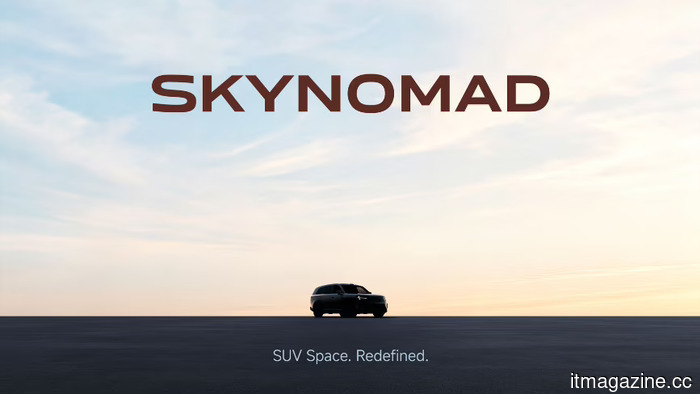 Xiaomi introduces the Sky Nomad, a square-shaped SUV lineup aimed at capturing the market for family cars in China.
Xiaomi has announced the Sky Nomad, a new SUV series that will feature an extended-range N90 equipped with a rooftop tent, as it aims to compete with Li Auto and Aito in the Chinese market.
Xiaomi introduces the Sky Nomad, a square-shaped SUV lineup aimed at capturing the market for family cars in China.
Xiaomi has announced the Sky Nomad, a new SUV series that will feature an extended-range N90 equipped with a rooftop tent, as it aims to compete with Li Auto and Aito in the Chinese market.
 Recruiters pursue specialized AI positions as their own roles are increasingly at risk.
Confronted with tools capable of screening and shortlisting in mere seconds, staffing agencies are shifting their focus to the limited, difficult-to-fill positions within the AI sector to maintain their relevance.
Recruiters pursue specialized AI positions as their own roles are increasingly at risk.
Confronted with tools capable of screening and shortlisting in mere seconds, staffing agencies are shifting their focus to the limited, difficult-to-fill positions within the AI sector to maintain their relevance.
 Thick phone or exhausted nervous system?
Imagine you are in an unfamiliar city, a bill rustling in your pocket, but the smartphone screen is dead, like a mammoth. A power outlet is a myth, and the power bank was left at home. For 48.7% of Russians, this nightmare is comparable in stress level to having no money at all.
Thick phone or exhausted nervous system?
Imagine you are in an unfamiliar city, a bill rustling in your pocket, but the smartphone screen is dead, like a mammoth. A power outlet is a myth, and the power bank was left at home. For 48.7% of Russians, this nightmare is comparable in stress level to having no money at all.
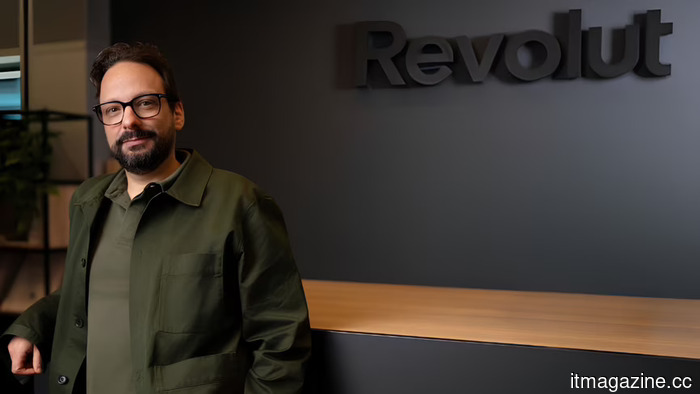 Revolut appoints former Chase UK chief Kuba Fast to head its European banking operations.
Revolut has appointed Kuba Fast, the former head of Chase UK, as the CEO of Revolut Bank UAB and its European operations, taking over from Joe Heneghan.
Revolut appoints former Chase UK chief Kuba Fast to head its European banking operations.
Revolut has appointed Kuba Fast, the former head of Chase UK, as the CEO of Revolut Bank UAB and its European operations, taking over from Joe Heneghan.
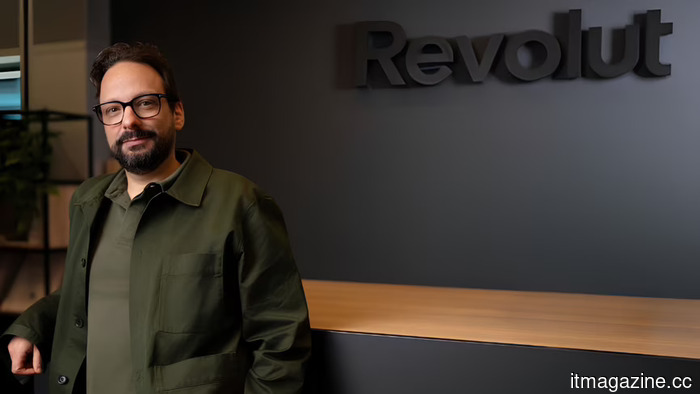 Revolut appoints former Chase UK chief Kuba Fast to head its European banking operations.
Revolut has appointed Kuba Fast, the former chief of Chase UK, as the new CEO of Revolut Bank UAB and its European operations, succeeding Joe Heneghan.
Revolut appoints former Chase UK chief Kuba Fast to head its European banking operations.
Revolut has appointed Kuba Fast, the former chief of Chase UK, as the new CEO of Revolut Bank UAB and its European operations, succeeding Joe Heneghan.
 U.S. states may file a lawsuit next week to impede Paramount's $110 billion acquisition of Warner Bros.
Sources informed Reuters that California, New York, and other states might file a lawsuit as early as next week to prevent Paramount's $110 billion deal with Warner Bros. Discovery.
U.S. states may file a lawsuit next week to impede Paramount's $110 billion acquisition of Warner Bros.
Sources informed Reuters that California, New York, and other states might file a lawsuit as early as next week to prevent Paramount's $110 billion deal with Warner Bros. Discovery.
Thick phone or depleted nervous system?
Imagine you are in an unfamiliar city, a bill rustles in your pocket, but the smartphone screen is dead, like a mammoth. A power outlet is a myth, the power bank was left at home. For 48.7% of Russians, this nightmare is comparable in stress level to having no money at all.