

Meta’s newest AI model, Muse Spark 1.1, has the capability to operate your computer on your behalf.
Meta
AI assistants have made significant advancements in answering questions and guiding us through complex tasks. However, the next development in AI seeks something bolder: performing those tasks on our behalf.
This concept is at the core of Meta’s new Muse Spark 1.1. Rather than just instructing you on which buttons to press, the model is designed to operate your computer for you. Whether it involves searching across various websites, completing forms, or switching between applications, Meta claims that Muse Spark 1.1 can navigate software similarly to a person, opting for the quickest route to accomplish tasks. This marks a significant evolution from merely conversational AI to action-oriented AI.
The age of point-and-click AI has begun.
The most significant enhancement with Muse Spark 1.1 is its ability to take command of the task itself. The company asserts that the model is designed to function across desktop applications, web browsers, and even mobile platforms. Depending on the most efficient approach, it can either engage with apps as you would—clicking buttons and navigating menus—or automate the process by generating scripts behind the scenes.
For example, when arranging dinner with friends, an AI agent could handle most of the planning. Instead of switching between Google Maps, restaurant websites, and your group chat, it could compare venues, check opening hours, compile crucial details, and provide you with the best options. You would still make the final decision, but the tedious groundwork would already be taken care of.
This is the direction in which the AI race is progressing. Companies are moving away from just developing chatty chatbots and are striving to create assistants that can genuinely accomplish tasks. Muse Spark 1.1 also benefits from a substantial memory upgrade, with support for a context window of up to one million tokens, allowing it to track extensive conversations, large documents, and intricate projects without requiring constant refreshers.
Can it truly handle the complex scenarios?
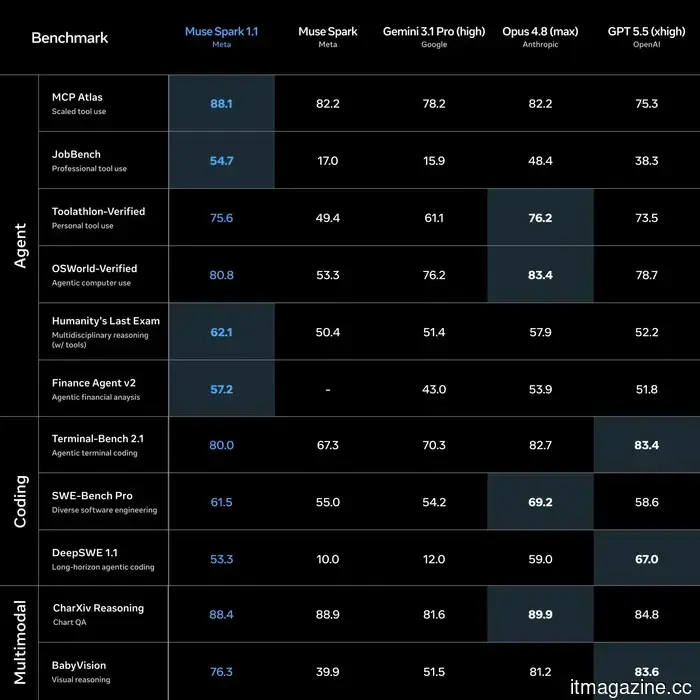
As with every significant AI launch, Muse Spark 1.1 arrives boasting a collection of benchmark achievements. Meta claims the model performs well against some leading AI names in coding and agent-focused evaluations, even surpassing several competitors. While these results are undoubtedly impressive, benchmarks alone do not provide the complete picture. What truly matters is the model’s performance outside of the controlled testing environment. Can it browse multiple websites without losing focus? Will it adjust if a webpage changes unexpectedly? Can developers rely on it to navigate large codebases without needing ongoing oversight? These are the critical questions that will determine the practical utility of Muse Spark 1.1.
Meta is offering developers the opportunity to assess its capabilities firsthand. Muse Spark 1.1 is now accessible in public preview through the new Meta Model API, allowing developers to create applications and test the model with real-world scenarios. Whether Muse Spark 1.1 becomes an indispensable AI assistant remains to be seen. Nonetheless, one trend is unmistakable: the competition has shifted from creating chatbots that generate better responses to building AI that can effectively tackle repetitive tasks, allowing users to focus on other matters.
Shimul is a contributor at Digital Trends, with over five years of experience in the tech field.
If you’re weary of managing ChatGPT, the new GPT-5.6 models might be the solution.
OpenAI appears to introduce a new AI model every few months, and today is no exception. The company has officially launched the GPT-5.6 family, which includes three new models for ChatGPT, Codex, and its API. The main highlight is GPT-5.6 Sol, accompanied by Terra and Luna, which aim to provide strong performance at a reduced cost.
The days of endless follow-up prompts may soon be over.
AI security cameras may eventually recognize your walk before identifying your face.
A new AI gait system tracks body movement through skeletal keypoints, targeting long-range identity verification where facial scans and fingerprints are inadequate.
Traditionally, security cameras focus on faces. However, recent research suggests they might soon incorporate another characteristic: the subtle behaviors evident in how a person walks. A paper published in the International Journal of Reasoning-based Intelligent Systems introduces SKDMap-Net, a gait recognition system designed to identify individuals based on walking videos, even if the camera fails to capture a clear view of their face. Instead of depending on a close-up scan, it analyzes body movements from one frame to the next.
A 20-second 3D printer breakthrough comes with a typical scientific caveat.
This process can rapidly create intricate microstructures compared to some laser-based techniques, but achieving full three-dimensional control is still a work in progress.
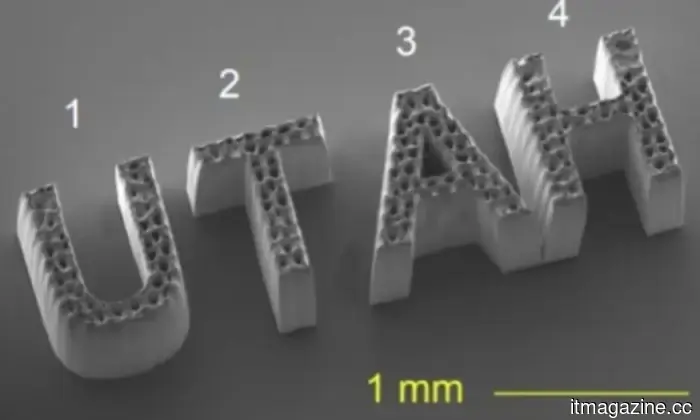
A 3D printer capable of producing a structure in about 20 seconds may seem like an overly ambitious claim. The innovative aspect is indeed valid. However, before anyone starts envisioning instant replacement parts, there’s a catch. Researchers at the University of Utah have showcased a holographic 3D printing technique that solidifies tiny structures in a single exposure, rather than building them



Other articles
 Claude Reflect has arrived. It's the annual Wrapped, but featuring Anthropic's AI.
Anthropic introduced Claude Reflect, a usage dashboard that monitors your AI activities over time and then prompts you to consider if you want to reduce usage.
Claude Reflect has arrived. It's the annual Wrapped, but featuring Anthropic's AI.
Anthropic introduced Claude Reflect, a usage dashboard that monitors your AI activities over time and then prompts you to consider if you want to reduce usage.
 AMD's CTO explains the necessity for additional CPUs for agentic AI.
At RAISE, AMD's Mark Papermaster stated that agentic AI places greater emphasis on CPUs rather than solely on GPUs, which he believes supports AMD's pursuit of a trillion-dollar valuation.
AMD's CTO explains the necessity for additional CPUs for agentic AI.
At RAISE, AMD's Mark Papermaster stated that agentic AI places greater emphasis on CPUs rather than solely on GPUs, which he believes supports AMD's pursuit of a trillion-dollar valuation.
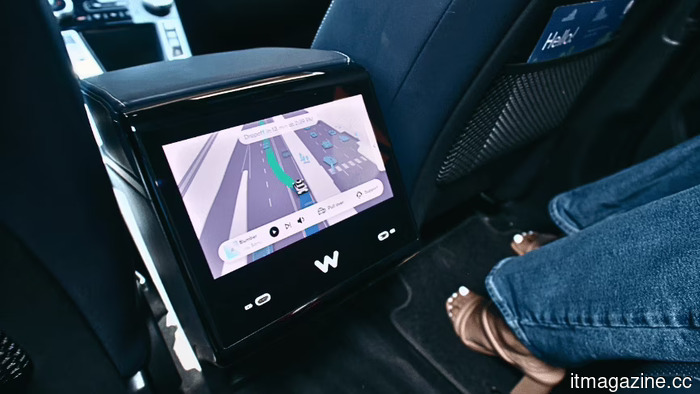 A Waymo reported two teenagers engaging in joyriding to the police.
A Waymo robotaxi alerted the police about two teenagers consuming alcohol and firing toy guns, as the company contends with a regulatory delay in California regarding who is permitted to use its vehicles.
A Waymo reported two teenagers engaging in joyriding to the police.
A Waymo robotaxi alerted the police about two teenagers consuming alcohol and firing toy guns, as the company contends with a regulatory delay in California regarding who is permitted to use its vehicles.
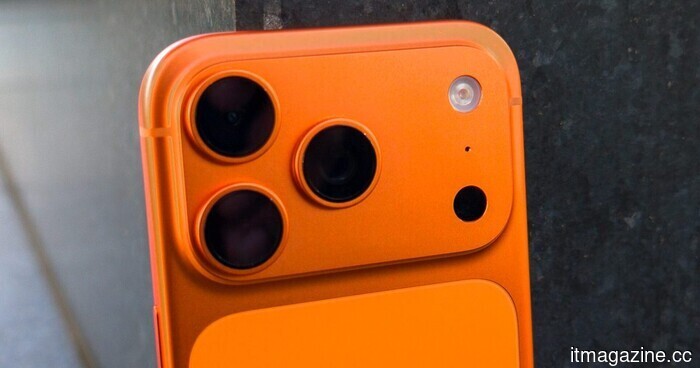 The speculations regarding a $300 price increase for the iPhone 18 Pro series appear to be becoming more plausible.
A third supply chain analysis corroborates what the WSJ and IDC have previously indicated: the iPhone 18 Pro Max is experiencing a notable rise in its bill of materials (BOM).
The speculations regarding a $300 price increase for the iPhone 18 Pro series appear to be becoming more plausible.
A third supply chain analysis corroborates what the WSJ and IDC have previously indicated: the iPhone 18 Pro Max is experiencing a notable rise in its bill of materials (BOM).
 Your phone isn't attempting to contaminate your water, but influencers have discovered a $50 solution regardless.
Influencers are marketing $50 EMF straws as a safeguard against daily electronics, yet the supporting evidence is scarce, and the actual offering might be just technology-induced anxiety disguised as wellness.
Your phone isn't attempting to contaminate your water, but influencers have discovered a $50 solution regardless.
Influencers are marketing $50 EMF straws as a safeguard against daily electronics, yet the supporting evidence is scarce, and the actual offering might be just technology-induced anxiety disguised as wellness.
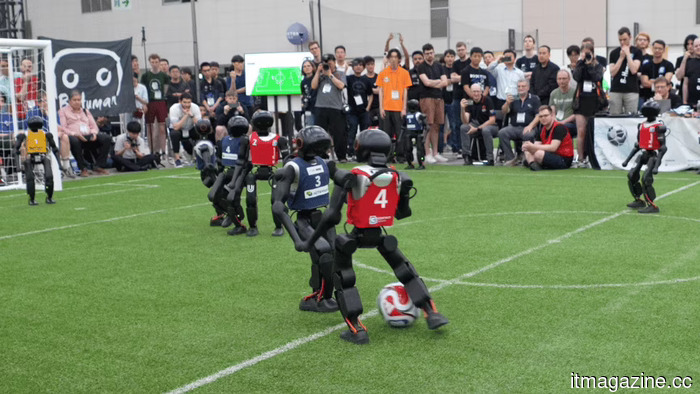 Robots dominated RoboCup 2026, and they have their sights set on the human World Cup.
Beijing's Booster Robotics fueled all the victorious teams at RoboCup 2026 in South Korea. The objective of the sport is to surpass the human World Cup champions by the year 2050.
Robots dominated RoboCup 2026, and they have their sights set on the human World Cup.
Beijing's Booster Robotics fueled all the victorious teams at RoboCup 2026 in South Korea. The objective of the sport is to surpass the human World Cup champions by the year 2050.
Meta’s newest AI model, Muse Spark 1.1, has the capability to operate your computer on your behalf.
Meta is intensifying its focus on AI agents with Muse Spark 1.1, a model that goes beyond just answering questions — it can utilize apps, surf the web, and even control your computer to perform tasks for you.