
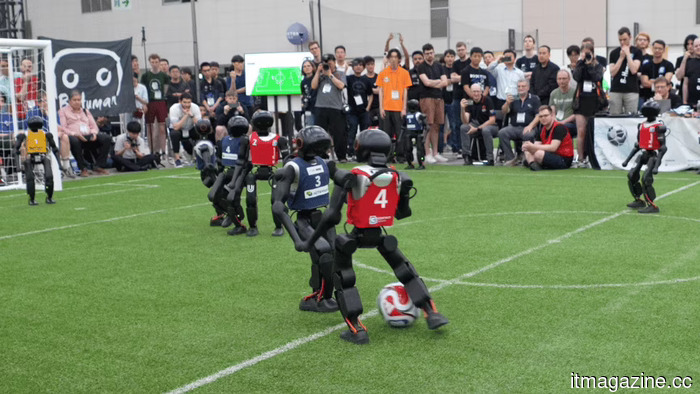
Robots dominated RoboCup 2026, and they have their sights set on the human World Cup.
While spectators around the globe followed the World Cup, robots were engaged in their own competition in Incheon. RoboCup 2026 took place from June 30 to July 6 in Songdo, featuring teams from numerous countries. When the final whistle was blown, one name was associated with every winning team.
Teams utilizing robots from Beijing's Booster Robotics dominated all three humanoid football categories. The statistics illustrate the dominance: of the 59 teams in the humanoid leagues, 38 used Booster machines. These teams claimed gold, silver, and most positions on the podium in the Small, Middle, and Large divisions.
The Hephaestus team from Tsinghua University secured victory in the Large division using the Booster T1. Germany's B-Human won the Middle division with the K1. A team named Invic triumphed in the Small division with the K1 Air.
From constructing robots to programming them
This clean sweep indicates a significant transformation in the field. For many years, each team built its robot from the ground up, dedicating much of their efforts to mechanics, hardware, and training robots to walk.
This has shifted. Most top teams now purchase the body off the shelf and concentrate on software development. Their emphasis is on perception, rapid decision-making, and coordinating multiple robots. Booster provides the hardware and continually enhances critical aspects, such as running, stopping suddenly, and recovering from falls. The focus of the competition has shifted from “who can construct the robot” to “who can enhance its intelligence.”
This distinction extends beyond football. Reliable legs and a stable body enable researchers to test intricate “embodied intelligence” in real-world scenarios rather than solely in simulations. A robot participating in football is, fundamentally, a robot learning to see, maintain balance, and respond quickly.
The 2050 aspiration
The ambition to surpass human champions is not a new claim. It is the foundational mission of RoboCup, established in 1997. The commitment asserts that by 2050, a team of autonomous humanoid robots will defeat the current World Cup champions under standard FIFA rules. “Our team’s ultimate aim is to beat the FIFA champion by 2050,” a competitor remarked to Reuters in Incheon.
The gap remains substantial, and the event acknowledged this reality. RoboCup 2026 represented the first instance where two complete teams of humanoid robots competed 11 against 11 on authentic hardware. The score was modest: B-Human won against the German team HTWK Robots with a score of 4:0. These players are small and unstable, far from being akin to Messi. Yet, a decade prior, even a reliable walk was a challenge. Moreover, humanoids have already surpassed human records in a half-marathon.
China’s strategic move
Booster's success also serves a business purpose. The company aims not only to sell robots but also to dominate the platform they operate on. It recently introduced Booster Studio, promoted as the first comprehensive development environment for embodied intelligence. Engineers use it to program, simulate, and deploy robot behavior before interacting with the actual hardware.
One of the youngest teams at Incheon came from a middle school in Macau. The students trained their code in the simulator before transferring it to real robots. Additionally, Booster has initiated its own 3v3 robot football league to attract more developers. The concept is an open ecosystem, positioning Booster as the foundational layer for all developments.
This aligns with a broader trend. Last year, China exported approximately 90% of the world's humanoid robots, led by companies like Unitree. The industry is crowded and not yet profitable for most, and Beijing has begun registering humanoids by ID. Winning an international competition is an impactful and economical way to gain visibility.
Is it truly achievable?
A note of caution is warranted. The attention-grabbing videos are heavily edited. A viral clip showcased a Booster T1 scoring a penalty through a wall, amusing until one considers that these machines share a field with humans. Robots capable of such force have previously injured bystanders at other events.
For the moment, robot football acts as a research tool disguised as entertainment. The gap to rival a genuine World Cup team remains vast, and 2050 is still a long way off. However, the trajectory is evident. The challenging aspect is no longer the physical body; it is the intelligence, and that is the component progressing the most rapidly.
Other articles
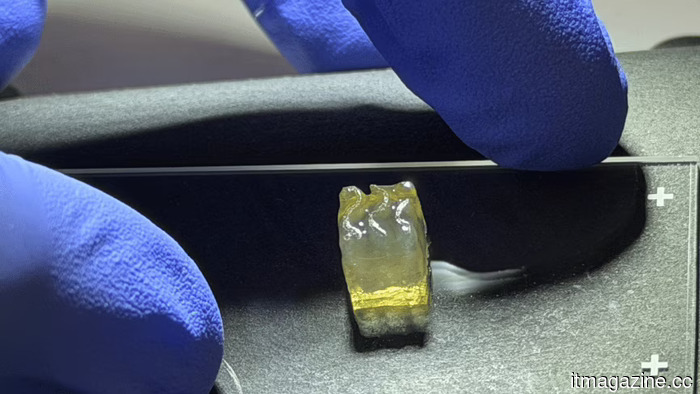 A startup created kidney and liver tissue using 3D printing technology in space.
Auxilium claims to have bioprinted kidney and liver tissue aboard the ISS, marking a first in this field. The immediate benefit is in drug-testing organoids rather than creating transplantable organs.
A startup created kidney and liver tissue using 3D printing technology in space.
Auxilium claims to have bioprinted kidney and liver tissue aboard the ISS, marking a first in this field. The immediate benefit is in drug-testing organoids rather than creating transplantable organs.
 Your phone isn't attempting to contaminate your water, but influencers have discovered a $50 solution regardless.
Influencers are marketing $50 EMF straws as a safeguard against daily electronics, yet the supporting evidence is scarce, and the actual offering might be just technology-induced anxiety disguised as wellness.
Your phone isn't attempting to contaminate your water, but influencers have discovered a $50 solution regardless.
Influencers are marketing $50 EMF straws as a safeguard against daily electronics, yet the supporting evidence is scarce, and the actual offering might be just technology-induced anxiety disguised as wellness.
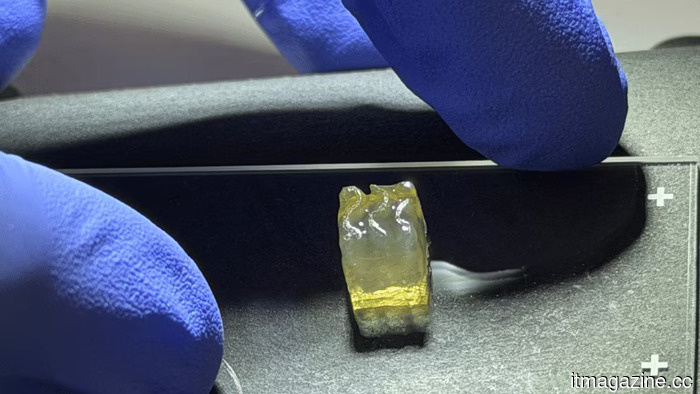 A startup manufactured 3D-printed kidney and liver tissues in space.
Auxilium claims it has bioprinted kidney and liver tissue aboard the ISS, marking a first in this area. The immediate benefit is in drug-testing organoids rather than creating transplantable organs.
A startup manufactured 3D-printed kidney and liver tissues in space.
Auxilium claims it has bioprinted kidney and liver tissue aboard the ISS, marking a first in this area. The immediate benefit is in drug-testing organoids rather than creating transplantable organs.
 AMD's CTO explains the necessity for additional CPUs for agentic AI.
At RAISE, AMD's Mark Papermaster stated that agentic AI places greater emphasis on CPUs rather than solely on GPUs, which he believes supports AMD's pursuit of a trillion-dollar valuation.
AMD's CTO explains the necessity for additional CPUs for agentic AI.
At RAISE, AMD's Mark Papermaster stated that agentic AI places greater emphasis on CPUs rather than solely on GPUs, which he believes supports AMD's pursuit of a trillion-dollar valuation.
 Meta’s newest AI model, Muse Spark 1.1, has the capability to operate your computer on your behalf.
Meta is intensifying its focus on AI agents with Muse Spark 1.1, a model that goes beyond just answering questions — it can utilize apps, surf the web, and even control your computer to perform tasks for you.
Meta’s newest AI model, Muse Spark 1.1, has the capability to operate your computer on your behalf.
Meta is intensifying its focus on AI agents with Muse Spark 1.1, a model that goes beyond just answering questions — it can utilize apps, surf the web, and even control your computer to perform tasks for you.
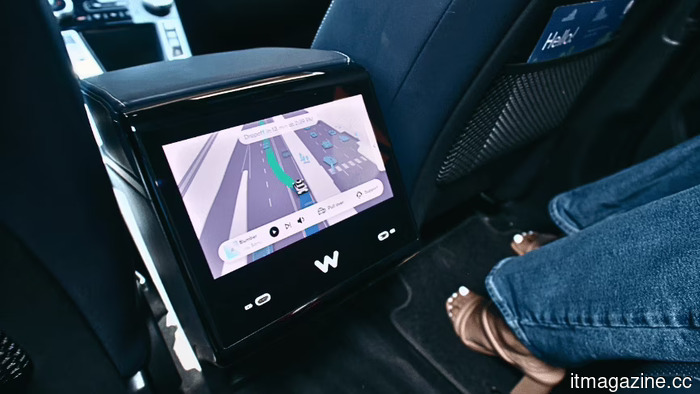 A Waymo reported two teenagers engaging in joyriding to the police.
A Waymo robotaxi alerted the police about two teenagers consuming alcohol and firing toy guns, as the company contends with a regulatory delay in California regarding who is permitted to use its vehicles.
A Waymo reported two teenagers engaging in joyriding to the police.
A Waymo robotaxi alerted the police about two teenagers consuming alcohol and firing toy guns, as the company contends with a regulatory delay in California regarding who is permitted to use its vehicles.
Robots dominated RoboCup 2026, and they have their sights set on the human World Cup.
Beijing's Booster Robotics fueled all the victorious teams at RoboCup 2026 in South Korea. The objective of the sport is to surpass the human World Cup champions by the year 2050.