

Your phone isn't attempting to contaminate your water, but influencers have discovered a $50 solution regardless.
EMF straws are being promoted as a way to protect wellness from common electronic devices, even though there is little evidence of their effectiveness.
If you've ever been concerned that your smartphone might be making your water unsafe, wellness influencers have introduced a solution. It's a curved stainless steel straw priced around $50.
Referred to as an “EMF straw” or “frequency straw,” this product is gaining traction on platforms like Instagram and TikTok, as reported by WIRED. Influencers assert that it can protect users from electromagnetic frequencies, with some suggesting it can enhance energy, boost immunity, or improve overall wellness.
However, the supporting evidence is lacking. Regulators have pointed out that products claiming to shield against EMF lack scientific backing, and similar items have not demonstrated measurable effects. Studies on low-frequency electromagnetic fields from everyday devices have also shown minimal evidence of significant health risks.
The psychology behind the purchase
The appeal of the EMF straw lies in its unusual appearance, which seems technical, yet also feels safe. Unlike a router or medical equipment, it’s simply a straw, making its claims seem easier to accept in a straightforward manner.
The wellness marketing utilizes enough technical jargon to sound credible. “EMF” is genuine, and devices such as phones and chargers do emit electromagnetic fields. The leap from this fact to a straw that is said to transform water into a protective barrier is where the argument begins to falter.
A product does not have to prove much when it can be showcased in a brief video with an ambiguous detector along with the assurance that it protects your body.
Where the scientific basis weakens
There is a clear difference between various types of radiation. High-frequency radiation, including X-rays and UV exposure, can harm cells, unlike the lower-frequency, non-ionizing radiation associated with consumer electronics.
Research surrounding exposure from phones is still considered valid. Trusting a $50 straw as a means of protection seems odd. A more realistic conclusion is much less attention-grabbing than the viral content: your phone is not making your smoothie radioactive.
Why the trend continues to grow
The EMF straw may seem humorous, but it’s important to remember that items like this are seldom marketed as jokes. They are introduced in a context filled with health fears, skepticism, and confusion about technology, which can cause even a ridiculous-looking straw to feel like a means of regaining control.
Investing $50 in a metal straw is unlikely to harm most people. However, the greater concern lies in the mentality that encourages treating every ordinary device in your home as a threat and the need to purchase a sense of security every time the online narrative suggests you should.
Paulo Vargas is an English major who transitioned from reporting to technical writing, with a career that has consistently circled back to…
I was aware that there was a significant amount of AI-generated content on LinkedIn. A startling report indicates that the situation is even worse than anticipated.
I already suspected LinkedIn was flooded with posts produced by AI, recycled leadership advice, and mediocre entrepreneurship lessons. A new report indicates that the extent of the issue is far greater than what the platform’s feed suggests.
AI detection company Pangram analyzed over one million posts through its Chrome extension across platforms such as LinkedIn, X, Reddit, Medium, and Substack. LinkedIn accounted for roughly one-third of the total scanned, yet contributed to 62% of all posts that Pangram identified as AI-generated.
X may soon notify you when a post you liked or shared is fact-checked.
Elon Musk announced that X will begin sending direct messages when posts you’ve interacted with receive a Community Note.
X has one of the more effective anti-misinformation features on social media, allowing volunteer contributors to attach brief notes to posts that may be misleading or lack essential information. Meta and TikTok appreciated this model and launched their own versions named Community Notes and Footnotes, respectively, last year. However, X's Community Notes system has a significant flaw.
The timing issue with Community Notes
Meta's new AI can create images of you based on your Instagram presence, and you are automatically enrolled.
Meta's handling of Instagram likeness rights with its Muse Image feature raises questions that a simple watermark cannot address.
Meta unveiled Muse Image on July 7, 2026, and while it is an intriguing advancement, there is an aspect of the announcement that warrants further examination. If your Instagram account is public, strangers can utilize your photos to generate AI images of you through Muse Image, and crucially, this setting is enabled by default.






Other articles
 Claude Reflect has arrived. It's the annual Wrapped, but featuring Anthropic's AI.
Anthropic introduced Claude Reflect, a usage dashboard that monitors your AI activities over time and then prompts you to consider if you want to reduce usage.
Claude Reflect has arrived. It's the annual Wrapped, but featuring Anthropic's AI.
Anthropic introduced Claude Reflect, a usage dashboard that monitors your AI activities over time and then prompts you to consider if you want to reduce usage.
 A Waymo reported two teenagers engaging in joyriding to the police.
A Waymo robotaxi alerted the police about two teenagers consuming alcohol and firing toy guns, as the company contends with a regulatory delay in California regarding who is permitted to use its vehicles.
A Waymo reported two teenagers engaging in joyriding to the police.
A Waymo robotaxi alerted the police about two teenagers consuming alcohol and firing toy guns, as the company contends with a regulatory delay in California regarding who is permitted to use its vehicles.
 Microdramas are thriving, and Character.AI is transforming it into a mutual obsession.
Character.AI is pursuing the rapidly growing microdrama market with three AI-enhanced vertical series, where characters are accessible for chats, inquiries, and new role-playing even after each episode concludes.
Microdramas are thriving, and Character.AI is transforming it into a mutual obsession.
Character.AI is pursuing the rapidly growing microdrama market with three AI-enhanced vertical series, where characters are accessible for chats, inquiries, and new role-playing even after each episode concludes.
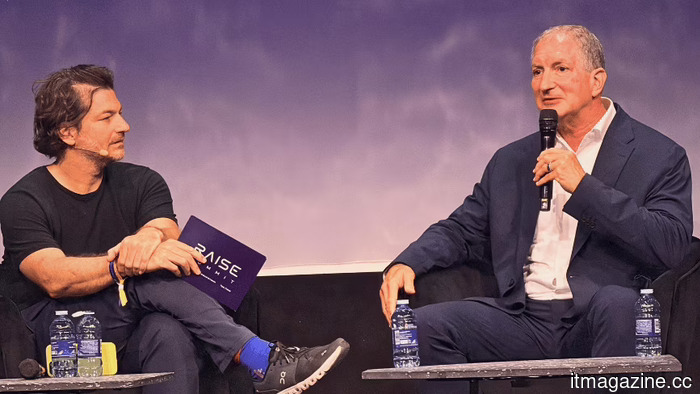 AMD's CTO explains the necessity of additional CPUs for agentic AI.
At RAISE, Mark Papermaster from AMD stated that agentic AI relies more on CPUs rather than solely on GPUs, which accounts for AMD's pursuit of a trillion-dollar valuation.
AMD's CTO explains the necessity of additional CPUs for agentic AI.
At RAISE, Mark Papermaster from AMD stated that agentic AI relies more on CPUs rather than solely on GPUs, which accounts for AMD's pursuit of a trillion-dollar valuation.
 Meta's newest AI model, Muse Spark 1.1, is capable of operating your computer autonomously.
Meta is reinforcing its commitment to AI agents with Muse Spark 1.1, a model that goes beyond answering questions — it can utilize applications, navigate the internet, and even control your computer to perform tasks for you.
Meta's newest AI model, Muse Spark 1.1, is capable of operating your computer autonomously.
Meta is reinforcing its commitment to AI agents with Muse Spark 1.1, a model that goes beyond answering questions — it can utilize applications, navigate the internet, and even control your computer to perform tasks for you.
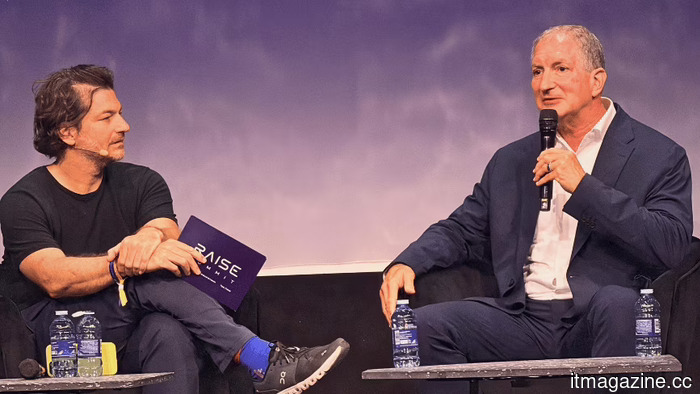 AMD's CTO explains the necessity for additional CPUs for agentic AI.
At RAISE, AMD's Mark Papermaster stated that agentic AI places greater emphasis on CPUs rather than solely on GPUs, which he believes supports AMD's pursuit of a trillion-dollar valuation.
AMD's CTO explains the necessity for additional CPUs for agentic AI.
At RAISE, AMD's Mark Papermaster stated that agentic AI places greater emphasis on CPUs rather than solely on GPUs, which he believes supports AMD's pursuit of a trillion-dollar valuation.
Your phone isn't attempting to contaminate your water, but influencers have discovered a $50 solution regardless.
Influencers are marketing $50 EMF straws as a safeguard against daily electronics, yet the supporting evidence is scarce, and the actual offering might be just technology-induced anxiety disguised as wellness.