

Claude Reflect has arrived. It's the annual Wrapped, but featuring Anthropic's AI.
It also prompts you to think about your usage and serves as a reminder to take breaks.
Anthropic has just introduced a usage analytics dashboard for Claude. This feature resembles the ‘Wrapped’ function that many major streaming or AI services unveil at the end of the year, though it is not referred to as Claude Wrapped.
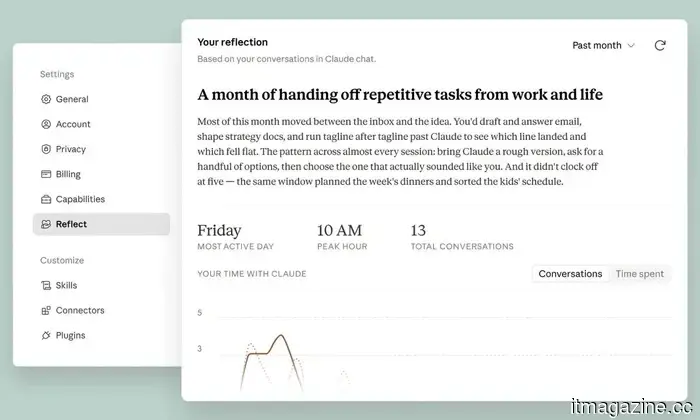
The feature is named Claude Reflect, as it offers more than just insights into how you have used the AI. Currently in beta and available for free, Pro, and Max users who have activated memory, this feature promotes a thoughtful approach to using Claude or other AI tools.
So, what exactly does Claude Reflect display?
Accessible in the Settings of Claude’s web and desktop applications, Reflect compiles a summary of your interactions with Claude over one, three, six, or twelve months.
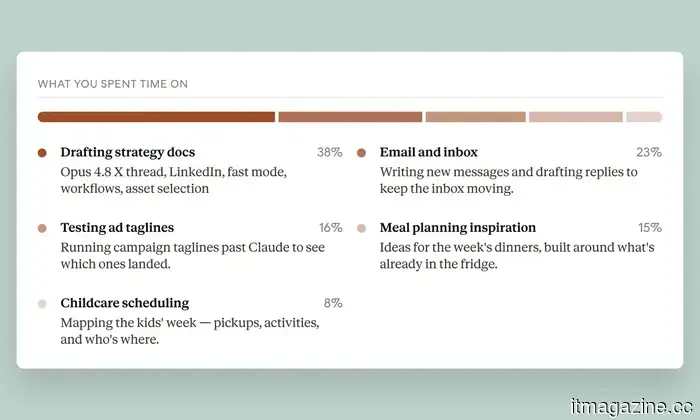
It analyzes the topics you engage with most, uncovers usage patterns, and categorizes your interactions according to Anthropic’s 4D AI Fluency Framework: delegation, description, discernment, and diligence.
Consider it a structured analysis of your AI engagement rather than merely a tally of conversations and topics. This feature was developed in collaboration with the MIT Media Lab, the Digital Wellness Lab at Boston Children’s Hospital, and the Family Online Safety Institute.
Anthropic also notes that incognito and health-related conversations are completely excluded. The data is retained in the dashboard and not utilized for any other purposes (per Anthropic).
Why is the focus on wellbeing particularly noteworthy?
It's unexpected from a company that markets AI-based tools and services.
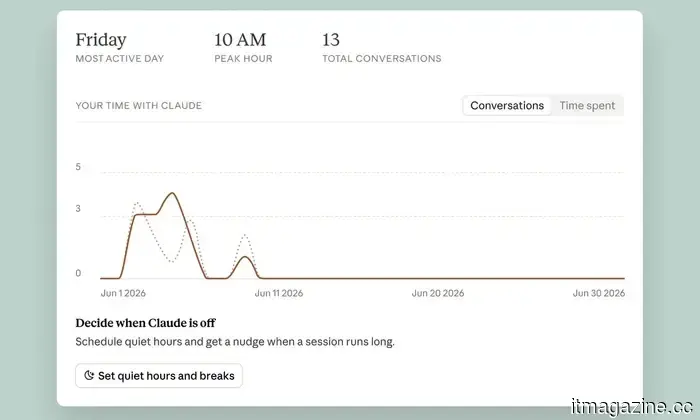
Reflect prompts questions such as “What’s one task you’d prefer to handle yourself, even if Claude could perform it quicker?” You can also set quiet hours and schedule reminders for taking breaks.
A feature tracking time spent is expected to be introduced soon, which, as the name implies, will likely monitor the duration of your interactions with Claude.
It is unusual for an AI company to develop something that actively encourages you to depend on AI less, and this is meant as a compliment.
For over five years, Shikhar has consistently clarified developments in consumer technology and presented them...
Windows 11 Search is receiving a slight increase in size, but only by 4 pixels.
This adjustment may be paving the way for the upcoming Ask Copilot feature.
If you’ve utilized Windows 11 Search following the June update, you might have noticed it feels a bit more user-friendly. Microsoft has recently improved the responsiveness of the Start menu and Search, while also addressing one of Search’s more peculiar limitations by allowing it to locate local files using just two characters. Now, the company seems to be implementing a much minor adjustment. According to Windows Central, Microsoft inadvertently disclosed that the search box in the Taskbar and Start menu will be 4 pixels taller. Although four pixels may appear to be a change appreciated only by UI/UX designers, screenshots from the Insider Preview build indicate that it is noticeable once you know where to look.
Parents express concerns that AI is becoming a crutch for their children while educational institutions struggle to keep pace, according to a recent survey.
Only 1 in 3 schools has established AI guidelines, even as nearly 50% of parents have growing concerns about their children depending on AI excessively.
Children are increasingly using AI for their homework, and half of their parents are uncertain whether this is a positive development. Deloitte's 2026 Back-to-School Survey, which surveyed 1,207 parents of K-12 students, revealed that 49% are worried that their child relies too heavily on AI. The results indicate that the adoption of AI is progressing much more rapidly than the policies designed to govern its use, leaving many parents unclear about how these tools are integrated into education.
Samsung aims to introduce its own chip for your next PC, focusing on accelerating AI tasks.
Samsung may be planning a new venture into the PC chip market. A recent report from the Korea Economic Daily indicates that Samsung’s System LSI division is creating a dedicated AI accelerator for PCs called Gaia. The company has reportedly provided early samples to Lenovo and HP for performance evaluation, with mass production potentially commencing as soon as 2027. Notable Samsung leaker Ice Universe described this project as the company's return to the PC processor sector after approximately 13 years. However, the details suggest it may differ from a standard laptop processor. Gaia is likely a specialized companion chip designed to manage artificial intelligence tasks rather than serving as a complete substitute for an Intel, AMD, or Qualcomm CPU.




Other articles
 Microdramas are on the rise, and Character.AI is transforming it into a mutual fascination.
Character.AI is pursuing the rapidly growing microdrama market with three AI-supported vertical series, where the characters are accessible for dialogue, inquiries, and new role-playing opportunities following each episode.
Microdramas are on the rise, and Character.AI is transforming it into a mutual fascination.
Character.AI is pursuing the rapidly growing microdrama market with three AI-supported vertical series, where the characters are accessible for dialogue, inquiries, and new role-playing opportunities following each episode.
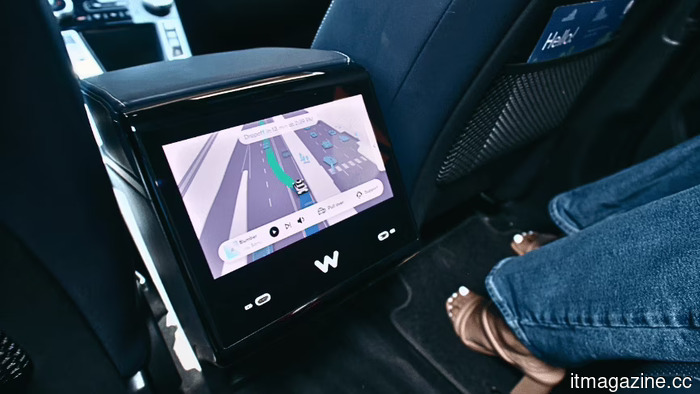 A Waymo reported two teenagers engaging in joyriding to the police.
A Waymo robotaxi alerted the police about two teenagers consuming alcohol and firing toy guns, as the company contends with a regulatory delay in California regarding who is permitted to use its vehicles.
A Waymo reported two teenagers engaging in joyriding to the police.
A Waymo robotaxi alerted the police about two teenagers consuming alcohol and firing toy guns, as the company contends with a regulatory delay in California regarding who is permitted to use its vehicles.
 Claude Reflect has arrived. It’s your typical annual Wrapped, but this time featuring Anthropic's AI.
Anthropic introduced Claude Reflect, a usage dashboard that monitors your AI usage patterns over time and then inquires if you'd like to reduce your engagement.
Claude Reflect has arrived. It’s your typical annual Wrapped, but this time featuring Anthropic's AI.
Anthropic introduced Claude Reflect, a usage dashboard that monitors your AI usage patterns over time and then inquires if you'd like to reduce your engagement.
 AMD's CTO explains the necessity of additional CPUs for agentic AI.
At RAISE, Mark Papermaster from AMD stated that agentic AI relies more on CPUs rather than solely on GPUs, which accounts for AMD's pursuit of a trillion-dollar valuation.
AMD's CTO explains the necessity of additional CPUs for agentic AI.
At RAISE, Mark Papermaster from AMD stated that agentic AI relies more on CPUs rather than solely on GPUs, which accounts for AMD's pursuit of a trillion-dollar valuation.
 Meta’s newest AI model, Muse Spark 1.1, has the capability to operate your computer on your behalf.
Meta is intensifying its focus on AI agents with Muse Spark 1.1, a model that goes beyond just answering questions — it can utilize apps, surf the web, and even control your computer to perform tasks for you.
Meta’s newest AI model, Muse Spark 1.1, has the capability to operate your computer on your behalf.
Meta is intensifying its focus on AI agents with Muse Spark 1.1, a model that goes beyond just answering questions — it can utilize apps, surf the web, and even control your computer to perform tasks for you.
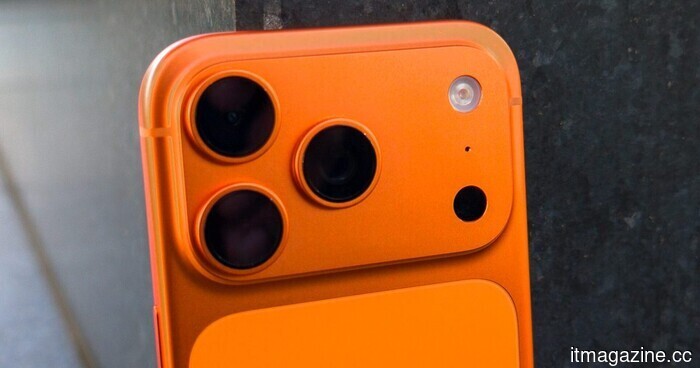 The speculations regarding a $300 price increase for the iPhone 18 Pro series appear to be becoming more plausible.
A third supply chain analysis corroborates what the WSJ and IDC have previously indicated: the iPhone 18 Pro Max is experiencing a notable rise in its bill of materials (BOM).
The speculations regarding a $300 price increase for the iPhone 18 Pro series appear to be becoming more plausible.
A third supply chain analysis corroborates what the WSJ and IDC have previously indicated: the iPhone 18 Pro Max is experiencing a notable rise in its bill of materials (BOM).
Claude Reflect has arrived. It's the annual Wrapped, but featuring Anthropic's AI.
Anthropic introduced Claude Reflect, a usage dashboard that monitors your AI activities over time and then prompts you to consider if you want to reduce usage.