
France intends to increase penalties for disinformation related to elections driven by AI by three times.
**Summary**
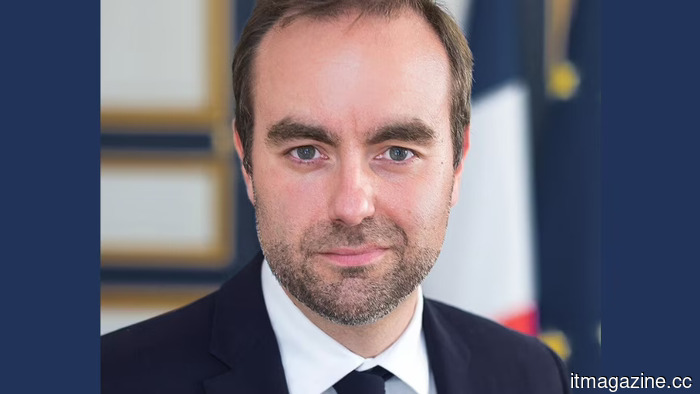
French Prime Minister Sébastien Lecornu unveiled a bill intended to significantly increase penalties for disseminating false information during elections. He presented the initiative in the Senate on July 8, prompted by a query regarding AI in the upcoming presidential elections. Lecornu contended that the existing penalties are "not sufficiently deterrent" and plans to triple the consequences for spreading misinformation during what he termed a "sacred" period for democracy.
The government positions this initiative as a protective measure against foreign interference and AI-generated misinformation. Senator Claude Malhuret, who raised the initial question, expressed concerns about manipulated videos, fake audio, fictitious characters, and bot-driven misinformation campaigns in the approaching election.
The bill is anticipated to be presented to the Council of Ministers at the end of July. Lecornu described it as a "very short" text that incorporates written contributions from various political factions.
**What the Bill Entails**
In addition to harsher penalties, Lecornu proposed extending an emergency judicial procedure that currently allows for the removal of false content. This procedure presently covers presidential, legislative, and senatorial elections, and he seeks to expand it to include all local elections.
He also endorsed the establishment of a permanent "public information commission" by decree, which he described as a resource for the media, judiciary, and citizens when interference is detected, rather than a censorial body.
This initiative builds on France’s existing 2018 law targeting information manipulation, which already addresses electoral disinformation, and complements EU-wide regulations, including content moderation frameworks established by the Digital Services Act.
**Navigating the Balance between Protection and Control**
The threat posed by deepfakes is substantial, as studies have demonstrated that synthetic media can mislead even discerning viewers. In response, platforms and governments have mobilized various measures, such as Meta’s election-disinformation task forces, alongside a wave of legislation following incidents like the Taylor Swift deepfake surge.
However, critics raise a familiar concern regarding misinformation laws: who determines what is false? Free-speech advocates caution that ambiguous criteria and government-appointed entities may stifle legitimate discourse, particularly during the highly charged atmosphere of a campaign.
France has experienced this tension previously, having mandated that platforms remove extremist content within one hour—a directive later limited by its constitutional court. This past serves as a reminder that content regulation in France frequently faces judicial challenges.
Currently, this is merely an announcement rather than a law, and the specifics will dictate its reception. Whether the commission serves as a cautionary measure or a bottleneck depends on the yet-to-be-released language of the legislation.
Other articles
 Samsung aims to incorporate its own chip into your next PC, with a focus on enhancing the speed of AI tasks.
Samsung's rumored Gaia accelerator may introduce specialized on-device AI hardware for upcoming PCs, putting the company in a more competitive landscape alongside Nvidia and Qualcomm.
Samsung aims to incorporate its own chip into your next PC, with a focus on enhancing the speed of AI tasks.
Samsung's rumored Gaia accelerator may introduce specialized on-device AI hardware for upcoming PCs, putting the company in a more competitive landscape alongside Nvidia and Qualcomm.
 Ollama secures $65 million for its open-model AI platform.
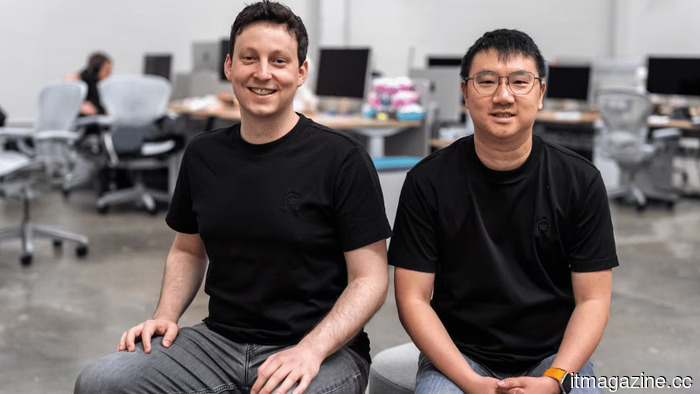
Ollama has secured $65 million in a Series B funding round led by Theory Ventures, bringing its total funding to $88 million, as its open-model runner approaches nearly 9 million developers.
Ollama secures $65 million for its open-model AI platform.
Ollama has secured $65 million in a Series B funding round led by Theory Ventures, bringing its total funding to $88 million, as its open-model runner approaches nearly 9 million developers.
 John Deere's victory regarding the right-to-repair primarily concerns software.
The settlement between the FTC and John Deere marks the largest right-to-repair victory in the US so far, serving as a cautionary tale regarding software lock-in for all the devices you possess.
John Deere's victory regarding the right-to-repair primarily concerns software.
The settlement between the FTC and John Deere marks the largest right-to-repair victory in the US so far, serving as a cautionary tale regarding software lock-in for all the devices you possess.
 John Deere's victory regarding the right to repair primarily concerns software.
The settlement between the FTC and John Deere represents the largest right-to-repair victory in the US thus far, serving as a caution regarding software restrictions in all your devices.
John Deere's victory regarding the right to repair primarily concerns software.
The settlement between the FTC and John Deere represents the largest right-to-repair victory in the US thus far, serving as a caution regarding software restrictions in all your devices.
 Following Samsung and Apple, Oppo may be the next to enter the expanding foldable market.
Oppo might enter the competition in the growing wide foldable market alongside Samsung and Apple, featuring a device powered by the Snapdragon 8 Gen 6 and equipped with a notably large 6,500mAh battery.
Following Samsung and Apple, Oppo may be the next to enter the expanding foldable market.
Oppo might enter the competition in the growing wide foldable market alongside Samsung and Apple, featuring a device powered by the Snapdragon 8 Gen 6 and equipped with a notably large 6,500mAh battery.
 AI image generators have moved beyond their troubling beginnings and entered a phase of artificial luxury.
I evaluated Meta Muse, Gemini Nano Banana 2, and ChatGPT Images 2.0. While the glaring AI errors are decreasing, the new issues are more challenging to dismiss.
AI image generators have moved beyond their troubling beginnings and entered a phase of artificial luxury.
I evaluated Meta Muse, Gemini Nano Banana 2, and ChatGPT Images 2.0. While the glaring AI errors are decreasing, the new issues are more challenging to dismiss.
France intends to increase penalties for disinformation related to elections driven by AI by three times.
PM Lecornu aims to increase penalties for misleading election content threefold and establish a public information commission, reigniting the discussion on who determines what is false.