

AI image generators have moved beyond their troubling beginnings and entered a phase of artificial luxury.
I anticipated this comparison would present a greater degree of flaws. The combination of Meta Muse, Gemini Nano Banana 2, and ChatGPT Images 2.0 seemed ripe for producing unrealistic features, distorted hands, artificial products, and posters resembling disordered alphabet soup. Instead, the results were largely competent, which added an air of suspicion to the entire experience.
These are not merely identical tools under different branding. Meta presents Muse Image as a social image model integrated within Meta AI and its applications. Google positions Nano Banana 2 with a focus on speed, editing capabilities, and Gemini’s extensive knowledge. OpenAI markets ChatGPT Images 2.0 based on text rendering, visual manipulation, and superior prompt management. Though the aspirations are distinct, the overall presentation remains polished.
The uncanny valley has quieted down.
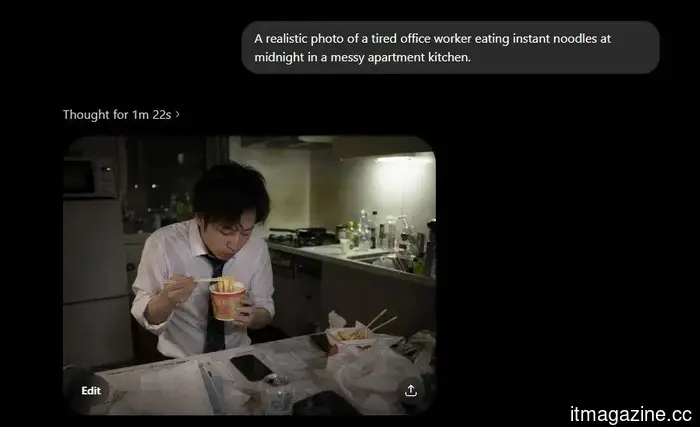
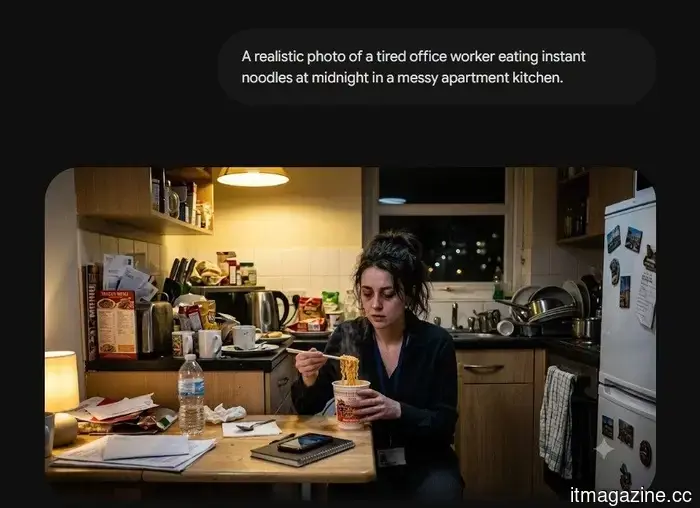
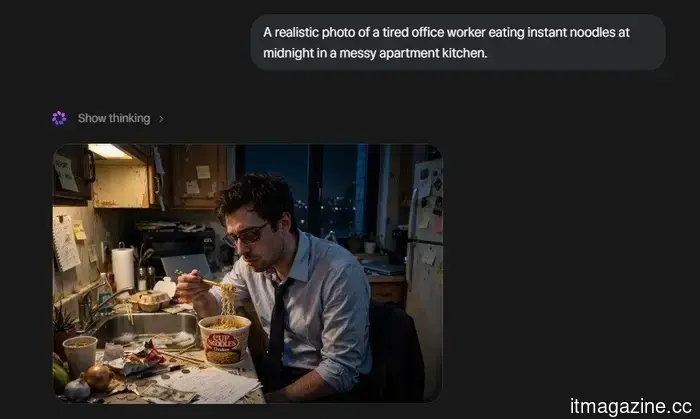
The initial prompt requested an exhausted office worker consuming instant noodles at midnight. A more detailed version requested the inclusion of a messy kitchen, a laptop, dirty dishes in the sink, and harsh lighting from the refrigerator. Meta and Gemini produced results quickly, while ChatGPT delivered the most unique simple image but largely maintained that mood when additional details were added.
That wasn’t a complete failure, per se. It followed the instructions. However, the issue was that all three tools appeared more focused on quality rather than realism. The rooms were thoughtfully arranged. The lighting was aesthetically pleasing. The portrayal of exhaustion seemed curated by someone who has never experienced eating noodles over the sink at midnight.
Readable text was a significant plus.
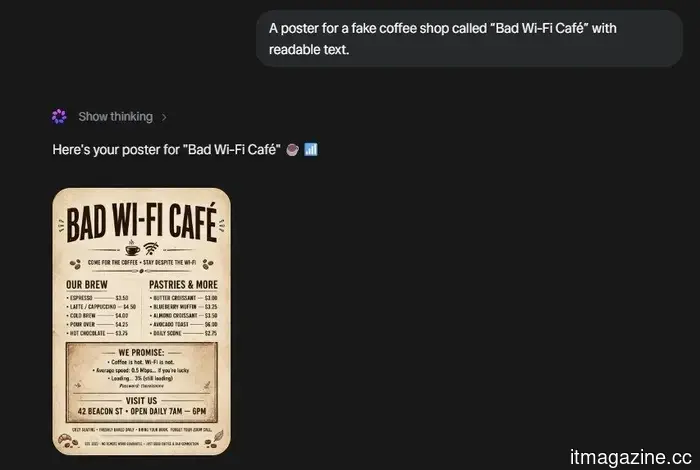
The poster test could have been chaotic. I requested a fictional coffee shop poster for “Bad Wi-Fi Café” and included specific text in the detailed prompt. All three produced adequate posters, and the text was clear enough to be considered progress. AI image tools previously treated text as mere decorative elements, so this is an improvement.
However, they still had the usual flaw. Everything emitted a warm AI yellow hue, making it feel as though every café, kitchen, and bedroom was illuminated by a staged sunset. Gemini created an image that resembled a photo of a poster rather than the poster itself. ChatGPT had the roughest experience, taking over three minutes, failing three times, and only succeeding after I initiated a new chat.
The prompt for a cat, suitcase, and umbrella worked more smoothly. The models adhered to the specified placement directions effectively. Product images were less reliable—while a sleek earbud photo was straightforward, the prompt for “open-ear wireless earbuds” led all three to produce generic, indistinct earbud images.
Manila appeared familiar through a filter.
The prompt for Manila street food could have devolved into cliched tourist imagery. Meta and Gemini performed better in my trials, capturing plastic stools, wet pavement, motorcycles, steam, tarps, and the casual ambiance of dining outdoors amid a bustling city.
This allowed the flaws to stand out more clearly. While the elements were appropriate, the finish still felt overly polished, as though the street had been cleaned for a photo shoot just before the rain arrived.
If we were to insert this image into a collection of real photographs, could it be distinguished?
None of these tools failed in the old, humorous ways. The scenes were coherent, the text was legible, and the objects generally aligned with my requests. The shortcomings have shifted from competency issues to taste-related concerns.
This leads to a stranger question than which model “wins.” In this post-truth era, does it matter which tool offers the most realism or adheres better to instructions when all three can already create something that appears plausible enough for a quick glance?
These models have mastered the art of making images seem sophisticated before learning to make them feel authentic. The era of artificial premium aesthetics is less amusing than hands distorted by nightmares, but it is likely more practical, which is precisely why it’s harder to overlook.



Other articles
 Block, founded by Jack Dorsey, resolves Cash App fraud allegations with 46 states for $45 million.
Block will compensate $45 million to 46 US states for its handling of Cash App fraud, as state regulators step in to fill the void left by the diminished CFPB.
Block, founded by Jack Dorsey, resolves Cash App fraud allegations with 46 states for $45 million.
Block will compensate $45 million to 46 US states for its handling of Cash App fraud, as state regulators step in to fill the void left by the diminished CFPB.
 Following Samsung and Apple, Oppo may soon be the next to enter the extensive foldable market.
Oppo could enter the competition for wide foldable devices alongside Samsung and Apple, featuring a Snapdragon 8 Gen 6 chipset and an unusually large 6,500mAh battery.
Following Samsung and Apple, Oppo may soon be the next to enter the extensive foldable market.
Oppo could enter the competition for wide foldable devices alongside Samsung and Apple, featuring a Snapdragon 8 Gen 6 chipset and an unusually large 6,500mAh battery.
 John Deere's victory regarding the right-to-repair primarily concerns software.
The settlement between the FTC and John Deere marks the largest right-to-repair victory in the US so far, serving as a cautionary tale regarding software lock-in for all the devices you possess.
John Deere's victory regarding the right-to-repair primarily concerns software.
The settlement between the FTC and John Deere marks the largest right-to-repair victory in the US so far, serving as a cautionary tale regarding software lock-in for all the devices you possess.
 John Deere's victory regarding the right to repair primarily concerns software.
The settlement between the FTC and John Deere represents the largest right-to-repair victory in the US thus far, serving as a caution regarding software restrictions in all your devices.
John Deere's victory regarding the right to repair primarily concerns software.
The settlement between the FTC and John Deere represents the largest right-to-repair victory in the US thus far, serving as a caution regarding software restrictions in all your devices.
 Ensuring the security of Shadow IT in the corporate setting
Shadow IT introduces security vulnerabilities for enterprises that are not covered by monitoring, patching, and access controls. This article explores the increasing exposure of shadow IT, including unauthorized SaaS, shadow AI, and risks related to geopolitical data sovereignty, and discusses how vendor risk assessment manages third-party risks on a broader scale.
Ensuring the security of Shadow IT in the corporate setting
Shadow IT introduces security vulnerabilities for enterprises that are not covered by monitoring, patching, and access controls. This article explores the increasing exposure of shadow IT, including unauthorized SaaS, shadow AI, and risks related to geopolitical data sovereignty, and discusses how vendor risk assessment manages third-party risks on a broader scale.
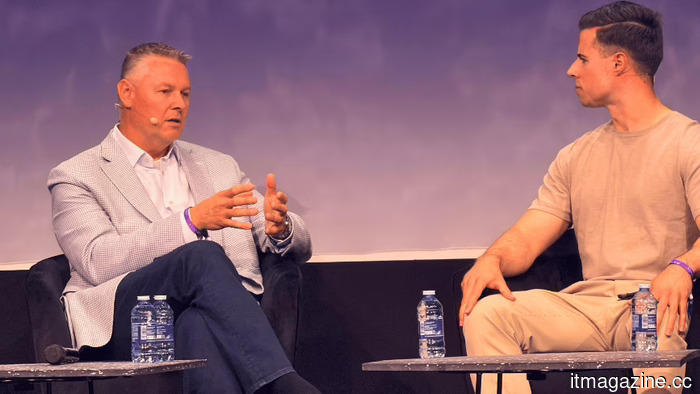 Mark Hura from Oracle: your data is your competitive advantage in AI.
During the RAISE Summit, Mark Hura from Oracle stated that the true advantage of AI lies in your private data and business results, rather than the model you purchase.
Mark Hura from Oracle: your data is your competitive advantage in AI.
During the RAISE Summit, Mark Hura from Oracle stated that the true advantage of AI lies in your private data and business results, rather than the model you purchase.
AI image generators have moved beyond their troubling beginnings and entered a phase of artificial luxury.
I evaluated Meta Muse, Gemini Nano Banana 2, and ChatGPT Images 2.0. While the glaring AI errors are decreasing, the new issues are more challenging to dismiss.