

Sources indicate that DeepSeek has initiated the development of its own AI chips to reduce dependence on NVIDIA.
In recent years, as generative AI has transitioned from model training to large-scale inference, a growing number of AI model developers have begun focusing on the hardware that supports these processes. According to Reuters, the Chinese AI startup DeepSeek has initiated an internal AI chip project aimed at inference workloads. The company’s objective is to minimize inference costs through custom-designed processors while decreasing its dependence on foreign suppliers like NVIDIA. DeepSeek has not yet made a public statement regarding this development.
The report indicated that the project is still in its early phases and is primarily oriented towards AI inference instead of model training. With the rapid adoption of generative AI, inference has emerged as one of the fastest-expanding areas within the AI market. Unlike training, which demands significant bursts of computing power, inference needs to efficiently handle a high volume of user requests continuously, making cost-efficiency, power consumption, and system reliability increasingly crucial.
Sources have revealed that DeepSeek started working on the chip approximately a year ago and has increased hiring in recent months. Instead of using public recruitment methods, the company has discreetly brought in experienced chip engineers through focused outreach efforts. The team encompasses chip architecture, verification, and software enablement.
DeepSeek ranks among China’s rapidly growing foundation model enterprises, gaining recognition with its open-source model DeepSeek-V3 and its reasoning model R1. As the demand for its services rises, computing infrastructure has become one of the company's largest operating costs. For many AI businesses, compute-related expenses may represent over half of their operational costs, and the limited availability and high prices of advanced GPUs have prompted more companies to explore custom chip development.
Custom AI chips have emerged as a strategic focus for numerous leading AI firms globally. For DeepSeek, creating its own AI chips could facilitate long-term cost reductions, boost deployment efficiency, and strengthen its competitive stance.
However, chip development is a capital-intensive and long-term endeavor. The journey from architectural design to tape-out and mass production usually spans more than a year, suggesting that DeepSeek's initiatives are not likely to produce immediate effects on the competitive dynamics of the AI chip market. Additionally, DeepSeek is pursuing its first round of external funding. Previous reports indicated that the company aims to raise approximately $7 billion, with a valuation ranging from $52 billion to $59 billion. Should the funding be secured, investment in chip development and other AI infrastructure is expected to become a priority.
Jessie Wu is a technology reporter based in Shanghai, covering consumer electronics, semiconductors, and the gaming industry for TechNode. You can reach her at jessie.wu@technode.com.




Other articles
 In your upcoming Teams meeting, there might be an AI assistant that responds to questions on your behalf.
Microsoft's summer Teams update is more utilitarian than others, featuring AI-enabled notes in in-person meeting spaces and a chat list that autonomously arranges itself.
In your upcoming Teams meeting, there might be an AI assistant that responds to questions on your behalf.
Microsoft's summer Teams update is more utilitarian than others, featuring AI-enabled notes in in-person meeting spaces and a chat list that autonomously arranges itself.
 Meta's latest image and video AI tools enable you to transform Instagram into your personal creative mood board.
With Muse Image now live and Muse Video in preview, Meta has officially ended its collaboration with Midjourney and Black Forest Labs for its creative AI.
Meta's latest image and video AI tools enable you to transform Instagram into your personal creative mood board.
With Muse Image now live and Muse Video in preview, Meta has officially ended its collaboration with Midjourney and Black Forest Labs for its creative AI.
 The arrest of a hacker has disclosed how Microsoft is able to monitor your Windows device.
A hacker utilized a VPN to maintain anonymity; however, Microsoft's Windows Global Device Identifier recorded his actions and reported them to the FBI.
The arrest of a hacker has disclosed how Microsoft is able to monitor your Windows device.
A hacker utilized a VPN to maintain anonymity; however, Microsoft's Windows Global Device Identifier recorded his actions and reported them to the FBI.
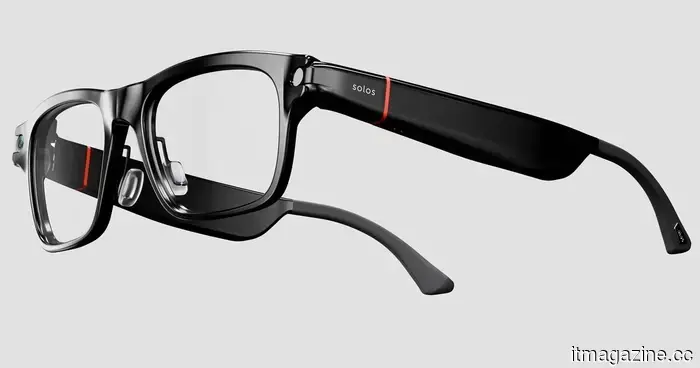 Solos' newest AI glasses are introducing a true privacy mode.
Solos has introduced the camera-less AirGo A6 smart glasses together with a Privacy Kit for the AirGo V2 that physically obstructs its integrated camera.
Solos' newest AI glasses are introducing a true privacy mode.
Solos has introduced the camera-less AirGo A6 smart glasses together with a Privacy Kit for the AirGo V2 that physically obstructs its integrated camera.
 Are your iPhone shortcuts vanishing silently? iOS 27 has introduced a method to restore them.
If you've noticed a sudden reduction in your iPhone Shortcuts library without any clear reason, the new Restore button in iOS 27 clarifies the issue and resolves it.
Are your iPhone shortcuts vanishing silently? iOS 27 has introduced a method to restore them.
If you've noticed a sudden reduction in your iPhone Shortcuts library without any clear reason, the new Restore button in iOS 27 clarifies the issue and resolves it.
 You can now install Windows on the Steam Machine, for reasons only you comprehend.
Valve has launched official Windows drivers for the Steam Machine, simplifying the process of installing Microsoft's operating system, although SteamOS still seems to provide superior gaming performance.
You can now install Windows on the Steam Machine, for reasons only you comprehend.
Valve has launched official Windows drivers for the Steam Machine, simplifying the process of installing Microsoft's operating system, although SteamOS still seems to provide superior gaming performance.
Sources indicate that DeepSeek has initiated the development of its own AI chips to reduce dependence on NVIDIA.
In recent years, as generative AI has evolved from model training to large-scale inference, more AI model developers have shifted their focus.