

The arrest of a hacker has disclosed how Microsoft is able to monitor your Windows device.
Microsoft was aware of the websites visited by a Windows PC used by a teenager accused of hacking.
A teenager allegedly utilized a VPN to conceal his activities while hacking a US jewelry retailer, but Microsoft was still informed.
Court documents revealed in the US case against Peter Stokes, a 19-year-old dual citizen of the US and Estonia linked to the infamous Scattered Spider hacking group, indicate that Microsoft shared records with the FBI related to a tracking system known as the Global Device Identifier, or GDID.
This identifier, automatically assigned to every Windows installation, was sufficient to associate Stokes’ computer with specific websites and third-party services, even though he was using a VPN.
Stokes was apprehended in Helsinki in April 2026 while attempting to board a flight to Japan, carrying two two-terabyte hard drives. He now faces federal charges in Chicago for conspiracy, computer intrusion, and fraud.
The case highlights the significance of the GDID, a term many people may be hearing for the first time.
The Global Device ID (GDID) is a distinct number linked to a Windows installation on a device and may remain unchanged through regular Windows updates.
The criminal complaint suggests that Microsoft’s records indicated that Stokes’ GDID accessed specific pages on ngrok, a developer tunneling tool, at exact timestamps, enabling them to reconstruct his actions and connect them to the hacking incident.
This identifier seems to persist across updates, lacks an easy opt-out option, and could allow Microsoft to link a Windows installation to activities on third-party services, not solely Microsoft’s.
In essence, Microsoft may maintain a record of the websites visited by your Windows PC, separate from your browser history and cookie tracking. You can technically eliminate this by reinstalling Windows, which generates a new GDID.
This is precisely why the Stokes case is noteworthy, even if you don’t plan on hacking a jewelry store via a VPN anytime soon.
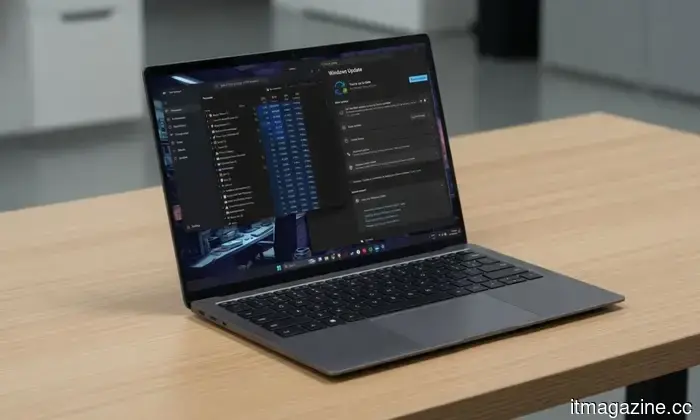
Currently, a bug in Windows 11 may be consuming hundreds of gigabytes of your storage space.
According to Windows Latest, a bug associated with a system file in Windows 11 can silently use up tens or hundreds of gigabytes on the system drive without users realizing it.
The problematic file, CapabilityAccessManager.db-wal, resides in the Capability Access Manager folder. Users have reported that this issue can manifest as unusually high “System files” usage in Windows 11’s storage breakdown, although the Settings app doesn’t clearly indicate the precise file responsible. In some instances, users reported its size growing to 200GB or more.
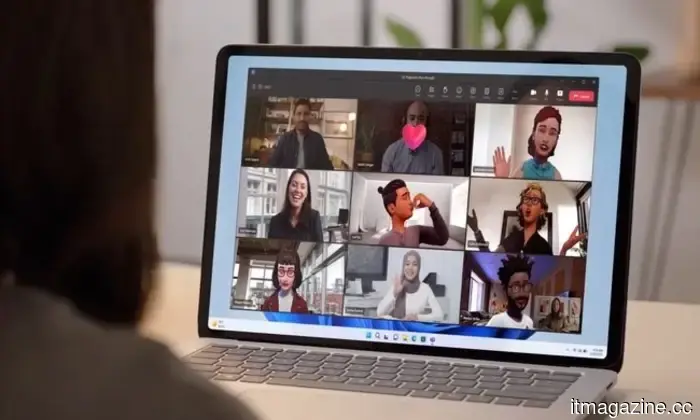
Microsoft Teams is set to receive significant updates, including an AI functionality that can assist during meetings.
Microsoft Teams is undergoing a substantial revamp that enhances nearly every aspect of the application, from AI-supported meetings to a more streamlined chat interface. Most of these modifications are already being tested, and several are projected to launch before the end of summer.
One of the most exciting new features is an upgraded AI Facilitator that can listen in on meetings, identify confusion among participants, and generate appropriate responses.
In the realm of AI, the availability of low-cost Chinese models might soon be restricted as the Chinese government considers imposing limitations similar to those in the US.
DeepSeek's R1 catalyzed global interest in affordable Chinese AI, followed by increasingly sophisticated systems from companies like Alibaba, ByteDance, and Z.ai. Some models can be downloaded and customized for independent hosting, offering developers a more economical alternative to expensive US platforms.
However, this cost-effective option might soon be impacted by geopolitical factors, specifically due to China. Reports indicate that Chinese officials have met with companies like Alibaba, ByteDance, and Z.ai to discuss the possibility of restricting foreign access to the country's most advanced AI systems, involving both closed models and open-weight releases, alongside technology not yet public.






Other articles
 Apple might be increasing the thickness of the iPhone 18 Pro to accommodate a significant camera enhancement.
The upcoming Pro iPhone from Apple may feature a notably thicker design, probably because of a larger battery and a speculated variable aperture camera.
Apple might be increasing the thickness of the iPhone 18 Pro to accommodate a significant camera enhancement.
The upcoming Pro iPhone from Apple may feature a notably thicker design, probably because of a larger battery and a speculated variable aperture camera.
 The era of affordable Chinese AI models may be coming to an end as the government considers implementing restrictions similar to those in the United States.
Chinese officials have allegedly talked about restricting foreign access to the nation's most sophisticated closed and open-weight AI models due to national security issues.
The era of affordable Chinese AI models may be coming to an end as the government considers implementing restrictions similar to those in the United States.
Chinese officials have allegedly talked about restricting foreign access to the nation's most sophisticated closed and open-weight AI models due to national security issues.
 New Zealand eliminates the possibility of a VPN ban following privacy concerns.
New Zealand has refuted proposals to prohibit VPNs in relation to its social media restrictions for those under 16, following a strong backlash regarding privacy concerns, as age verification regulations continue to move towards encryption.
New Zealand eliminates the possibility of a VPN ban following privacy concerns.
New Zealand has refuted proposals to prohibit VPNs in relation to its social media restrictions for those under 16, following a strong backlash regarding privacy concerns, as age verification regulations continue to move towards encryption.
 Google has announced the launch event for the Pixel 11, giving a sneak peek at the design of its new flagship.
Made by Google 2026 is set for August 12 in New York, and the invitation image from Google unintentionally provided a great glimpse of the Pixel 11 Pro's gold metallic design.
Google has announced the launch event for the Pixel 11, giving a sneak peek at the design of its new flagship.
Made by Google 2026 is set for August 12 in New York, and the invitation image from Google unintentionally provided a great glimpse of the Pixel 11 Pro's gold metallic design.
 The era of affordable Chinese AI models may be coming to an end as the government considers implementing restrictions akin to those in the United States.
Chinese authorities have allegedly talked about restricting foreign access to the nation's most sophisticated closed and open-weight AI models due to concerns over national security.
The era of affordable Chinese AI models may be coming to an end as the government considers implementing restrictions akin to those in the United States.
Chinese authorities have allegedly talked about restricting foreign access to the nation's most sophisticated closed and open-weight AI models due to concerns over national security.
 Solos' newest AI glasses are introducing a true privacy mode.
Solos has introduced the camera-less AirGo A6 smart glasses together with a Privacy Kit for the AirGo V2 that physically obstructs its integrated camera.
Solos' newest AI glasses are introducing a true privacy mode.
Solos has introduced the camera-less AirGo A6 smart glasses together with a Privacy Kit for the AirGo V2 that physically obstructs its integrated camera.
The arrest of a hacker has disclosed how Microsoft is able to monitor your Windows device.
A hacker utilized a VPN to maintain anonymity; however, Microsoft's Windows Global Device Identifier recorded his actions and reported them to the FBI.