
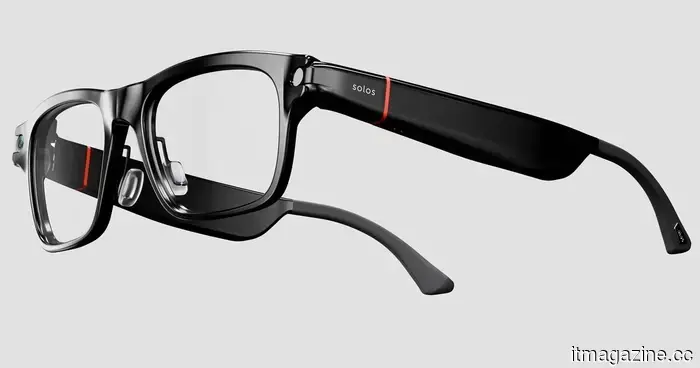
Solos' newest AI glasses are introducing a true privacy mode.
Solos is introducing a physical Privacy Kit for its AirGo V2, which features a camera, while also launching a camera-free version, the AirGo A6.
AI smart glasses encounter trust issues, as the presence of a camera can cause discomfort among those nearby, even when not actively recording. Solos' latest solution is not another blinking LED or software control, but rather a physical component.
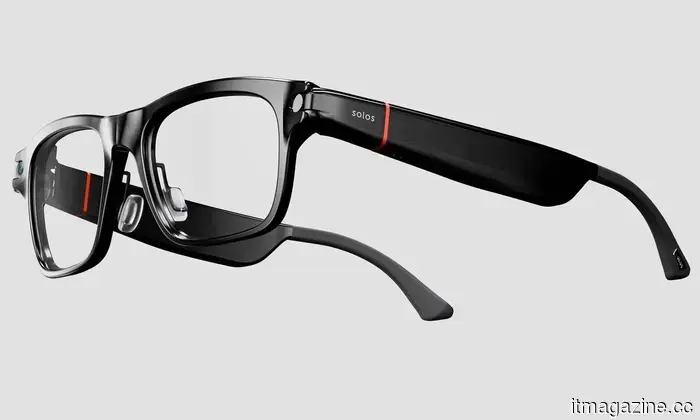
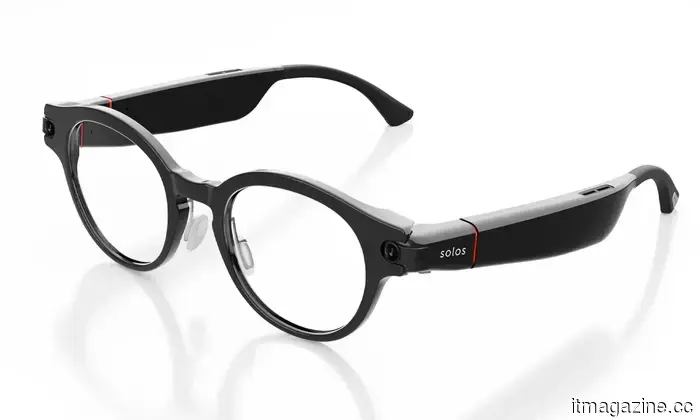
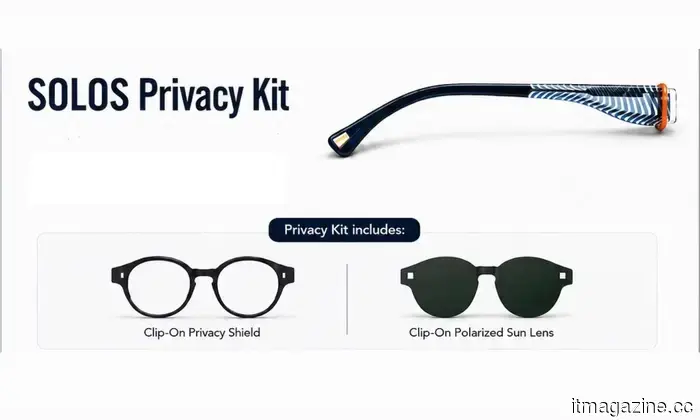
The company has revealed two privacy-centric additions to its wearable line-up: the camera-free AirGo A6 smart glasses and a new Privacy Kit for the AirGo V2 that obstructs the camera physically whenever users prefer it to be inactive.
Unlike many other AI smart glasses on the market, the AirGo A6 lacks a camera entirely. Solos aims to provide a lighter, more conventional design for everyday use, emphasizing comfort and privacy. Users will still enjoy AI-driven features through integrated microphones and speakers, such as voice assistance, translations, notifications, and hands-free operations, without any image capture.
However, the camera is not completely absent. Solos has also launched the AirGo V2 worldwide, starting at $299. This model is equipped with a 16MP camera that can record 2K video, modular frames, and offers up to 12 hours of battery life, serving as the company’s premium option for those seeking visual AI functionalities.
To alleviate concerns regarding wearable cameras, Solos has introduced a Privacy Kit for the AirGo V2. Rather than depending solely on software notifications or recording lights, this accessory physically covers the camera lens, clearly indicating to those around that the camera is non-functional.
This straightforward solution addresses one of AI's prominent perception challenges. As smart glasses grow in popularity, reassuring onlookers that they are not being recorded may be as crucial as persuading consumers to adopt them. While a removable plastic camera cover may seem less advanced, it could prove to be one of the most useful features observed in AI wearables to date.
Varun is a seasoned technology journalist and editor with over eight years of experience in consumer tech media, covering a variety of topics.
Virtual taekwondo may initially sound like a gimmick, but it's emerging as a popular option in Southeast Asia by maintaining the physical challenge while minimizing the risks associated with combat sports.
The concept of virtual taekwondo can seem absurd at first glance. Athletes wear headsets and attach sensors to their bodies, kicking at thin air while referring to it as a combat sport. Similar to Wii Sports, they’re engaging in movement, reaction, and exertion, but their strikes land on avatars rather than opponents.
A new VR empathy game, Rekindle, transforms facial expressions into interactive controls. Players are prompted to express emotions, while the game tracks their faces to see if their reactions align with the narrative.
Set in a dystopian future targeting sexual identity, the game's storyline revolves around memory, identity, and empathy, particularly for the LGBTQ+ community. Players navigate through a narrative that collects fragments of the protagonist's memories.
Carely has introduced a new wearable designed to monitor aging parents without requiring them to interact with technology, thus alleviating the need for constant check-ins.
Monitoring aging parents typically involves a proactive approach: Are they managing well? Did they rest adequately? Would you be aware if something went wrong before it escalates? Carely aims to eliminate that uncertainty altogether, operating without a screen, an app that parents must use, or daily check-in calls.





Other articles
 Claude Cowork can continue functioning even when you shut your laptop.
Claude Cowork now operates on both web and mobile, allowing your AI tasks to continue even after you shut your laptop.
Claude Cowork can continue functioning even when you shut your laptop.
Claude Cowork now operates on both web and mobile, allowing your AI tasks to continue even after you shut your laptop.
 The arrest of a hacker has disclosed how Microsoft is able to monitor your Windows device.
A hacker utilized a VPN to maintain anonymity; however, Microsoft's Windows Global Device Identifier recorded his actions and reported them to the FBI.
The arrest of a hacker has disclosed how Microsoft is able to monitor your Windows device.
A hacker utilized a VPN to maintain anonymity; however, Microsoft's Windows Global Device Identifier recorded his actions and reported them to the FBI.
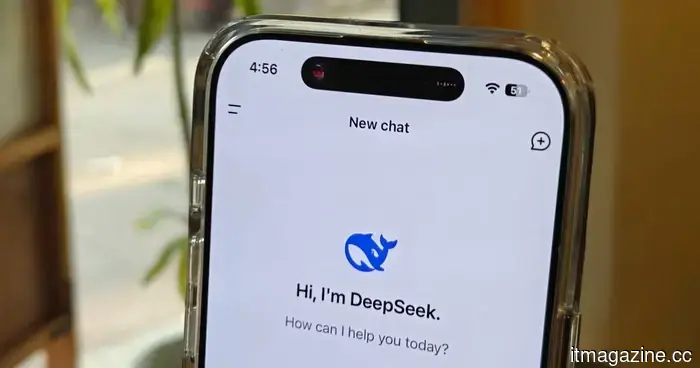 The era of affordable Chinese AI models may be coming to an end as the government considers implementing restrictions similar to those in the United States.
Chinese officials have allegedly talked about restricting foreign access to the nation's most sophisticated closed and open-weight AI models due to national security issues.
The era of affordable Chinese AI models may be coming to an end as the government considers implementing restrictions similar to those in the United States.
Chinese officials have allegedly talked about restricting foreign access to the nation's most sophisticated closed and open-weight AI models due to national security issues.
 In your upcoming Teams meeting, there might be an AI assistant that responds to questions on your behalf.
Microsoft's summer Teams update is more utilitarian than others, featuring AI-enabled notes in in-person meeting spaces and a chat list that autonomously arranges itself.
In your upcoming Teams meeting, there might be an AI assistant that responds to questions on your behalf.
Microsoft's summer Teams update is more utilitarian than others, featuring AI-enabled notes in in-person meeting spaces and a chat list that autonomously arranges itself.
 Google has announced the launch event for the Pixel 11, giving a sneak peek at the design of its new flagship.
Made by Google 2026 is set for August 12 in New York, and the invitation image from Google unintentionally provided a great glimpse of the Pixel 11 Pro's gold metallic design.
Google has announced the launch event for the Pixel 11, giving a sneak peek at the design of its new flagship.
Made by Google 2026 is set for August 12 in New York, and the invitation image from Google unintentionally provided a great glimpse of the Pixel 11 Pro's gold metallic design.
 Google has announced the launch event for the Pixel 11, offering a glimpse of its new flagship design.
Made by Google 2026 is set for August 12 in New York, and the invitation image from Google inadvertently provided us with our clearest glimpse of the Pixel 11 Pro's gold metal design.
Google has announced the launch event for the Pixel 11, offering a glimpse of its new flagship design.
Made by Google 2026 is set for August 12 in New York, and the invitation image from Google inadvertently provided us with our clearest glimpse of the Pixel 11 Pro's gold metal design.
Solos' newest AI glasses are introducing a true privacy mode.
Solos has introduced the camera-less AirGo A6 smart glasses together with a Privacy Kit for the AirGo V2 that physically obstructs its integrated camera.