
Nvidia collaborates with chip competitor d-Matrix on inference technology.
Nvidia has discovered a novel strategy to deal with its chip competitors: collaboration. The GPU leader is merging its hardware with inference chips developed by the startup d-Matrix, as reported by The Information. Together, they will deliver a joint system designed to operate AI models. The first customer for this system will be the AI-cloud firm Parasail, with deployment anticipated later this year. This approach aligns with Nvidia's broader tendency to partner with companies that aim to challenge its dominance.
The rationale follows the structure of AI operations. Responding to a prompt involves two stages: a heavy "prefill" step ideal for Nvidia's GPUs, followed by a lighter, repetitive "decode" phase that can be performed more economically on specialized chips. Combining these two allows each to optimize its strengths.
As for d-Matrix, it has designed its Corsair accelerator using “in-memory computing,” which places data close to the processing logic. Established in 2019, it secured $275 million at a $2 billion valuation in November and is currently seeking additional funding. CEO Sid Sheth asserts that its advantage lies in integrating compute and memory on a single chip. Furthermore, it avoids the costly, limited high-bandwidth memory that Nvidia's chips rely on. The startup contends that using Corsair alongside GPUs can process tokens approximately ten times faster at about one-third of the cost, consuming up to five times less energy for certain tasks.
These figures come from the company itself rather than independent verification. However, they highlight the significant potential in the current AI landscape. While training focuses on developing models, inference—executing them for millions of users—represents where the operational expenses and revenue increasingly reside.
Nvidia's strategy of assimilating competitors is notable because the firm usually does not require assistance. It leads in AI chip technology, and startups like d-Matrix aim to undermine that advantage. Instead of confronting each competitor, Nvidia continues to integrate rivals into its ecosystem, a method it has also employed with other chip and networking companies.
This strategy mitigates risks. If specialized inference chips gain traction, like the custom silicon currently spreading in major tech, Nvidia stands to benefit from the transition rather than be adversely affected. Conversely, if such developments falter, it would face minimal losses. In any case, customers remain within Nvidia’s ecosystem.
The significance of this partnership lies in its indication that the AI-chip market is evolving beyond a singular victor. Buyers are increasingly seeking the most cost-effective chip for each specific task rather than relying on one dominant GPU for all needs. Nvidia's response is to ensure that it either sells or collaborates with whatever emerges successful.
Other articles
 Palmer Luckey: American universities are lagging behind those in China.
Palmer Luckey of Anduril claims that American universities are producing 'architecture astronauts,' while China is cultivating actual engineers, a sentiment that Pfizer's CEO has also echoed.
Palmer Luckey: American universities are lagging behind those in China.
Palmer Luckey of Anduril claims that American universities are producing 'architecture astronauts,' while China is cultivating actual engineers, a sentiment that Pfizer's CEO has also echoed.
 AI funding update: five significant financing rounds to note today
A $300 million fundraising round, a billion-dollar valuation for an AI agent, and Europe's investments in voice technology and energy: highlights from the last 24 hours in AI and deep-tech financing.
AI funding update: five significant financing rounds to note today
A $300 million fundraising round, a billion-dollar valuation for an AI agent, and Europe's investments in voice technology and energy: highlights from the last 24 hours in AI and deep-tech financing.
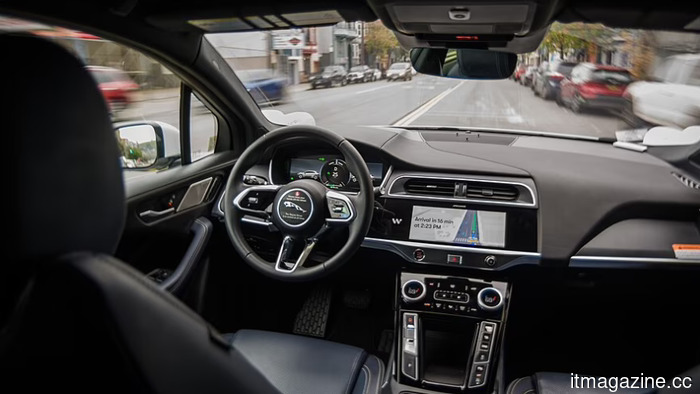 NHTSA requires companies developing autonomous vehicles to address issues related to first responder interference by the end of July.
The NHTSA reports that autonomous vehicles are interfering with emergency situations by obstructing ambulances. It has requested that developers of these vehicles provide solutions by the end of this month.
NHTSA requires companies developing autonomous vehicles to address issues related to first responder interference by the end of July.
The NHTSA reports that autonomous vehicles are interfering with emergency situations by obstructing ambulances. It has requested that developers of these vehicles provide solutions by the end of this month.
 Still hoping for a more affordable Vision Pro? A new report reveals some disappointing news.
Apple's more affordable Vision Pro seems less likely to materialize as Samsung Display has reportedly chosen to halt the development of the budget-friendly screen technology intended for the headset.
Still hoping for a more affordable Vision Pro? A new report reveals some disappointing news.
Apple's more affordable Vision Pro seems less likely to materialize as Samsung Display has reportedly chosen to halt the development of the budget-friendly screen technology intended for the headset.
 HubSpot retracts its decision on utilizing customer data for AI purposes.
HubSpot has abandoned its proposal to consolidate customer data for an AI feature following a four-day wave of criticism, highlighting how sensitive the issue of AI and data collection has become.
HubSpot retracts its decision on utilizing customer data for AI purposes.
HubSpot has abandoned its proposal to consolidate customer data for an AI feature following a four-day wave of criticism, highlighting how sensitive the issue of AI and data collection has become.
 Privacy concerns surrounding smart glasses: New York's ban faces Meta's solution.
New York prohibits smart glasses in all 1,240 courts as Meta secures its recording indicator, despite testing "super-sensing" glasses that are always on.
Privacy concerns surrounding smart glasses: New York's ban faces Meta's solution.
New York prohibits smart glasses in all 1,240 courts as Meta secures its recording indicator, despite testing "super-sensing" glasses that are always on.
Nvidia collaborates with chip competitor d-Matrix on inference technology.
Nvidia is integrating its GPUs with d-Matrix's inference chips in a collaborative system, marking a recent shift towards partnering with competitors in the chip industry rather than competing against them.