
Fi places Starlink satellites within a dog collar.
The smart-collar company Fi is incorporating Starlink technology into a dog collar. Its latest product, the Fi Ultra, utilizes SpaceX's direct-to-cell satellites, allowing owners to track their pets even in areas without mobile coverage.
Unlike typical devices, such as smartphones, the new Fi Ultra dog collar marks the first pet tracker that operates on Starlink’s direct-to-cell network, as reported exclusively by Fortune. Current GPS trackers, including Fi's previous versions as well as those from competitors like Tractive and Garmin, rely on ground-based mobile towers. When a pet moves beyond the range of the last tower, tracking ceases. The partnership with Starlink seeks to remedy that limitation.
With over 650 satellites deployed, SpaceX has effectively turned each into a cell tower in orbit, capable of communicating directly with LTE devices on the ground. This setup requires no additional hardware—just an unobstructed view of the sky. "The central drawback of all existing tracking products is their dependence on the LTE network," stated founder Jonathan Bensamoun to Fortune. "Starlink provides satellite technology, offering almost universal access, at least in the US for the moment."
The Fi Ultra is priced at $199 with a $99 semi-annual membership fee, while existing users are required to pay only for the device itself. Its battery life can extend up to three months, and machine learning technology helps it conserve power by entering sleep mode when the dog is home or resting, reactivating when the dog goes missing.
The launch comes at a strategic time, as Austrian competitor Tractive recently acquired the pet-wearable company Whistle, subsequently shutting down its products and leaving many devices unusable. Fi has successfully raised $45 million and has spent the last year expanding its presence to 38 countries, anticipating to exceed $100 million in annual recurring revenue this year.
The potential in this market is significant. The pet wearables sector is projected to grow from $3.8 billion in 2026 to $11.4 billion by 2033. As people have children later in life, spending on pets has increased. This sector aligns with the broader trend of consumer wearable technology and the ongoing race to connect the globe via satellite, involving companies from Rocket Lab to SpaceX.
The importance of this innovation lies in its ability to address dead zones for mobile phones. The introduction of a dog collar utilizing direct-to-cell satellites highlights the rapid expansion of this connectivity to various applications. “I'm focused on eliminating the trade-off between freedom and safety through technology,” Bensamoun remarked. Coverage will prioritize the US initially, but the trend is clear: if a device has a SIM card, it could soon be connected to a satellite.
Other articles
 Rollme's latest AirCam integrates a camera into your headphones for less than $80.
Rollme's AirCam is a bone conduction headset featuring an 8 MP camera, real-time translation capabilities, and a price that beats all competitors.
Rollme's latest AirCam integrates a camera into your headphones for less than $80.
Rollme's AirCam is a bone conduction headset featuring an 8 MP camera, real-time translation capabilities, and a price that beats all competitors.
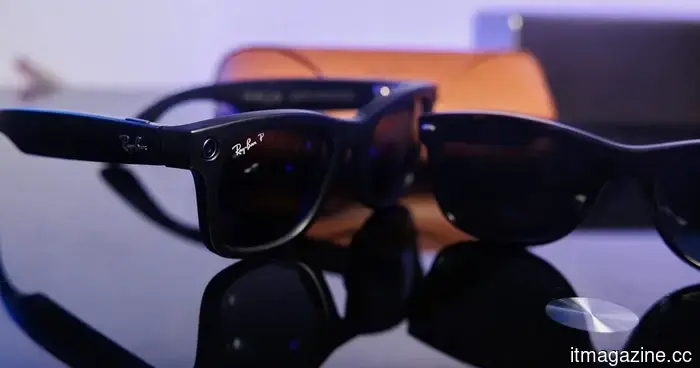 Meta may be developing smart glasses equipped with AI super sensing capabilities that would allow for constant visual and auditory perception.
Meta is said to be experimenting with "super sensing" AI glasses that will gather extensive information about your life and provide it to an AI assistant that will support you.
Meta may be developing smart glasses equipped with AI super sensing capabilities that would allow for constant visual and auditory perception.
Meta is said to be experimenting with "super sensing" AI glasses that will gather extensive information about your life and provide it to an AI assistant that will support you.
 Venus Aerospace secures $91 million for its detonation engine.
Venus Aerospace has secured $91 million in a Series B funding round to develop its rotating detonation rocket engine into equipment for missiles and high-speed space vehicles.
Venus Aerospace secures $91 million for its detonation engine.
Venus Aerospace has secured $91 million in a Series B funding round to develop its rotating detonation rocket engine into equipment for missiles and high-speed space vehicles.
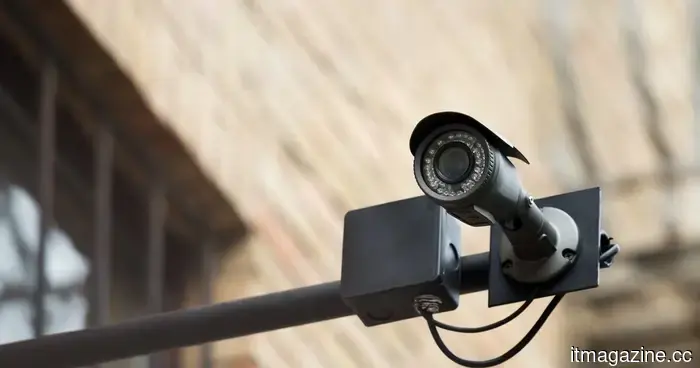 AI security cameras might soon identify your gait before they can recognize your facial features.
A novel AI-based gait recognition system can recognize individuals through their walking patterns, providing security cameras with an additional long-range indication when faces are unclear, obscured, or too small to rely on.
AI security cameras might soon identify your gait before they can recognize your facial features.
A novel AI-based gait recognition system can recognize individuals through their walking patterns, providing security cameras with an additional long-range indication when faces are unclear, obscured, or too small to rely on.
 Samsung intends to establish a floating AI data center by 2028.
Samsung Heavy Industries intends to develop a specialized 50MW floating data center by 2028, as onshore AI projects face challenges related to land, water, and community opposition.
Samsung intends to establish a floating AI data center by 2028.
Samsung Heavy Industries intends to develop a specialized 50MW floating data center by 2028, as onshore AI projects face challenges related to land, water, and community opposition.
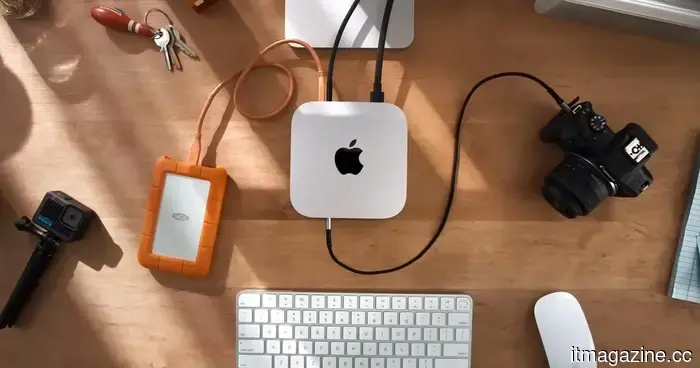 Apple begins testing lower-cost Chinese RAM in iPhones, but it won't lead to savings for consumers.
Apple is currently testing memory chips from CXMT, a Chinese chip manufacturer that is backed by the government and is on the Pentagon's watchlist. Previously, Washington has expressed concerns about this, and it is likely to do so again.
Apple begins testing lower-cost Chinese RAM in iPhones, but it won't lead to savings for consumers.
Apple is currently testing memory chips from CXMT, a Chinese chip manufacturer that is backed by the government and is on the Pentagon's watchlist. Previously, Washington has expressed concerns about this, and it is likely to do so again.
Fi places Starlink satellites within a dog collar.
Fi's latest product, the Fi Ultra, is the first dog collar to utilize Starlink's direct-to-cell satellites, enabling pet tracking beyond the reach of traditional phone towers, according to a report by Fortune.