

Smart glasses privacy dilemma: New York's ban confronts Meta's solution.
The backlash against smart glasses has now moved into the legal arena. Starting 20 July, New York will prohibit recording eyewear in all of its 1,240 courts, becoming the first state in the U.S. to implement such a measure. An internal memo from the New York State Unified Court System outlines this rule, which was initially reported by Syracuse.com.
The ban is extensive, encompassing any eyewear or headgear capable of recording audio or video, including prescription glasses with a camera. Those who arrive wearing such devices must surrender them to court personnel. This rule applies to staff and lawyers as well. The rationale for the ban is to prevent individuals from secretly recording court proceedings, which violates New York’s civil rights law.
This backlash has been years in the making. New York is not alone in this endeavor; courts in Philadelphia, Hawaii, and Wisconsin have already imposed restrictions on such devices. Additionally, some cruise lines have prohibited them in public spaces. The catalyst for this movement has been Meta, whose Ray-Ban and branded glasses have become emblematic of the trend, as well as the accompanying anxieties.
Critics have labeled the glasses "pervert glasses," a term that gained traction after influencers were seen using them to film women in public without their consent. One influencer, who boasts 1.8 million followers, gained notoriety by approaching strangers on camera and has faced physical confrontations more than once.
Meta’s primary defense mechanism is a small white LED light. This "capture" light flashes whenever the glasses are recording and does not have an off switch. However, individuals have managed to circumvent this feature; some have covered it with tape, while others have resorted to surgery to remove it altogether. A tech reporter discovered an entire industry dedicated to this workaround.
In response, Meta recently announced that the glasses would completely disable the camera if the system detects that the LED has been altered or destroyed. This update is mandatory and is currently being implemented, according to VP of wearables Alex Himel in a statement to The Verge. Meta also stated it would remove ads and listings for tampering services, ban the associated accounts, and pursue legal action against them.
In an interesting development, while Meta is defending the recording light, it is simultaneously testing glasses that would not feature it. According to the Financial Times, Meta is working on “super-sensing” prototypes that take pictures every few seconds throughout the day, designed to act as an always-on assistant that can help users remember where they placed their keys or recall conversations.
The potential downside is significant, as company executives are considering not activating the LED while the super-sensing feature is in use. As a result, bystanders would have no indication that they are being recorded. Within Meta, there is a divide on whether the captured footage should be stored or used for AI training, with one possibility being to retain only metadata instead of the actual images, although even that could provide precise location and device information.
This feature could potentially be added to existing glasses through a software update, which is relevant because the hardware is already in widespread use. However, battery life remains a significant limitation, as continuous recording quickly drains a small device.
This ongoing situation is raising concerns among privacy advocates. Meta has previously considered integrating facial recognition technology into its glasses, despite having misused it in the past. The issue is compounded by the proliferation of inexpensive cameras in public spaces. A recent report revealed that clips intended for training Meta’s AI, some containing private moments, were reviewed by human contractors.
Not everyone views the situation solely as a risk. Meta is running a program providing free glasses to all blind veterans in America, which disability advocates argue brings genuine benefits. Competitors are also strategizing cautiously; for instance, Realities offers camera-free frames, while Snap’s Specs pursue augmented reality through a different method. Google and Apple are also in close competition.
The significance of this issue lies in the fact that smart glasses are becoming commonplace, which poses challenges. They increasingly resemble ordinary items, making it difficult to discern who is recording. Courts have chosen the straightforward solution of banning such devices at their entrances. Meanwhile, Meta is attempting to regain trust with a brighter, tamper-proof recording light, even as its own plans seem to point toward glasses that constantly observe without any indication.
The future debate over privacy may not revolve around a recording light but rather the fundamental question of whether the camera should ever be activated at all.
Other articles
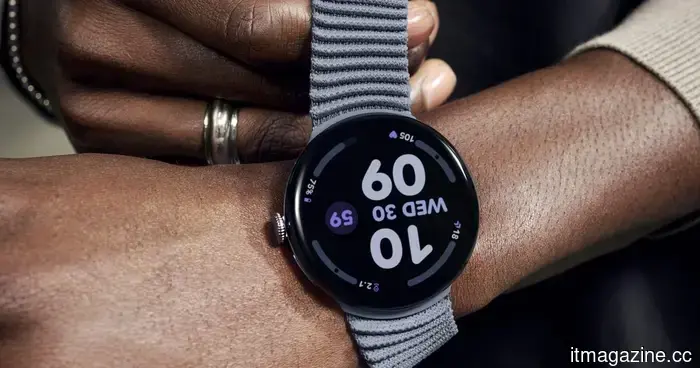 The Pixel Watch 5 from Google might not avoid the price increases set for 2026.
Pricing details for the Pixel Watch 5 have surfaced ahead of Google's event in August, indicating modest increases for certain models.
The Pixel Watch 5 from Google might not avoid the price increases set for 2026.
Pricing details for the Pixel Watch 5 have surfaced ahead of Google's event in August, indicating modest increases for certain models.
 Official renders of the Galaxy Z Flip 8 showcase Samsung's well-known foldable device in three new colors.
Official-looking renders of the Galaxy Z Flip 8 have surfaced, showcasing three color options and a design that feels very recognizable. However, Samsung might be counting on the fact that this is precisely what consumers are seeking.
Official renders of the Galaxy Z Flip 8 showcase Samsung's well-known foldable device in three new colors.
Official-looking renders of the Galaxy Z Flip 8 have surfaced, showcasing three color options and a design that feels very recognizable. However, Samsung might be counting on the fact that this is precisely what consumers are seeking.
 Still hoping for a more affordable Vision Pro? A new report reveals some disappointing news.
Apple's more affordable Vision Pro seems less likely to materialize as Samsung Display has reportedly chosen to halt the development of the budget-friendly screen technology intended for the headset.
Still hoping for a more affordable Vision Pro? A new report reveals some disappointing news.
Apple's more affordable Vision Pro seems less likely to materialize as Samsung Display has reportedly chosen to halt the development of the budget-friendly screen technology intended for the headset.
 A £35 billion scheme to construct 14 small nuclear reactors in the UK.
Michał Sołowow's SGE intends to install 14 GE Vernova Hitachi BWRX-300 small modular reactors at three locations in the UK, representing a £35 billion investment in power for the AI era, to be completed by 2034.
A £35 billion scheme to construct 14 small nuclear reactors in the UK.
Michał Sołowow's SGE intends to install 14 GE Vernova Hitachi BWRX-300 small modular reactors at three locations in the UK, representing a £35 billion investment in power for the AI era, to be completed by 2034.
 SpaceXAI introduces Grok 4.5, marking its inaugural model featuring Cursor.
SpaceXAI has introduced Grok 4.5, the inaugural model developed with Cursor. Musk refers to it as "Opus-class" yet more affordable, designed for tasks in coding, legal, and finance sectors.
SpaceXAI introduces Grok 4.5, marking its inaugural model featuring Cursor.
SpaceXAI has introduced Grok 4.5, the inaugural model developed with Cursor. Musk refers to it as "Opus-class" yet more affordable, designed for tasks in coding, legal, and finance sectors.
 City Labs introduces the inaugural commercial nuclear satellite.
City Labs' BOHR is the first nuclear power source designed for commercial use in orbit, a tritium betavoltaic battery created to function in areas where solar panels are not viable.
City Labs introduces the inaugural commercial nuclear satellite.
City Labs' BOHR is the first nuclear power source designed for commercial use in orbit, a tritium betavoltaic battery created to function in areas where solar panels are not viable.
Smart glasses privacy dilemma: New York's ban confronts Meta's solution.
New York prohibits smart glasses in all 1,240 courts as Meta secures its recording light, despite experimenting with always-on "super-sensing" eyewear.