
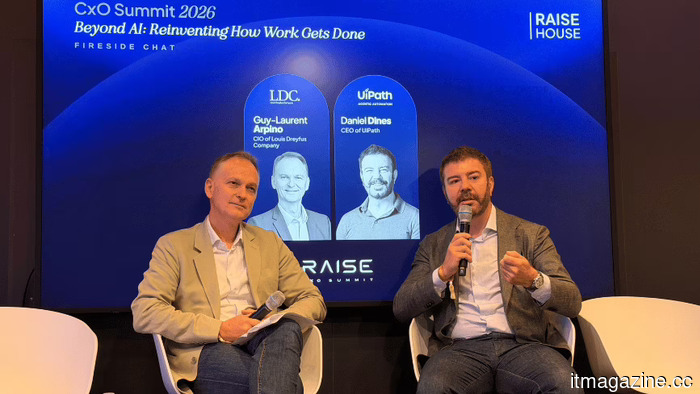
Daniel Dines believes that failing to hire junior employees is an error.
At the RAISE summit in Paris, two business leaders questioned why AI agents often falter during pilot programs. Their solution begins with prioritizing people rather than models.
Many enterprises face stagnation; their AI agents remain in pilot phases and fail to move into production. This was the straightforward assessment from Daniel Dines, CEO of UiPath, during his presentation at the RAISE CxO Summit earlier this week.
Dines criticized the industry's exaggerated claims, arguing that the idea of a “country of geniuses” operating like human employees is misleading and detrimental. He deemed this perception “a major disservice to the entire AI industry,” emphasizing that one cannot simply hire an AI, equip it with a laptop, integrate it into systems, and expect it to fully take over human roles.
He provided a more grounded prediction: “AI will not become human-like,” he stated. While it might achieve a certain level of artificial general intelligence (AGI), it will not think or learn in the same manner as humans. Therefore, enterprises must establish a new division of responsibilities.
The model he suggested is straightforward: AI proposes, humans decide, and automation executes. The challenge lies in the proposals—those that are trivial waste time, and those that contain bugs can take longer to fix than the original task. According to Dines, this discrepancy is a primary reason why many pilots do not progress.
The underlying issue is knowledge. Humans learn their jobs by piecing together various hints, from emails and support tickets to casual conversations. No organization centralizes all this information, and AI cannot assimilate it in the same way.
In response, Dines introduced the concept of a “cartographer.” This role involves creating a “map of work” for AI, detailing business entities, available actions, and potential consequences. Who is responsible if an AI agent processes a payment? Can anyone reverse it? Currently, this knowledge is often not documented.
Guy-Laurent Arpino, CIO of the Louis Dreyfus Company, concurred but emphasized a caution stemming from experience. He noted that the most challenging aspect of any transformation is the organizational element, rather than the technology itself.
The commodity-trading giant invested years in refining its data and codifying the expertise of its traders. This information is now stored in “craft databases” and knowledge repositories, which Arpino refers to as “the true intellectual property of our company.” It is only with this foundation that agents can operate effectively. “The biggest foe of AI agents is unreliability,” he remarked.
LDC is currently reworking its entire “contract-to-cash” process, encompassing everything from trade capture to logistics to payment. Some components rely on earlier automation established with UiPath, while others delineate where agents operate and where human intervention is necessary.
Both leaders consistently highlighted the importance of people. Dines believes that one human characteristic will endure beyond the automation trend: willpower. “I don’t foresee AI possessing its own will,” he noted. Businesses are driven by countless human initiatives, so the future will rely on “fewer passengers and more drivers.”
There exists a risk in the middle management tier. Senior leaders endorse the transition, and younger employees embrace it quickly, but middle managers can become stagnant between these two groups. LDC has a “champions” program that empowers its youngest employees with the latest tools, fostering innovation from the ground up.
The significance of this message was underscored by their stern warning regarding hiring practices. Recruitment of junior staff has declined sharply in the last 18 months, and Dines warned that this is a misstep. Reducing the hiring pipeline, he cautioned, will deprive the enterprise of future leaders. He reiterated the importance of senior staff serving as mentors.
Arpino agreed and stated that LDC continues to hire juniors despite high turnover in entry-level positions. The challenge, he acknowledged, is to train them without hindering the progress of AI. The technology continues to advance rapidly, while the more laborious task lies in preparing a company and its workforce to keep pace. This tension shaped the discussions at RAISE this week.
Europe’s aspirations for AI contrasted with prevailing uncertainties, including skepticism about whether AI will generate the growth its advocates promise.
Other articles
 Residents of London oppose a data center on Brick Lane, not even for AI purposes.
Residents are opposing a datacentre proposed for the old Truman Brewery on Brick Lane. The interesting aspect is that it would cater to high-frequency trading rather than AI.
Residents of London oppose a data center on Brick Lane, not even for AI purposes.
Residents are opposing a datacentre proposed for the old Truman Brewery on Brick Lane. The interesting aspect is that it would cater to high-frequency trading rather than AI.
 Meta will turn off the camera on AI smart glasses if you interfere with or obstruct the indicator light.
Meta is introducing an update that begins with its second-generation smart glasses, which will deactivate the camera capture system if the LED light is obstructed or physically altered.
Meta will turn off the camera on AI smart glasses if you interfere with or obstruct the indicator light.
Meta is introducing an update that begins with its second-generation smart glasses, which will deactivate the camera capture system if the LED light is obstructed or physically altered.
 Samsung has scheduled the Unpacked event for July 22 to unveil the Galaxy Z Fold 8 series of foldable smartphones.
During its upcoming Unpacked event, Samsung is anticipated to unveil three new foldable smartphones along with updated smartwatch versions.
Samsung has scheduled the Unpacked event for July 22 to unveil the Galaxy Z Fold 8 series of foldable smartphones.
During its upcoming Unpacked event, Samsung is anticipated to unveil three new foldable smartphones along with updated smartwatch versions.
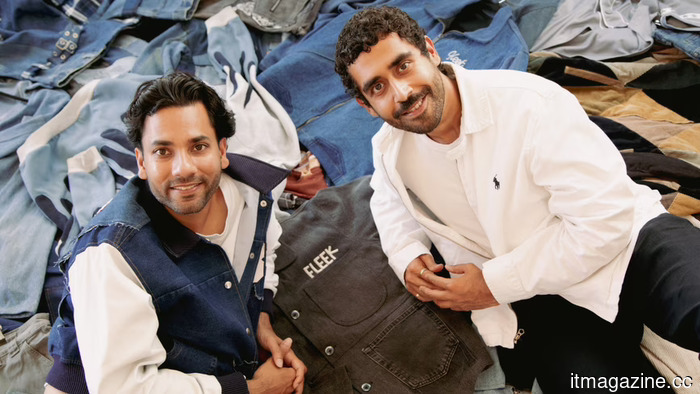 Fleek secures $25 million to develop the AI infrastructure for the worldwide secondhand fashion industry.
London-based startup Fleek has secured $25 million in Series B funding, with support from Burda, an early investor in Vinted, to enhance the AI technology it employs for sorting, grading, and pricing second-hand clothing.
Fleek secures $25 million to develop the AI infrastructure for the worldwide secondhand fashion industry.
London-based startup Fleek has secured $25 million in Series B funding, with support from Burda, an early investor in Vinted, to enhance the AI technology it employs for sorting, grading, and pricing second-hand clothing.
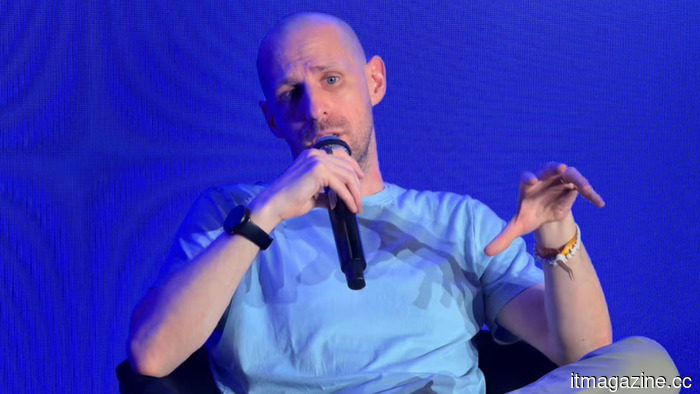 “It could genuinely jeopardize your business”: n8n’s argument for model-agnostic AI
During the Raise Summit, n8n founder Jan Oberhauser argued for the role of being AI’s orchestration layer as model sovereignty emerged as a significant topic in boardroom discussions.
Amazon's hidden 'Moonraker' initiative transforms Alexa into an AI agent.
Documents that have been leaked disclose Moonraker, Amazon's expensive initiative to develop Alexa into an AI agent capable of linking tasks, with anticipated GPU expenses exceeding $100 million by 2026.
“It could genuinely jeopardize your business”: n8n’s argument for model-agnostic AI
During the Raise Summit, n8n founder Jan Oberhauser argued for the role of being AI’s orchestration layer as model sovereignty emerged as a significant topic in boardroom discussions.
Amazon's hidden 'Moonraker' initiative transforms Alexa into an AI agent.
Documents that have been leaked disclose Moonraker, Amazon's expensive initiative to develop Alexa into an AI agent capable of linking tasks, with anticipated GPU expenses exceeding $100 million by 2026.
Daniel Dines believes that failing to hire junior employees is an error.
At the Raise summit, UiPath's Daniel Dines stated that reducing junior hiring is a misstep, while he and LDC's Guy-Laurent Arpino discussed the future of enterprise AI.