
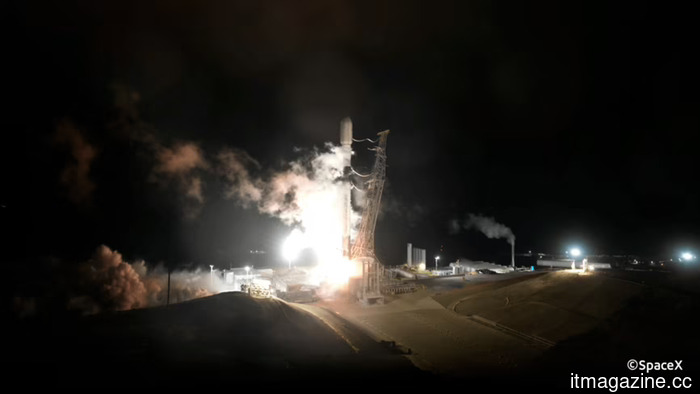
Romania spearheads its inaugural private ESA mission with the launch of CyberCUBE.
A Falcon 9 rocket launched from Vandenberg Space Force Base in California on the morning of July 7, carrying a satellite approximately the size of a loaf of bread that will spend the next year investigating how European spacecraft can be attacked. The payload, named CyberCUBE, marks the first European Space Agency mission fully managed by a private company based in Romania.
This distinction is significant in a sector where ESA missions have traditionally been led by larger member states of the agency. It coincides with record levels of private space technology investment across Europe and heightened concerns in Brussels regarding the security of the orbital systems it relies on.
GMV Romania, the local branch of the Spanish technology group, served as the prime contractor, guiding the mission through its design, integration, launch, and in-orbit validation. This makes CyberCUBE the first ESA satellite coordinated by a Romanian company, according to GMV.
Cristian Chițu, space director at GMV Romania, stated, "We have shown that Romanian experts can manage an ESA mission from start to finish." He characterized the launch as a significant achievement for the country's broader space sector rather than solely for one company.
Romanian engineers also selected the launch provider and assisted in integrating the satellite into Exolaunch’s EXOpod deployment system, from which SpaceX’s Falcon 9 deployed it into orbit. The team was involved in supervising launch operations on the ground in California.
The flight hardware is a 3U CubeSat constructed by Alén Space, the Spanish small satellite specialist that GMV acquired in 2023. It features reprogrammable onboard processing and a payload designed to monitor cyber threats while in orbit.
The objective is to provide ESA with a secure, reconfigurable test environment for security tools prior to their use in operational missions. Planned experiments include detecting unauthorized access to command systems and validating post-quantum cryptography, which is designed to withstand future quantum computing threats.
The mission focuses on two main threats: jamming, which disrupts a signal with intentional interference, and spoofing, which provides a spacecraft with misleading but convincing data. Both threats have evolved from theoretical concerns to documented strategies as Europe increasingly depends on its satellites.
According to GMV, the mission has a budget of approximately €1.9 million and an anticipated operational lifespan of at least twelve months. ESA has issued an open call inviting external researchers to conduct their own experiments on the platform, as part of the agency's growing interest in collaborating on ESA-backed satellite projects with commercial partners.
The primary user of the satellite will be ESA’s Cybersecurity Operations Centre, which will manage experiment requests and analyze the return data. Daily operations will be conducted from the agency’s center in Redu, Belgium, with high-speed communications coordinated from its operations hub in Darmstadt.
On the ground, GMV Spain provided essential components of the control segment, including a mission control center developed using the company’s commercial FocusSuite software. Engineers also created a flatsat, a simplified duplicate of the satellite that allows operators to practice commands before sending them to the actual spacecraft.
Daniel-Eugeniu Crunțeanu, director general of the Romanian Space Agency, remarked, "The successful launch illustrates the increasing maturity of Romania’s space ecosystem and the benefit of ongoing participation in ESA programs." He linked future aspirations to Romania's capacity to continue contributing to ESA’s optional programs.
This launch takes place amid broader European efforts to strengthen digital security, encompassing NATO’s cyber partnerships with private vendors and national space strategies. Space, once considered a remote and largely invulnerable domain, is now increasingly regarded as a critical area to defend.
GMV will oversee several weeks of in-orbit validation before transferring control to ESA for the mission’s operational phase. The insights gained are intended to influence how the agency safeguards the satellites it launches in the future.
Other articles
 This VR empathy game might just be the beginning of something far more unsettling.
Rekindle employs facial recognition biometrics to transform emotions into gameplay, but this concept could ultimately advance emotion-sensitive technology in therapy, safety systems, and interfaces that monitor more than just clicks.
This VR empathy game might just be the beginning of something far more unsettling.
Rekindle employs facial recognition biometrics to transform emotions into gameplay, but this concept could ultimately advance emotion-sensitive technology in therapy, safety systems, and interfaces that monitor more than just clicks.
 Marshall updates its Acton and Stanmore speakers, enhancing bass quality and ease of repair.
Marshall has introduced the Acton IV and Stanmore IV Bluetooth speakers, featuring enhanced sound quality, Bluetooth Auracast technology, interchangeable components, and greater flexibility in positioning.
Marshall updates its Acton and Stanmore speakers, enhancing bass quality and ease of repair.
Marshall has introduced the Acton IV and Stanmore IV Bluetooth speakers, featuring enhanced sound quality, Bluetooth Auracast technology, interchangeable components, and greater flexibility in positioning.
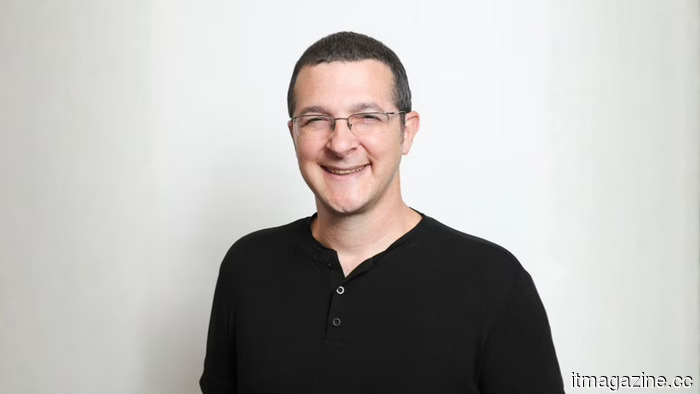 Hud CEO Roee Adler states that runtime intelligence will shape the upcoming era of software operations.
Roee Adler, the CEO of the Israeli startup Hud, contends that conventional observability is inadequate for AI coding agents. He believes that runtime intelligence, which captures the production context at the function level, will emerge as the architectural layer that ensures the reliability of autonomous software delivery.
Hud CEO Roee Adler states that runtime intelligence will shape the upcoming era of software operations.
Roee Adler, the CEO of the Israeli startup Hud, contends that conventional observability is inadequate for AI coding agents. He believes that runtime intelligence, which captures the production context at the function level, will emerge as the architectural layer that ensures the reliability of autonomous software delivery.
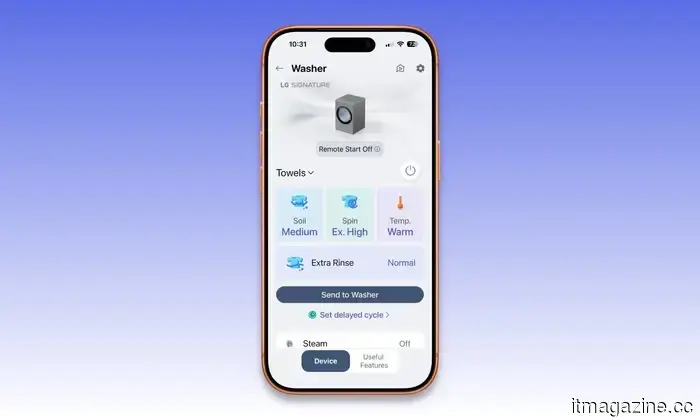 LG SIGNATURE WM9900HSA review: A washer that's just as enjoyable to use as it is aesthetically pleasing.
The impressive 5.8-cu-ft flagship washer from LG offers rapid, quiet, AI-driven cleaning and features months' worth of automatic soap dispensing, yet the beautiful LCD has difficulty in bright sunlight, and the placement of the drawer presents some risk.
LG SIGNATURE WM9900HSA review: A washer that's just as enjoyable to use as it is aesthetically pleasing.
The impressive 5.8-cu-ft flagship washer from LG offers rapid, quiet, AI-driven cleaning and features months' worth of automatic soap dispensing, yet the beautiful LCD has difficulty in bright sunlight, and the placement of the drawer presents some risk.
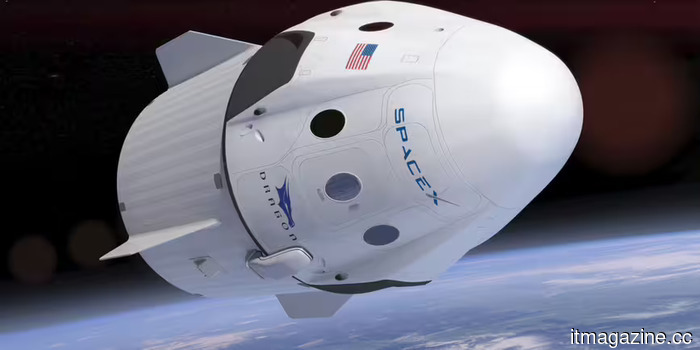 The most optimistic supporter of SpaceX predicts a valuation of $10.5 trillion.
Raymond James set a Street-high target of $800 for SpaceX, suggesting a valuation of $10.5 trillion, as the company became part of the Nasdaq 100. Meanwhile, Jeremy Grantham estimates the likelihood of a crash at 90%.
The most optimistic supporter of SpaceX predicts a valuation of $10.5 trillion.
Raymond James set a Street-high target of $800 for SpaceX, suggesting a valuation of $10.5 trillion, as the company became part of the Nasdaq 100. Meanwhile, Jeremy Grantham estimates the likelihood of a crash at 90%.
 This virtual reality empathy game might be the beginning of something far more unsettling.
Rekindle employs facial recognition biometrics to translate emotions into gameplay. However, this concept could also advance emotion-sensitive technology in areas like therapy, safety mechanisms, and user interfaces that monitor more than just clicks.
This virtual reality empathy game might be the beginning of something far more unsettling.
Rekindle employs facial recognition biometrics to translate emotions into gameplay. However, this concept could also advance emotion-sensitive technology in areas like therapy, safety mechanisms, and user interfaces that monitor more than just clicks.
Romania spearheads its inaugural private ESA mission with the launch of CyberCUBE.
CyberCUBE, an orbital cybersecurity test facility operated by GMV Romania, has been launched aboard a Falcon 9. This marks the first ESA mission directed by a Romanian firm.