
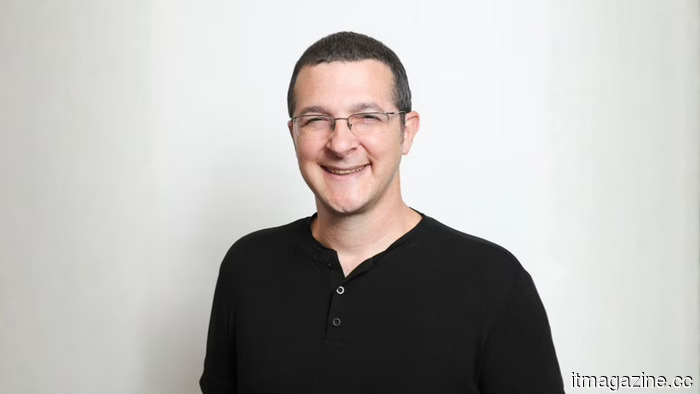
Hud CEO Roee Adler states that runtime intelligence will shape the upcoming era of software operations.
Artificial intelligence has significantly sped up software development, enabling coding agents to generate substantial amounts of production-ready code within minutes. However, while the speed of software writing has increased, ensuring proper software behavior in production continues to be one of the engineering field's major challenges.
For many years, observability platforms have assisted teams in monitoring infrastructure through logs, metrics, and traces. Roee Adler, CEO of Hud, notes that the surge in AI-assisted development is highlighting the shortcomings of systems initially crafted for human operators instead of autonomous coding agents.
Software Is Being Developed for a Different Time
Adler contends that this transition goes beyond merely adopting AI tools; it signifies an essential transformation in software development itself. He explains, “The core change is that software is no longer predominantly created by humans using the engineering processes we've honed over decades; it's now being generated by coding agents that are an entirely different breed.” He describes these agents as “fast, impatient, and aggressive,” yet they lack the production context necessary to consistently make safe decisions in complicated environments.
Adler believes that rather than hindering AI adoption, the industry should establish the infrastructure needed for coding agents to evolve into reliable collaborators. He emphasizes that the objective isn't to replace engineers but to provide AI with enough real-world insights to function confidently in production.
Accelerated Development Has Created a New Challenge
While AI is significantly boosting the volume of code that developers can create, Adler points out that organizations are not experiencing a similar acceleration in overall software delivery.
He claims that the issue doesn't stem from engineering teams encountering new operational blind spots. Rather, existing review and validation processes were not designed to keep pace with AI-generated development. As more code enters production, maintaining confidence becomes more challenging. Adler observes that although individual engineers are becoming increasingly productive, “the bottleneck has shifted to the gate, which is attempting to prevent erroneous changes from harming the system.”
He believes engineering organizations now face two critical questions: how to review the ever-growing amount of AI-generated code while ensuring business intent is upheld, and how to retain institutional knowledge as fewer engineers are familiar with every aspect of increasingly AI-generated codebases.
Why Observability Is Insufficient for AI
Engineering teams currently invest significantly in logs, metrics, traces, and application performance monitoring platforms. While these systems are beneficial for pinpointing when services become unhealthy, Adler argues they weren't developed to provide the type of evidence that AI systems need.
He articulates, “They’re designed to highlight that something is wrong, not why.” Even though logs, metrics, and traces can assist engineers in investigating incidents, “Having agents sift through logs is what we currently have, and it's inadequate.” Adler maintains that AI needs “structured, function-level context that describes what is actually executed,” allowing models direct insight into how code operates under real production conditions instead of relying on them to deduce behavior from fragmented telemetry.
This philosophy underpins what Hud refers to as runtime intelligence.
Why Context Is More Important Than More Data
Traditional observability often results in massive datasets of telemetry, leaving engineers to reconstruct failures after they occur. Adler asserts that simply accumulating more information doesn’t resolve the issue if the crucial details are still obscured.
He explains, “More telemetry creates a larger haystack, and the needle is the only item you sought.” When production incidents arise, engineers don’t require terabytes of logs; they need precise execution flows, affected parameters, code paths, dependency behaviors, and relevant forensic context that elucidate why a failure transpired.
Hud’s methodology focuses on automatically capturing that forensic context in real-time as incidents occur, rather than requiring engineers to predict beforehand which logs, dashboards, or instrumentation will be needed. Adler argues this shift is vital because manual configuration inevitably results in coverage gaps. “Any process that relies on setup gets applied inconsistently,” he remarks, noting that organizations frequently overlook failures they never anticipated.
Runtime Intelligence as a New Layer in Architecture
While many observability vendors are integrating AI assistants into their existing offerings, Adler does not see runtime intelligence as just an added feature.
He posits that “it constitutes a separate layer, not just an enhancement.” Simply overlaying AI onto sampled telemetry means the model inherits all the limitations of the underlying data. In contrast, runtime intelligence transforms the kind of information gathered from the outset, generating production-aware context designed specifically for AI reasoning rather than human analysis.
This distinction clarifies Hud’s focus on capturing execution context without sampling. According to Adler, although sampling is effective for dashboards and long-term trends, it poses challenges during incident response because the rare event that caused the outage may be the very data that gets discarded. Since AI can only reason from the information provided to it, lacking production data not only hampers investigations but can also lead models to reach incorrect conclusions.
The Future Involves Reviewing AI, Not Debugging It
Looking forward, Adler anticipates that engineers will spend considerably less time manually investigating production incidents and much more time verifying AI-generated fixes.
Other articles
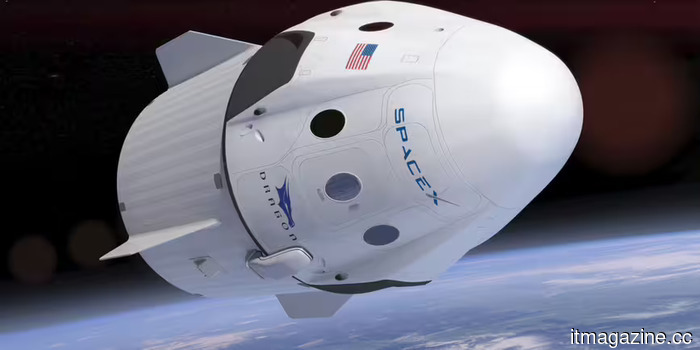 The most optimistic supporter of SpaceX predicts a valuation of $10.5 trillion.
Raymond James set a Street-high target of $800 for SpaceX, suggesting a valuation of $10.5 trillion, as the company became part of the Nasdaq 100. Meanwhile, Jeremy Grantham estimates the likelihood of a crash at 90%.
The most optimistic supporter of SpaceX predicts a valuation of $10.5 trillion.
Raymond James set a Street-high target of $800 for SpaceX, suggesting a valuation of $10.5 trillion, as the company became part of the Nasdaq 100. Meanwhile, Jeremy Grantham estimates the likelihood of a crash at 90%.
 Marshall updates its Acton and Stanmore speakers, enhancing bass quality and ease of repair.
Marshall has introduced the Acton IV and Stanmore IV Bluetooth speakers, featuring enhanced sound quality, Bluetooth Auracast technology, interchangeable components, and greater flexibility in positioning.
Marshall updates its Acton and Stanmore speakers, enhancing bass quality and ease of repair.
Marshall has introduced the Acton IV and Stanmore IV Bluetooth speakers, featuring enhanced sound quality, Bluetooth Auracast technology, interchangeable components, and greater flexibility in positioning.
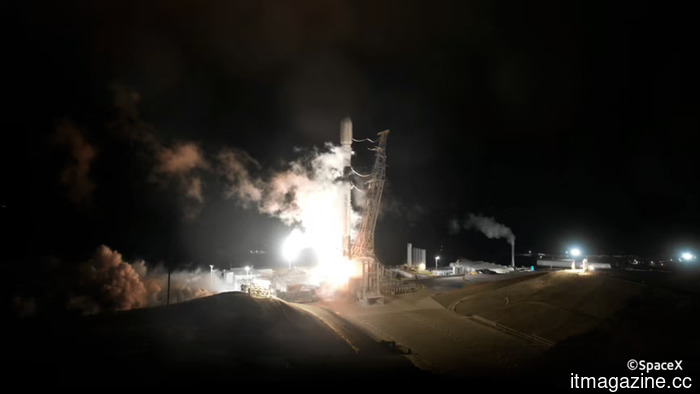 Romania spearheads its inaugural private ESA mission through the launch of CyberCUBE.
CyberCUBE, an orbital cybersecurity testbed operated by GMV Romania, has been launched aboard a Falcon 9. This marks the first ESA mission led by a Romanian firm.
Romania spearheads its inaugural private ESA mission through the launch of CyberCUBE.
CyberCUBE, an orbital cybersecurity testbed operated by GMV Romania, has been launched aboard a Falcon 9. This marks the first ESA mission led by a Romanian firm.
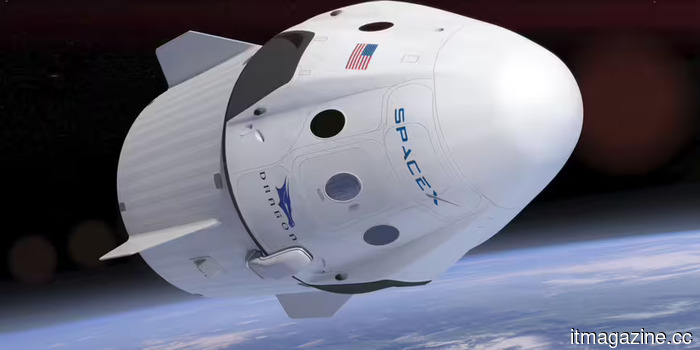 SpaceX's most optimistic supporter predicts a valuation of $10.5 trillion.
Raymond James set a Street-high target of $800 for SpaceX, suggesting a valuation of $10.5 trillion, coinciding with its inclusion in the Nasdaq 100. Meanwhile, Jeremy Grantham estimates a 90% chance of a market crash.
SpaceX's most optimistic supporter predicts a valuation of $10.5 trillion.
Raymond James set a Street-high target of $800 for SpaceX, suggesting a valuation of $10.5 trillion, coinciding with its inclusion in the Nasdaq 100. Meanwhile, Jeremy Grantham estimates a 90% chance of a market crash.
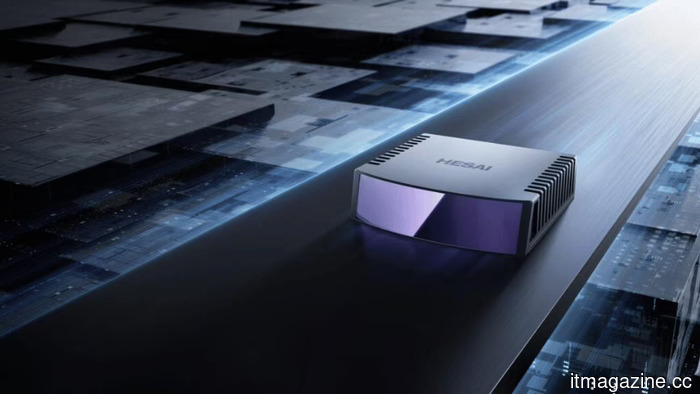 Chinese lidar manufacturer Hesai, which is on the blacklist, is fueling self-driving initiatives in the US.
The Pentagon imposed sanctions on Hesai, identifying it as a Chinese military firm. Despite this, its lidar technology continues to enable US robotaxis, trucks, and an Nvidia autonomous driving platform.
Chinese lidar manufacturer Hesai, which is on the blacklist, is fueling self-driving initiatives in the US.
The Pentagon imposed sanctions on Hesai, identifying it as a Chinese military firm. Despite this, its lidar technology continues to enable US robotaxis, trucks, and an Nvidia autonomous driving platform.
 According to data from Estonia's Odience, niche creator communities are outperforming those with a broader audience.
Performance statistics from Odience, based in Estonia, indicate that nano and micro creators with closely connected niche audiences consistently surpass mass-reach influencer campaigns in terms of clicks, leads, and conversion rates.
According to data from Estonia's Odience, niche creator communities are outperforming those with a broader audience.
Performance statistics from Odience, based in Estonia, indicate that nano and micro creators with closely connected niche audiences consistently surpass mass-reach influencer campaigns in terms of clicks, leads, and conversion rates.
Hud CEO Roee Adler states that runtime intelligence will shape the upcoming era of software operations.
Roee Adler, the CEO of the Israeli startup Hud, contends that conventional observability is inadequate for AI coding agents. He believes that runtime intelligence, which captures the production context at the function level, will emerge as the architectural layer that ensures the reliability of autonomous software delivery.