

New Zealand dismisses the idea of banning VPNs following a backlash regarding privacy concerns.
Summary: The New Zealand government has dismissed the idea of restricting or banning VPNs in the context of its proposed social media ban for those under 16, following a strong privacy backlash. Prime Minister Christopher Luxon and Education Minister Erica Stanford clarified that banning VPNs is not part of their plans. This conversation was triggered by a report suggesting Stanford had proposed VPN restrictions, which some officials viewed as a challenge for enforcing age verification. Stanford insists no such ban was ever considered, despite coalition partner NZ First indicating that initial proposals might have led to discussions about VPN limitations and digital IDs.
The quick reaction against this notion came from various political sides, with parties like ACT regarding anti-encryption measures as unacceptable, and the Free Speech Union criticizing the idea as “censorship infrastructure” rather than a means for child safety. VPNs serve not just as circumvention tools for teens but are vital security resources for businesses, journalists, and individuals protecting their data.
As New Zealand finalizes its under-16 social media ban, similar legislation is being adopted in other countries. The issue of VPNs arises frequently in global discussions about age verification laws, as seen with the UK's under-16 ban where there are concerns that measures affecting VPN usage could lead to invasive checks for adults. This trend is reflected in proposals across Europe and in Greece’s intended under-15 ban.
The challenge remains in effectively enforcing these regulations, as demonstrated by Australia's experience with its ban. Although New Zealanders retain access to their VPNs and privacy advocates achieve a victory, the more significant dilemma of enforcing a ban on minors without compromising the security of the wider population persists.
Other articles
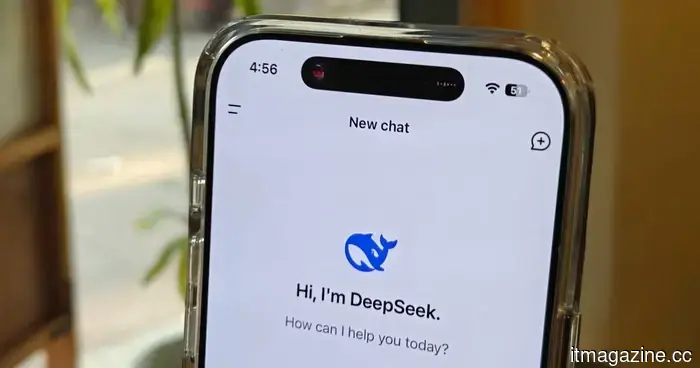 The era of affordable Chinese AI models may be coming to an end as the government considers implementing restrictions similar to those in the United States.
Chinese officials have allegedly talked about restricting foreign access to the nation's most sophisticated closed and open-weight AI models due to national security issues.
The era of affordable Chinese AI models may be coming to an end as the government considers implementing restrictions similar to those in the United States.
Chinese officials have allegedly talked about restricting foreign access to the nation's most sophisticated closed and open-weight AI models due to national security issues.
 Are your iPhone shortcuts vanishing silently? iOS 27 has introduced a method to restore them.
If you've noticed a sudden reduction in your iPhone Shortcuts library without any clear reason, the new Restore button in iOS 27 clarifies the issue and resolves it.
Are your iPhone shortcuts vanishing silently? iOS 27 has introduced a method to restore them.
If you've noticed a sudden reduction in your iPhone Shortcuts library without any clear reason, the new Restore button in iOS 27 clarifies the issue and resolves it.
 OpenAI is looking to hire an investment banker for its AI division.
OpenAI is offering a $205K position for a "subject matter expert" to educate its AI on the foundational tasks of Wall Street, as it competes with Anthropic for profitable finance sector profits.
OpenAI is looking to hire an investment banker for its AI division.
OpenAI is offering a $205K position for a "subject matter expert" to educate its AI on the foundational tasks of Wall Street, as it competes with Anthropic for profitable finance sector profits.
 Apple may have discovered an innovative method to enhance the battery life of the iPhone Air 2.
Apple's upcoming slim iPhone could successfully combine style, improved battery life, and enhanced cameras without increasing its thickness.
Apple may have discovered an innovative method to enhance the battery life of the iPhone Air 2.
Apple's upcoming slim iPhone could successfully combine style, improved battery life, and enhanced cameras without increasing its thickness.
 Waymo robotaxis experienced a halt and caught fire on July 4.
Waymo's autonomous vehicles lost power, obstructed traffic in San Francisco, and one drove over a lit firework, igniting a fire during the Fourth of July celebrations.
Waymo robotaxis experienced a halt and caught fire on July 4.
Waymo's autonomous vehicles lost power, obstructed traffic in San Francisco, and one drove over a lit firework, igniting a fire during the Fourth of July celebrations.
 Microsoft replaces OpenAI with its own AI in several applications.
Microsoft is directing certain app features to its own MAI models rather than relying on OpenAI and Anthropic, reducing its dependence on external partners.
Microsoft replaces OpenAI with its own AI in several applications.
Microsoft is directing certain app features to its own MAI models rather than relying on OpenAI and Anthropic, reducing its dependence on external partners.
New Zealand dismisses the idea of banning VPNs following a backlash regarding privacy concerns.
New Zealand has rejected proposals to prohibit VPNs in connection with its social media restrictions for those under 16 years old following strong privacy concerns, as age verification legislation continues to move closer to encryption issues.