

Toyota relocates Tacoma production to Texas; Trump takes credit.
Toyota plans to invest $3.6 billion to expand its San Antonio facility and transition some Tacoma pickup production from Mexico to Texas over the next four years, creating 2,000 jobs. While Trump took credit for this decision due to tariffs, Toyota did not cite tariffs as a reason for the move and confirmed that it is not leaving Mexico. This announcement comes amid uncertainty regarding the USMCA, which was not renewed in its current form on July 1st.
On Monday, Toyota unveiled its intention to invest $3.6 billion in its San Antonio plant to add a second assembly line and move part of Tacoma production from Mexico. President Donald Trump quickly claimed this as evidence that his trade policy is effective, stating, “That’s what tariffs do, properly used,” during a visit to Ankara, Turkey.
However, Toyota's narrative differs, as the announcement did not link the expansion to tariffs. North America chief Ted Ogawa emphasized the company's "confidence in the region’s workforce, innovation, and long-term growth potential." Importantly, the company is not leaving Mexico; production will gradually shift from its Baja California plant over approximately four years, while Toyota will continue to manufacture Tacomas in Guanajuato and Corollas in Mexico.
The expansion will create around 2,000 jobs and add 2.5 million square feet, effectively doubling the size of the Texas location by 2030 and increasing annual capacity by 150,000 vehicles. Since 2003, Toyota's total investment in San Antonio will reach $8.3 billion.
Trump's portrayal overlooks a critical detail: in the year ending March 2026, Toyota's North American division reported an operating loss, with US tariffs costing about $9 billion in operating income. Reshoring production is one way to address this issue, but other options include raising prices or absorbing losses. Automakers are reevaluating strategies, with numerous electric vehicle models being removed from the US market as tariffs and the loss of tax credits alter the financial landscape.
The policy environment is indeed unstable. On July 1, the US chose not to renew the USMCA in its current state, opting for annual reviews and pushing for the requirement that 50% of automotive value be produced within America. Toyota acknowledged this uncertainty, calling for a "quick resolution" to the USMCA while reaffirming its commitment to all three North American nations, indicating a cautious approach rather than celebrating.
For Trump, the situation appears positive regardless of Toyota's perspective, as a well-known brand is adding US factory jobs during his administration, which has argued that tariffs and the evolving US market are prompting automakers to produce domestically. Meanwhile, Toyota is gaining real momentum in the US, nearing GM as hybrid sales rise while competitors’ electric vehicle sales decline, making it a logical business decision to expand where their trucks are selling well.
Both interpretations hold validity: tariffs are increasing Mexican production costs, while Texas presents a growing market and workforce. The main difference lies in who gets to take the credit, and the impact of the cross-border situation extends beyond Toyota, affecting Tesla's own sourcing adjustments due to tariffs.
Other articles
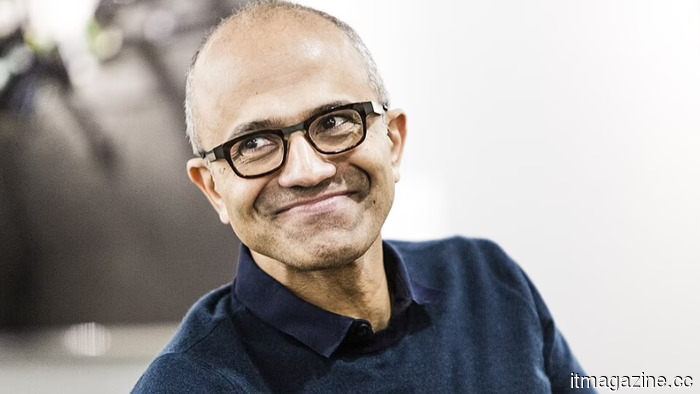 Microsoft replaces OpenAI's technology with its own AI in certain applications.
Microsoft is shifting certain app features to its own MAI models rather than relying on OpenAI and Anthropic, reducing its dependence on external partners.
Microsoft replaces OpenAI's technology with its own AI in certain applications.
Microsoft is shifting certain app features to its own MAI models rather than relying on OpenAI and Anthropic, reducing its dependence on external partners.
 Toyota moves Tacoma production to Texas; Trump takes credit.
Toyota's $3.6 billion expansion in Texas involves shifting a portion of Tacoma production from Mexico. Trump attributes this to tariffs, but Toyota has not done so, and the company is not exiting Mexico.
Toyota moves Tacoma production to Texas; Trump takes credit.
Toyota's $3.6 billion expansion in Texas involves shifting a portion of Tacoma production from Mexico. Trump attributes this to tariffs, but Toyota has not done so, and the company is not exiting Mexico.
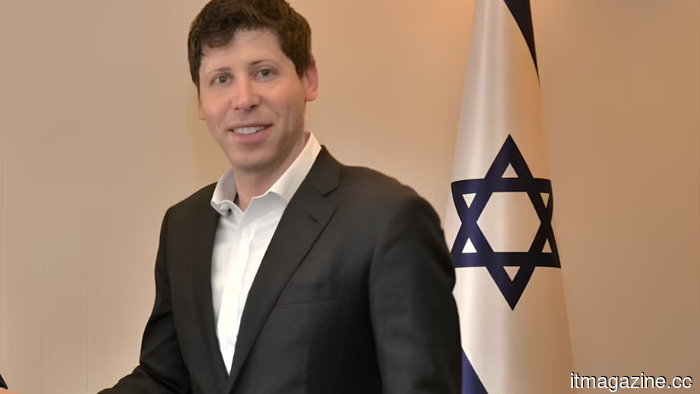 OpenAI is seeking to hire an investment banker for its AI division.
OpenAI's $205K position for a "subject matter expert" intends to instruct its AI in the routine tasks of Wall Street while competing with Anthropic for profitable revenue in the finance sector.
OpenAI is seeking to hire an investment banker for its AI division.
OpenAI's $205K position for a "subject matter expert" intends to instruct its AI in the routine tasks of Wall Street while competing with Anthropic for profitable revenue in the finance sector.
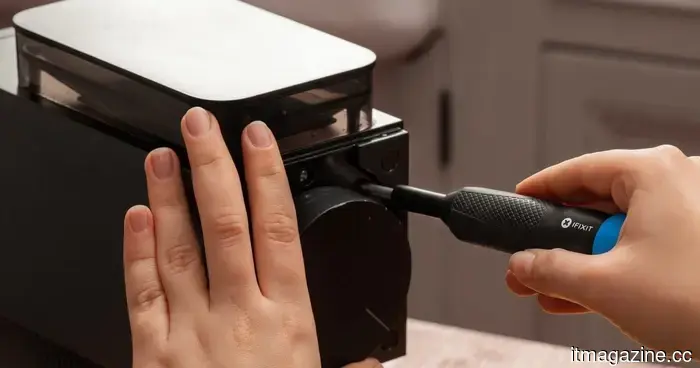 iFixit aims to repair your appliances next and has introduced a larger toolkit.
The Megalodon Driver Kit from iFixit, priced at $34.95, expands its repair knowledge beyond small electronics by featuring longer bits and a high-torque driver designed for home repairs.
iFixit aims to repair your appliances next and has introduced a larger toolkit.
The Megalodon Driver Kit from iFixit, priced at $34.95, expands its repair knowledge beyond small electronics by featuring longer bits and a high-torque driver designed for home repairs.
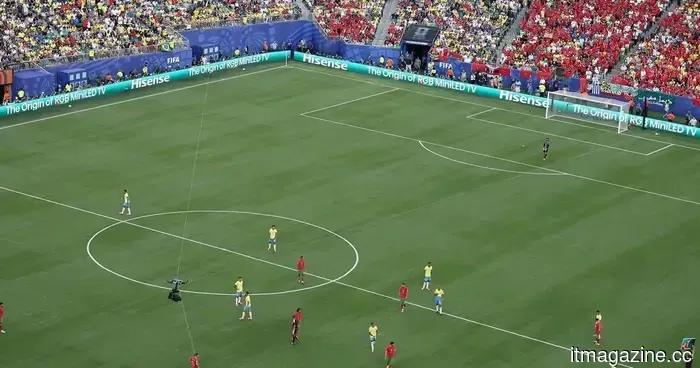 Hisense's RGB MiniLED technology will be prominently featured at the FIFA World Cup 2026™.
From the VAR Room to the fan zones, Hisense's advanced display technology is transforming the way the globe’s largest tournament is played, officiated, and viewed.
Hisense's RGB MiniLED technology will be prominently featured at the FIFA World Cup 2026™.
From the VAR Room to the fan zones, Hisense's advanced display technology is transforming the way the globe’s largest tournament is played, officiated, and viewed.
 Claude Cowork is now available on the web and mobile platforms.
Anthropic's Claude Cowork is now available on both web and mobile platforms, allowing tasks to continue running even when your laptop is closed, as AI agents make their way into the entire workplace.
Claude Cowork is now available on the web and mobile platforms.
Anthropic's Claude Cowork is now available on both web and mobile platforms, allowing tasks to continue running even when your laptop is closed, as AI agents make their way into the entire workplace.
Toyota relocates Tacoma production to Texas; Trump takes credit.
Toyota's $3.6 billion expansion in Texas will shift a portion of Tacoma production away from Mexico. While Trump attributes this change to tariffs, Toyota does not agree and confirms that it will not be exiting Mexico.