

The prohibition of social media for young users is turning into a significant challenge for age verification.
A fabricated birthday is sufficient to bypass Australia's social media restriction for teenagers.
Australia implemented a world-first ban on social media for those under 16, intending to keep them off popular platforms such as Instagram, Snapchat, TikTok, YouTube, and X. While this change sparked considerable debate, it seems evading the ban was not much of a challenge.
Researchers set up 50 test accounts across nine of the ten platforms affected by the legislation, with each account stating its user was 16, the allowed minimum age. None of the platforms required the researchers to provide verification or undergo any further age-assurance checks. The only exception was the Australian livestreaming service Kick, which refused to create an account without proper age verification.
Insights into platforms' potential knowledge of younger users
The findings uncovered some intriguing details. Some test accounts received advertisements for youth banking products, hinting that the platforms might have adequate behavioral data to categorize them within a younger age group. One account created on X, stating an age of 16, reportedly encountered pornographic material.
Australia's framework was built around a tiered age assurance approach. Platforms could start with simpler verifications, like claimed birthdays and account behavior, before escalating users of concern to facial age estimation or other formal checks. However, the researchers observed that this escalation did not occur in their test, as all accounts remained active.
Meta challenged the framework of the test, stating that the accounts self-reported their age and might not exhibit the behavior typical of genuine users under 16.
The efficacy of checks introduces another challenge
Australia prohibits platforms from solely relying on government-issued identification since requiring all users to upload ID raises significant privacy issues. Lightweight verification methods maintain user privacy and simplify signups, but determined teenagers can easily circumvent them. More stringent systems might necessitate facial scans, identity documents, parental consent, or additional measures.
Previous research indicated that over 85% of Australians aged 12 to 15 continued to use restricted social media platforms three months after the ban was enacted. The government has since increased maximum potential fines and threatened legal action against companies it deems non-compliant. Platforms initially claimed to have removed millions of suspected underage accounts, but ongoing research suggests that such removals do not necessarily confirm that young users have left.
Australia’s initiative has also sparked significant reactions worldwide, with governments in the UK, Europe, and the US contemplating or implementing similar age restrictions for social media applications.






Other articles
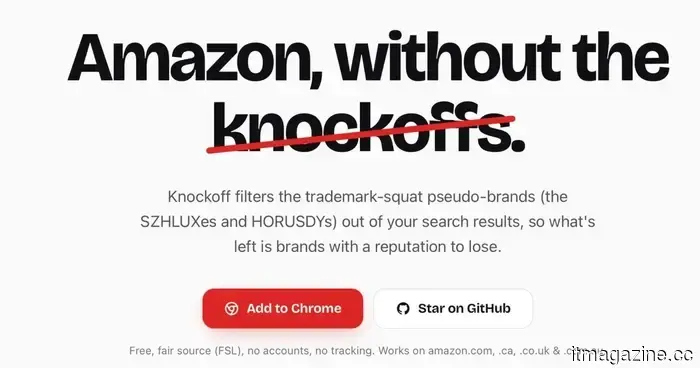 Amazon is rife with imitators and dubious brands. This Chrome extension helps you steer clear of them.
Knockoff allows you to reduce the visibility of unfamiliar Amazon brands, making your shopping experience feel less daunting.
Amazon is rife with imitators and dubious brands. This Chrome extension helps you steer clear of them.
Knockoff allows you to reduce the visibility of unfamiliar Amazon brands, making your shopping experience feel less daunting.
 FuriosaAI introduces its Nvidia competitor chips to Europe.
FuriosaAI from South Korea has activated its low-power RNGD AI accelerators at an Equinix data center in Lisbon, marking its initial entry into the European market.
FuriosaAI introduces its Nvidia competitor chips to Europe.
FuriosaAI from South Korea has activated its low-power RNGD AI accelerators at an Equinix data center in Lisbon, marking its initial entry into the European market.
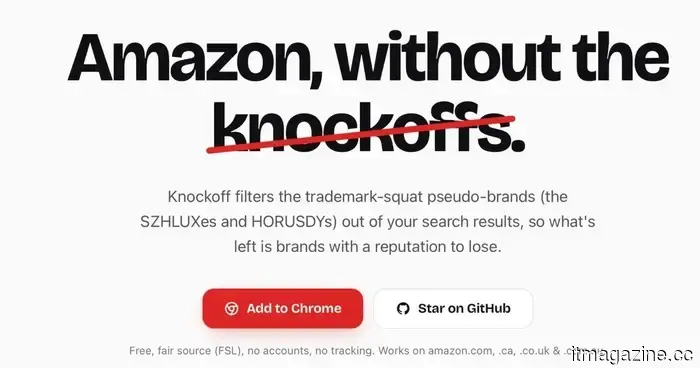 Amazon is cluttered with imitators and questionable brands. This Chrome extension helps you steer clear of them.
Knockoff allows you to reduce visibility or conceal unknown Amazon brands, making the shopping experience feel a bit less daunting.
Amazon is cluttered with imitators and questionable brands. This Chrome extension helps you steer clear of them.
Knockoff allows you to reduce visibility or conceal unknown Amazon brands, making the shopping experience feel a bit less daunting.
 New Zealand dismisses the idea of a VPN ban following privacy concerns.
New Zealand has rejected intentions to prohibit VPNs in relation to its social media ban for individuals under 16, following strong privacy concerns, as age-verification regulations continue to move closer to encryption issues.
New Zealand dismisses the idea of a VPN ban following privacy concerns.
New Zealand has rejected intentions to prohibit VPNs in relation to its social media ban for individuals under 16, following strong privacy concerns, as age-verification regulations continue to move closer to encryption issues.
 Major tech companies challenge Belgium's creator compensation law at the EU court.
Google, Meta, Spotify, and Sony informed the EU's highest court that Belgium's copyright legislation requires platforms to compensate creators more than what was intended by the 2019 directive.
Major tech companies challenge Belgium's creator compensation law at the EU court.
Google, Meta, Spotify, and Sony informed the EU's highest court that Belgium's copyright legislation requires platforms to compensate creators more than what was intended by the 2019 directive.
 Big Tech challenges Belgium's creator compensation law in EU court.
Google, Meta, Spotify, and Sony informed the EU's highest court that Belgium's copyright legislation requires platforms to compensate creators more than what was envisioned by the 2019 directive.
Big Tech challenges Belgium's creator compensation law in EU court.
Google, Meta, Spotify, and Sony informed the EU's highest court that Belgium's copyright legislation requires platforms to compensate creators more than what was envisioned by the 2019 directive.
The prohibition of social media for young users is turning into a significant challenge for age verification.
Researchers set up 50 social media accounts that purported to be from 16-year-olds and discovered that none of the leading platforms required users to verify their age.