
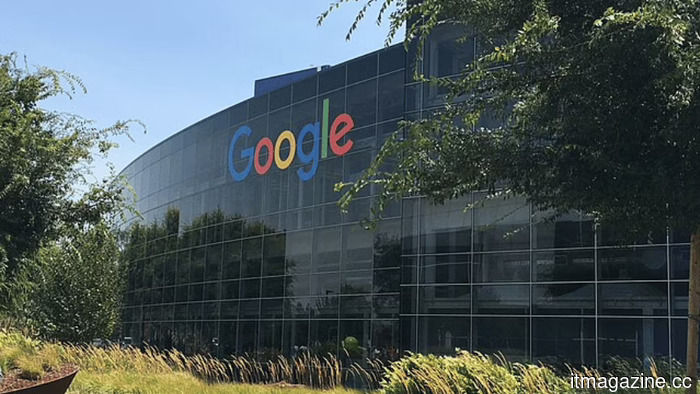
Big Tech challenges Belgium's creator compensation law in EU court.
Google, Meta, Spotify, and Sony have brought their case against Belgium to Europe’s highest court, claiming that the country's copyright legislation requires platforms to compensate creators far more than what was intended by the EU. On Tuesday, these four major tech companies requested the EU’s Court of Justice to intervene against Belgium, arguing that the nation has altered the payment structure for news, music, and video that is shared online, according to Courthouse News.
Belgium, supported by several EU governments, contends that the law simply ensures a fairer distribution of earnings for publishers and artists. The judges now face a critical question: Did Belgium properly enact the EU’s 2019 copyright directive, or did it modify it?
Belgium's additions
The directive aimed to assist publishers and creators in capturing more revenue when their works are shared online. However, Belgium has gone further, introducing mandatory negotiations, disclosure obligations, and new required payments for certain creators. The four companies assert that these additional measures exceed what was sanctioned by EU legislators.
Google argues that the law disrupts the established balance. It recently suffered a record €4.1 billion fine from the EU after an appeal. A lawyer for Google informed the court that Google Search already holds over 1,500 licensing agreements covering more than 5,500 press outlets, and YouTube also compensates music companies and creators.
According to Google, the Belgian system compels binding payment negotiations and requires sensitive business information before a platform can demonstrate it used the content. The requests come from unexpected sources as well, with Google mentioning inquiries from plumbing trade associations, gaming sites, podcast producers, and real estate listings. “This places online service providers in a dilemma,” lawyer Olivier Vrins stated before the court.
Host or publisher?
Meta raised a different argument, claiming that the Belgian law creates confusion between platforms that host content and those that produce it. Facebook noted that it does not select which stories are shown; rather, users do that. “If not, every online platform would essentially become a user of the content uploaded by its own users,” lawyer Benoit Van Asbroeck argued in court.
Spotify and Sony focused on another provision, which grants authors and performers a mandatory supplemental right, even after licensing their work through labels and collecting societies. The two companies cautioned that this could lead to platforms being required to pay twice for the same stream.
Why it matters
Belgium and its supporters, which include France, Spain, Italy, Poland, and Germany, assert that the tech giants are missing the key issue. They argue that creators must negotiate against significantly more powerful entities. Without additional protections, they contend that copyright rights hold little practical value.
The implications extend beyond Belgium. The court will determine the extent to which any member state can implement stricter regulations than those set by the EU. Advocate General Maciej Szpunar is expected to present his opinion on November 19, followed by a final ruling. The outcome will influence the cost of content for every publisher and platform across Europe.
Other articles
 Toyota relocates Tacoma production to Texas; Trump takes credit.
Toyota's $3.6 billion expansion in Texas will shift a portion of Tacoma production away from Mexico. While Trump attributes this change to tariffs, Toyota does not agree and confirms that it will not be exiting Mexico.
Toyota relocates Tacoma production to Texas; Trump takes credit.
Toyota's $3.6 billion expansion in Texas will shift a portion of Tacoma production away from Mexico. While Trump attributes this change to tariffs, Toyota does not agree and confirms that it will not be exiting Mexico.
 Meta introduces Muse Image, its initial AI image model developed within Alexandr Wang's lab.
Meta's Muse Image feature is now available within the Meta AI chatbot, as well as on Instagram and WhatsApp. Users have the ability to create images of friends based on public posts from Instagram. There is an option to opt-out.
Meta introduces Muse Image, its initial AI image model developed within Alexandr Wang's lab.
Meta's Muse Image feature is now available within the Meta AI chatbot, as well as on Instagram and WhatsApp. Users have the ability to create images of friends based on public posts from Instagram. There is an option to opt-out.
 Scotland considers a moratorium on datacentres that may hinder AI development in the UK.
Scotland's SNP has decided to impose a freeze on all new datacentres, a decision that may hinder the Lanarkshire AI growth area and a key component of the UK's AI strategy.
Scotland considers a moratorium on datacentres that may hinder AI development in the UK.
Scotland's SNP has decided to impose a freeze on all new datacentres, a decision that may hinder the Lanarkshire AI growth area and a key component of the UK's AI strategy.
 New Zealand eliminates the possibility of a VPN ban following privacy concerns.
New Zealand has refuted proposals to prohibit VPNs in relation to its social media restrictions for those under 16, following a strong backlash regarding privacy concerns, as age verification regulations continue to move towards encryption.
New Zealand eliminates the possibility of a VPN ban following privacy concerns.
New Zealand has refuted proposals to prohibit VPNs in relation to its social media restrictions for those under 16, following a strong backlash regarding privacy concerns, as age verification regulations continue to move towards encryption.
 Meta unveils Muse Image, its inaugural AI image model developed within Alexandr Wang's lab.
Meta's Muse Image feature is now available in the Meta AI chatbot, Instagram, and WhatsApp. Users have the ability to create images of friends based on public Instagram posts. There is an option to opt out.
Meta unveils Muse Image, its inaugural AI image model developed within Alexandr Wang's lab.
Meta's Muse Image feature is now available in the Meta AI chatbot, Instagram, and WhatsApp. Users have the ability to create images of friends based on public Instagram posts. There is an option to opt out.
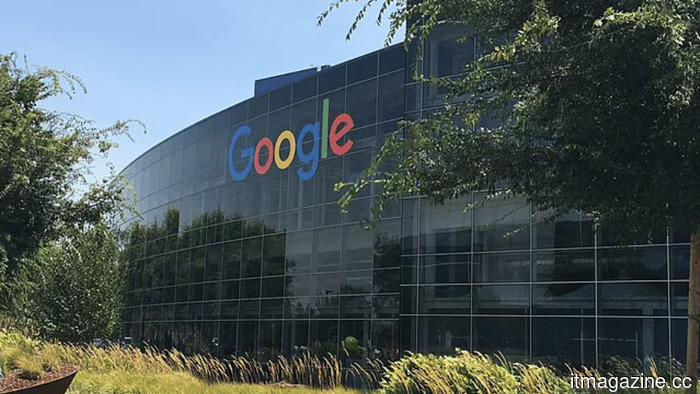 Major tech companies challenge Belgium's creator compensation law at the EU court.
Google, Meta, Spotify, and Sony informed the EU's highest court that Belgium's copyright legislation requires platforms to compensate creators more than what was intended by the 2019 directive.
Major tech companies challenge Belgium's creator compensation law at the EU court.
Google, Meta, Spotify, and Sony informed the EU's highest court that Belgium's copyright legislation requires platforms to compensate creators more than what was intended by the 2019 directive.
Big Tech challenges Belgium's creator compensation law in EU court.
Google, Meta, Spotify, and Sony informed the EU's highest court that Belgium's copyright legislation requires platforms to compensate creators more than what was envisioned by the 2019 directive.