
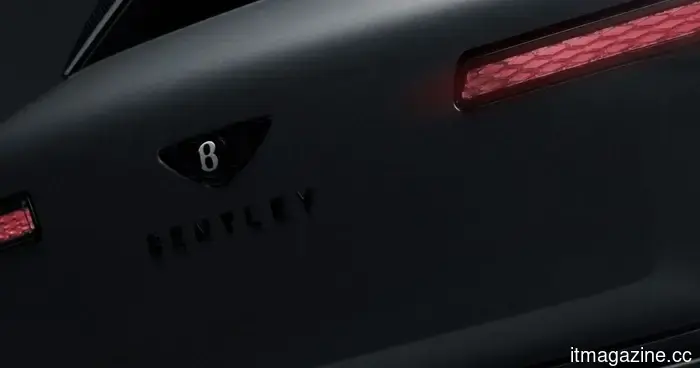
Bentley's inaugural fully electric SUV will be named Torcal.
Bentley has officially unveiled the name of its first fully electric vehicle, Torcal, representing a significant milestone in the brand's 107-year history. This luxury SUV is set to make its global debut on September 23, joining Bentley’s existing model lineup which includes the Continental GT, Flying Spur, and Bentayga.
This announcement comes during a challenging period for premium electric vehicles. Luxury automakers, including Porsche, Audi, Mercedes-Benz, and even Ferrari and Lamborghini, which previously accelerated their electrification efforts, have since slowed down or shifted their focus to hybrids as demand has decreased in key markets. Bentley has also delayed its ambition to transition to an all-electric brand, pushing the target from 2030 to 2035 for a more gradual evolution.
The Torcal could shape Bentley’s electric future.
Named after El Torcal de Antequera, a limestone landscape in southern Spain, the Torcal also draws from the Latin word torquere (“to twist”), alluding to torque and the effortless performance that has characterized the brand for over a century.
Bentley Chairman and CEO Frank-Steffen Walliser referred to the Torcal as “the most considered car in our history,” emphasizing its high standards for craftsmanship, comfort, and performance. While full specifications are yet to be disclosed, it has been confirmed that the Torcal will be a Luxury Urban SUV measuring under five meters in length. Reports from Car and Driver and Road & Track indicate that it will be built on the Volkswagen Group’s Premium Platform Electric (PPE) architecture, which it shares with the forthcoming Porsche Cayenne Electric and Audi A6 e-tron.
Bentley has previously stated that the SUV will feature ultra-fast charging capabilities, allowing for approximately 160km of range in just seven minutes, and is anticipated to provide over 300 miles (around 480km) of driving range. Spy shots suggest it will include an enclosed illuminated grille, crystal-inspired LED lighting, and a revamped digital cabin boasting a curved portrait-oriented touchscreen.
Bentley's first EV emerges during a challenging time for luxury electric vehicles.
Bentley is entering the EV arena amidst one of the most difficult phases for the luxury segment. Over the last two years, demand for premium electric vehicles has declined, prompting several high-end brands to reassess their strategies. Lamborghini postponed its Lanzador EV, citing a drastic drop in customer interest, while Ferrari delayed its second EV. Audi ceased production of the Q8 e-tron due to weakened demand in the luxury EV market, and Porsche has acknowledged a multibillion-euro impairment as it re-evaluates its electrification goals. Bentley, too, has adjusted its all-electric timeline from 2030 to 2035, reflecting a more cautious approach from even well-established luxury names.
The challenge is formidable. The demand for luxury EVs has diminished across Europe, the US, and China as wealthy consumers increasingly prefer plug-in hybrids over fully electric vehicles. Numerous premier manufacturers have altered their electrification schedules, suggesting the transition may take longer than initially expected.
Bentley seems to be adopting a careful strategy. Rather than chasing sales volume, the brand is presenting the Torcal as a luxury-first vehicle that is electric by nature. The shared PPE platform offers reliable technology, while Bentley continues to prioritize bespoke craftsmanship, performance, and exclusivity.
Further details about the Torcal will be shared in the upcoming weeks leading up to its global debut on September 23. Whether it can rekindle interest in high-end electric SUVs remains to be seen, but this model will be Bentley’s clearest signal yet of how it intends to navigate the industry's shift towards electrification.

Other articles
 X aims to maintain its video edits internally, beginning with captions and personalized backgrounds.
X has launched an updated Video Editor and Recorder for iOS, featuring multilingual captions and a green screen tool, allowing creators to edit their videos directly within the app.
X aims to maintain its video edits internally, beginning with captions and personalized backgrounds.
X has launched an updated Video Editor and Recorder for iOS, featuring multilingual captions and a green screen tool, allowing creators to edit their videos directly within the app.
 X intends to manage your video edits internally, beginning with captions and personalized backgrounds.
X has introduced an updated Video Editor and Recorder for iOS, incorporating multilingual captions and a green screen feature, allowing creators to edit their videos directly within the app.
X intends to manage your video edits internally, beginning with captions and personalized backgrounds.
X has introduced an updated Video Editor and Recorder for iOS, incorporating multilingual captions and a green screen feature, allowing creators to edit their videos directly within the app.
 Nscale secures a $900 million revolving credit facility to finance its data center expansion.
Nscale has finalized a $900 million revolving credit facility, which has been syndicated among 12 banks, enhancing its flexible liquidity for the development of AI data centers.
Nscale secures a $900 million revolving credit facility to finance its data center expansion.
Nscale has finalized a $900 million revolving credit facility, which has been syndicated among 12 banks, enhancing its flexible liquidity for the development of AI data centers.
 Syntiant submits paperwork for a US IPO, anticipating that public markets will also seek edge AI solutions.
Edge AI chip manufacturer Syntiant has submitted a US IPO on the Nasdaq, using the ticker SYTN, although terms and pricing have not yet been revealed.
Syntiant submits paperwork for a US IPO, anticipating that public markets will also seek edge AI solutions.
Edge AI chip manufacturer Syntiant has submitted a US IPO on the Nasdaq, using the ticker SYTN, although terms and pricing have not yet been revealed.
 Top AI requirements management software: 8 tools paving the way in 2026
An evaluation of eight AI-driven requirements management platforms for 2026, featuring aspects such as NLP-driven quality analysis, automated test creation, and real-time traceability scoring, including Jama Connect, IBM DOORS Next, Codebeamer, Polarion, and others.
Top AI requirements management software: 8 tools paving the way in 2026
An evaluation of eight AI-driven requirements management platforms for 2026, featuring aspects such as NLP-driven quality analysis, automated test creation, and real-time traceability scoring, including Jama Connect, IBM DOORS Next, Codebeamer, Polarion, and others.
 The Importance of CNAPP in Cloud-Native Security
Grasping the current requirements of online security. Cloud-native security once seemed to be an issue for highly technical teams operating within intricate systems. However, that perspective has evolved. As organizations utilize containers, Kubernetes, APIs, serverless functions, and rapid deployment cycles, security teams require a method to monitor risk throughout all these elements without having to assemble […]
The Importance of CNAPP in Cloud-Native Security
Grasping the current requirements of online security. Cloud-native security once seemed to be an issue for highly technical teams operating within intricate systems. However, that perspective has evolved. As organizations utilize containers, Kubernetes, APIs, serverless functions, and rapid deployment cycles, security teams require a method to monitor risk throughout all these elements without having to assemble […]
Bentley's inaugural fully electric SUV will be named Torcal.
Bentley has introduced the Torcal, its inaugural electric SUV, focusing on high-quality craftsmanship and rapid charging amidst a decline in demand within the luxury EV market.