
China aims for cinemas to offer karaoke and coffee along with just ticket sales.
Cinemas in China are being urged to diversify beyond ticket sales. New recommendations from the National Film Administration and the State Administration for Market Regulation suggest that theaters should incorporate AI concierge agents, karaoke booths, and coffee shops in their lobbies, as reported by Bloomberg.
These guidelines also prompt operators to consider movie-themed merchandise stores, licensed items, art exhibitions, and pop-up shops, transforming unused screening rooms and lobby areas into retail and cultural hubs.
The timing of this push is significant; China's box office revenue dropped by 40.6% year on year in the first half of 2026, totaling approximately $2.56 billion, marking the weakest first half since 2014, excluding pandemic years, according to Screen Daily.
This marks a stark contrast from 2025, when the nation's 93,187 cinemas—more than any other market in the world as noted by the Hollywood Reporter—generated around $7.45 billion, an increase of nearly 22% from the previous year.
In 2025, audiences were plentiful, but in 2026, various factors like a limited release schedule and competition from short videos and AI-created micro-dramas have significantly reduced attendance.
The new recommendations are not entirely novel but rather an official acknowledgment of an existing concept. Luo Yang, deputy head of the China Film Administration, introduced a "film-plus" initiative last year aimed at blending cinema with tourism, dining, technology, gaming, and merchandise. This was detailed in a Xinhua report from the State Council Information Office, which suggested that every yuan spent at the box office is estimated to generate 15.77 yuan in related sectors, one of the highest multipliers globally.
Successful examples, such as Nezha-branded coffee drinks selling five million cups in just three days, are the kinds of results regulators now expect to see in all cinemas, not just those fortunate to have a blockbuster film.
Beijing has also attempted to encourage attendance through subsidies, launching a “Film Consumption Year” initiative reportedly worth about $130 million to promote ticket deals and discounts. However, the karaoke and coffee shop guidelines propose a different approach, encouraging cinemas to provide additional incentives for customers to visit.
Such regulatory recommendations often advance more quickly on paper than in practice. Converting screening rooms to retail spaces or training staff for coffee service requires funds that many operators lack, especially with a significant decline in attendance.
The guidelines do not specify enforcement nor provide funding, meaning the responsibility for implementation falls on cinema chains that are already dealing with the revenue downturn the policy aims to mitigate.
Independent cinemas, in particular, are likely to feel the impact hardest. A national chain can test a merchandise counter at one flagship location to evaluate its success, while a single-screen venue in a smaller city, already operating on slim margins and facing a limited release schedule, has little capacity to invest in an unwanted karaoke booth.
The larger context reveals an industry attempting to reconcile two concepts: wanting to be perceived as both a cultural and economic force—reporting an industry output of 817.26 billion yuan in 2025 according to the same Xinhua report—while also acknowledging that ticket sales alone aren't sufficient.
China's AI sector has been rapidly closing the gap with global competitors, with its AI video generation unit exploring growth beyond its initial scope. Cinema operators seem to be adopting a similar strategy: if audiences are not coming solely to watch movies, they might as well provide them with an agent, a song, and a coffee while they are there.
However, none of this addresses the fundamental issue of what films are actually being screened. The decline in blockbuster offerings and a perceived reduction in the availability of Hollywood releases in China appear to have contributed significantly to the empty seats—much more than the absence of coffee or karaoke ever could. While karaoke booths and AI concierges might help maintain operations during slow periods, they come off as a stopgap for a weak film lineup rather than a solution.
Other articles
 India calls on Meta regarding Instagram advertisements that endorse child sexual abuse content.
India's IT ministry has called in Meta executives following a BBC investigation which revealed that Instagram had been running paid advertisements promoting CSAM and directing users to Telegram.
China aims for cinemas to offer not only tickets but also karaoke and coffee.
Chinese regulators are encouraging cinemas to incorporate AI agents, karaoke booths, and coffee shops as ticket sales have dropped by 40% in the first half of 2026.
India calls on Meta regarding Instagram advertisements that endorse child sexual abuse content.
India's IT ministry has called in Meta executives following a BBC investigation which revealed that Instagram had been running paid advertisements promoting CSAM and directing users to Telegram.
China aims for cinemas to offer not only tickets but also karaoke and coffee.
Chinese regulators are encouraging cinemas to incorporate AI agents, karaoke booths, and coffee shops as ticket sales have dropped by 40% in the first half of 2026.
 Germany's cooperative and savings banks begin cryptocurrency trading.
Germany's cooperative and savings banks are introducing cryptocurrency trading to millions of retail clients, four years after labeling digital assets as an unpredictable risk.
Germany's cooperative and savings banks begin cryptocurrency trading.
Germany's cooperative and savings banks are introducing cryptocurrency trading to millions of retail clients, four years after labeling digital assets as an unpredictable risk.
 Amazon has discreetly enhanced its Fire HD 10 tablet by adding an impressive 1GB of RAM.
Amazon has updated the Fire HD 10 by adding an additional gigabyte of RAM, prolonging the lifespan of its flagship tablet rather than introducing a completely new version.
Amazon has discreetly enhanced its Fire HD 10 tablet by adding an impressive 1GB of RAM.
Amazon has updated the Fire HD 10 by adding an additional gigabyte of RAM, prolonging the lifespan of its flagship tablet rather than introducing a completely new version.
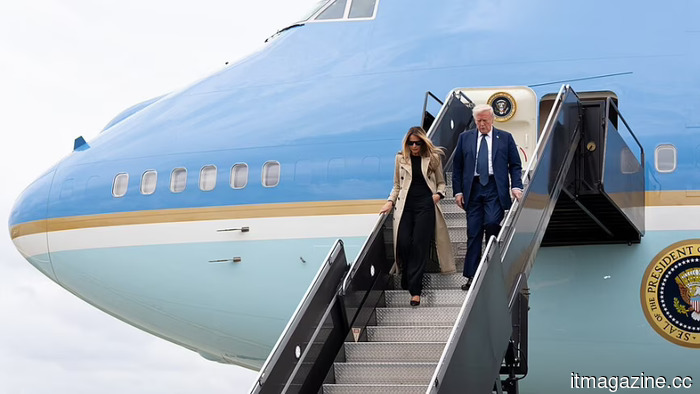 The Trump memecoin resulted in a $3.8 billion loss for investors, while the president made $636 million.
Nansen data indicates that 988,905 buyers of the $TRUMP token experienced losses totaling $3.81 billion, whereas Trump made $636 million in royalties. His financial disclosure for 2025 reports $1.4 billion in cryptocurrency income.
The Trump memecoin resulted in a $3.8 billion loss for investors, while the president made $636 million.
Nansen data indicates that 988,905 buyers of the $TRUMP token experienced losses totaling $3.81 billion, whereas Trump made $636 million in royalties. His financial disclosure for 2025 reports $1.4 billion in cryptocurrency income.
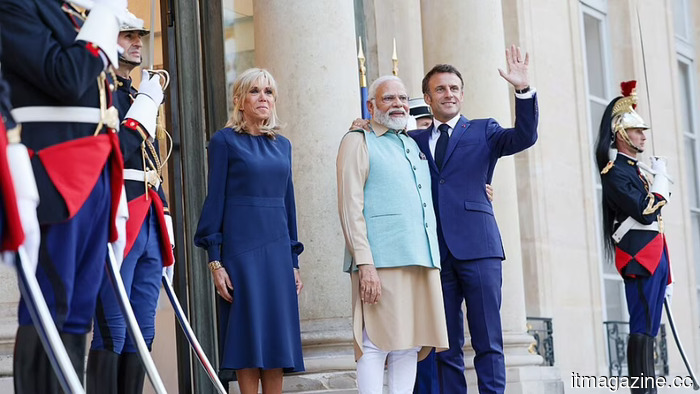 Macron and Modi seek the support of tech CEOs in the competition for AI infrastructure.
Macron persuaded SoftBank to invest €75 billion in data centers in France. Modi obtained $48 billion from Amazon. Personal diplomacy is dominating the competition for AI infrastructure.
Macron and Modi seek the support of tech CEOs in the competition for AI infrastructure.
Macron persuaded SoftBank to invest €75 billion in data centers in France. Modi obtained $48 billion from Amazon. Personal diplomacy is dominating the competition for AI infrastructure.
China aims for cinemas to offer karaoke and coffee along with just ticket sales.
Chinese regulators are urging cinemas to incorporate AI agents, karaoke booths, and coffee shops, as ticket sales fell by 40% in the first half of 2026.