
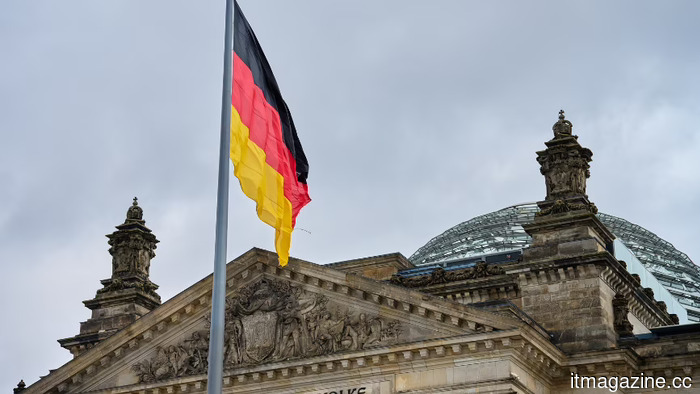
Germany's cooperative and savings banks begin cryptocurrency trading.
Germany’s cooperative and savings banks are launching cryptocurrency trading services for millions of retail customers. DZ Bank already operates a MiCA-licensed platform, while DekaBank is developing a similar service for the savings banks' 50 million clients.
These cooperative and savings banks, which traditionally manage mortgages, checking accounts, and small business loans, are introducing crypto trading in a market that was previously hesitant to embrace credit cards just ten years ago. Some of the approximately 650 cooperative banks in Germany currently use a crypto platform created by DZ Bank, and for the roughly 340 savings banks, DekaBank has a separate product set to debut later this year.
Each local bank will make an independent decision to participate, but there is considerable interest from both sectors.
The shift is particularly notable given that four years ago, Germany’s savings banks opted out of offering crypto trading, citing “incalculable risks.” A planned Bitcoin pilot was scrapped in spring 2022 due to internal disagreements. The change can be attributed to new regulations.
The EU’s Markets in Crypto-Assets regulation introduced a unified licensing framework, replacing previously fragmented national rules, which provided conservative institutions with the legal clarity they had been seeking. DZ Bank received its MiCA license from BaFin at the end of December 2025, allowing it to launch “meinKrypto,” a digital asset trading platform integrated into the VR Banking App.
The banks hope that their established familiarity will attract customers where crypto exchanges have struggled. A survey from crypto infrastructure supplier Boerse Stuttgart Digital revealed that Germans have more than double the trust in their primary bank than in specialized crypto trading platforms, at approximately 38% compared to 19%.
“Now, trading occurs in a familiar environment,” stated Claus Reder, a board member at Volksbank Raiffeisenbank Würzburg, one of the first cooperative banks to offer the service. “This lends credibility to the trading service.”
The survey also pointed out that only about 25% of German respondents have invested in cryptocurrencies, which aligns with figures from Italy (24%) and France (23%). The tightening fintech regulations in Europe, encompassing MiCA, DORA, and the new anti-money laundering authority, seem to be making the asset class more appealing to institutions that would have avoided it under the previous patchwork of national regulations.
DZ Bank’s platform currently allows trading in Bitcoin, Ethereum, Litecoin, and Cardano, and over 71% of cooperative banks in Germany are showing interest in providing this service. “We anticipate that a significant three-figure number of banks will adopt the product in the future,” mentioned Markus Bärenfänger, a product expert at DZ Bank.
The savings banks network, with around 50 million customers, has the potential to expand crypto trading to a demographic comparable to South Korea's population. For many of these banks, the motivation is not primarily about profit from crypto trades but about remaining competitive. As tech firms increasingly enter personal finance, local banks risk losing younger customers to digital-first alternatives.
“If a local bank does not provide cryptocurrency trading, it diminishes its relevance among certain market segments, especially younger or tech-savvy customers,” noted Ralf Kölbach, who leads cooperative lender Westerwald Bank.
However, not everyone is optimistic about this development. Co-Pierre Georg, a professor at the Frankfurt School of Finance and Management, expressed concern that savings and cooperative banks opening the floodgates to the cryptocurrency market could be problematic, as their traditional customers “likely do not fully understand the risks associated with cryptocurrencies.”
Even the savings banks’ own association, DSGV, has advised that crypto trading is meant for self-directed investors, characterizing it as a “highly speculative form of investment with the risk of total loss.” This warning is significant, coming from the representative body of institutions preparing to offer this product.
Germany is characterized by a higher propensity to rent rather than own homes, a constitutional debt brake that limited government deficits until it was relaxed last year, and a cultural identity grounded in fiscal conservatism rather than mere policy preference. The consolidation in Europe’s fintech sector appears to be favoring regulated entities with strong customer ties, and Germany’s community banks aim to position themselves as such.
The critical question remains whether presenting a volatile asset within a trusted framework alters the inherent risks or simply conceals them. “Life and its risks cannot be fully insured,” Kölbach remarked.
Other articles
 Micron initiates construction on a $9 billion expansion in Hiroshima to meet the demand for AI memory.
Micron has commenced construction on a ¥1.5 trillion expansion in Hiroshima to produce HBM chips for AI accelerators, with support from the Japanese government reaching as much as ¥775 billion.
Micron initiates construction on a $9 billion expansion in Hiroshima to meet the demand for AI memory.
Micron has commenced construction on a ¥1.5 trillion expansion in Hiroshima to produce HBM chips for AI accelerators, with support from the Japanese government reaching as much as ¥775 billion.
 India calls on Meta regarding Instagram advertisements that endorse child sexual abuse content.
India's IT ministry has called in Meta executives following a BBC investigation which revealed that Instagram had been running paid advertisements promoting CSAM and directing users to Telegram.
India calls on Meta regarding Instagram advertisements that endorse child sexual abuse content.
India's IT ministry has called in Meta executives following a BBC investigation which revealed that Instagram had been running paid advertisements promoting CSAM and directing users to Telegram.
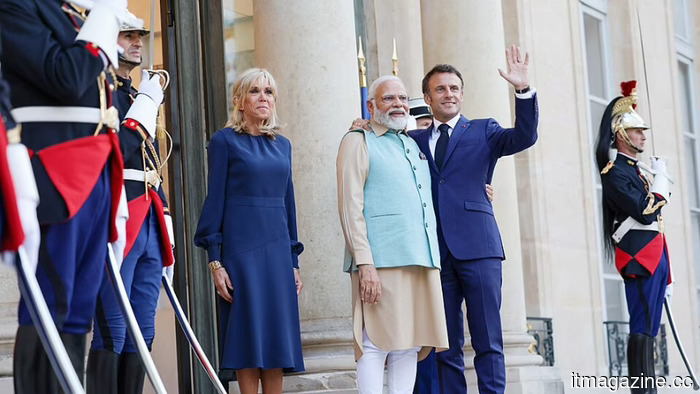 Macron and Modi engage with tech CEOs in the competition for AI infrastructure.
Macron persuaded SoftBank to invest €75 billion in French data centers. Modi obtained $48 billion from Amazon. The competition for AI infrastructure is being dominated by personal diplomacy.
Macron and Modi engage with tech CEOs in the competition for AI infrastructure.
Macron persuaded SoftBank to invest €75 billion in French data centers. Modi obtained $48 billion from Amazon. The competition for AI infrastructure is being dominated by personal diplomacy.
 The Trump memecoin resulted in a loss of $3.8 billion for investors while the president made $636 million.
Data from Nansen indicates that 988,905 buyers of the $TRUMP token incurred losses totaling $3.81 billion, while Trump earned $636 million in royalties. His financial disclosure for 2025 reports $1.4 billion in earnings from cryptocurrency.
The Trump memecoin resulted in a loss of $3.8 billion for investors while the president made $636 million.
Data from Nansen indicates that 988,905 buyers of the $TRUMP token incurred losses totaling $3.81 billion, while Trump earned $636 million in royalties. His financial disclosure for 2025 reports $1.4 billion in earnings from cryptocurrency.
 The Trump memecoin resulted in a $3.8 billion loss for investors, while the president made $636 million.
Nansen data indicates that 988,905 buyers of the $TRUMP token experienced losses totaling $3.81 billion, whereas Trump made $636 million in royalties. His financial disclosure for 2025 reports $1.4 billion in cryptocurrency income.
The Trump memecoin resulted in a $3.8 billion loss for investors, while the president made $636 million.
Nansen data indicates that 988,905 buyers of the $TRUMP token experienced losses totaling $3.81 billion, whereas Trump made $636 million in royalties. His financial disclosure for 2025 reports $1.4 billion in cryptocurrency income.
 Amazon has discreetly enhanced its Fire HD 10 tablet by adding an impressive 1GB of RAM.
Amazon has updated the Fire HD 10 by adding an additional gigabyte of RAM, prolonging the lifespan of its flagship tablet rather than introducing a completely new version.
Amazon has discreetly enhanced its Fire HD 10 tablet by adding an impressive 1GB of RAM.
Amazon has updated the Fire HD 10 by adding an additional gigabyte of RAM, prolonging the lifespan of its flagship tablet rather than introducing a completely new version.
Germany's cooperative and savings banks begin cryptocurrency trading.
Germany's cooperative and savings banks are introducing cryptocurrency trading to millions of retail clients, four years after labeling digital assets as an unpredictable risk.