

Europe introduces new regulations aimed at loot boxes and gaming for children.
The video game industry is preparing for a surge of regulations from Europe, which could restrict children's access to certain games and result in significant financial losses for the sector. A series of European rules is targeting the sale of games to minors, with loot boxes being the primary focus. This change could negatively impact global sales, as reported by Bloomberg. Authorities are concerned that children continue to access games that are not appropriate for their age group.
The issue with loot boxes involves paid treasure chests that dispense random digital items, which critics have long labeled as a form of addictive gambling. This chance-based mechanic generated approximately $23 billion for game companies worldwide last year, according to S&P research.
Regulations are now becoming stricter. In June, the Pan-European Game Information organization (PEGI) started rating any game featuring loot boxes as inappropriate for those under 16. The EU intends to go further, as lawmakers are considering a total ban on loot boxes in games accessible to children. The Digital Fairness Act, which includes this measure, is anticipated to be approved next year.
The impact of this pressure is also being felt outside of Brussels. In the UK, the Online Safety Act requires game developers to verify the ages of their players. A proposed ban on social media for those under 16 could affect platforms like Roblox. Brazil, which has one of the most active gaming markets globally, is implementing a ban on the sale of loot boxes to minors.
These developments align with a wider trend across Europe, where nations are progressively raising the age at which children can register for digital services.
The industry's concern lies in potential financial losses. Loot boxes have been a significant driver of growth for the sector over the past decade, and losing this income would create pressure to find new revenue sources. Adjusting strategies "could be a strain," according to Neil Barbour, an analyst at S&P Global. In Europe, players spend around $12 billion annually on in-game purchases.
In October, the lobby group Video Games Europe cautioned that stringent regulations could jeopardize a large portion of this revenue, as companies typically modify their games on a global scale rather than by region. Thus, strict European regulations could adversely affect sales well beyond the continent.
A warning sign has already emerged with Roblox, which experienced an 18 percent drop in its stock in May after new age verification procedures slowed user growth. Consequently, the company reduced its annual bookings forecast by approximately $1 billion.
In contrast, the US allows the industry to self-regulate. This approach was similarly taken after the backlash against "Star Wars Battlefront II" in 2017. While American lawmakers have proposed an anti-loot-box bill, self-regulation continues to prevail. Stan McCoy, general counsel of the Entertainment Software Association, advocates for "smart guardrails" that don't stigmatize a model many players enjoy. However, Europe appears to be taking a more immediate approach to regulation, with rules potentially outpacing the evolution of games.
Other articles
 Elon Musk denies reports suggesting that SpaceX is working on an AI device.
Elon Musk referred to a Wall Street Journal report as "completely false" after it alleged that SpaceX presented investors with a handset-like AI device prior to its IPO.
Elon Musk denies reports suggesting that SpaceX is working on an AI device.
Elon Musk referred to a Wall Street Journal report as "completely false" after it alleged that SpaceX presented investors with a handset-like AI device prior to its IPO.
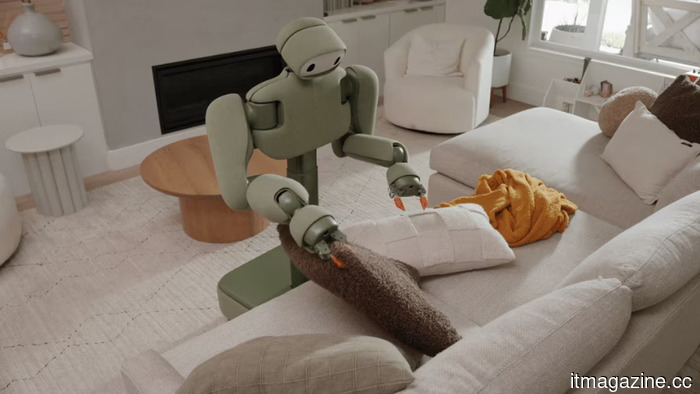 Weave Robotics Isaac 1: a home robot priced at $7,999
Weave Robotics' Isaac 1 is a $7,999 wheeled home robot without fingers that can fold laundry and organize spaces, offering a more affordable option compared to humanoid competitors like 1X's Neo.
Weave Robotics Isaac 1: a home robot priced at $7,999
Weave Robotics' Isaac 1 is a $7,999 wheeled home robot without fingers that can fold laundry and organize spaces, offering a more affordable option compared to humanoid competitors like 1X's Neo.
 SAP halts hiring and travel to support its AI initiative.
An internal memo reveals that SAP is halting most hiring, pausing non-AI travel, and reducing supplier expenditures to support a "substantial" initiative in AI.
SAP halts hiring and travel to support its AI initiative.
An internal memo reveals that SAP is halting most hiring, pausing non-AI travel, and reducing supplier expenditures to support a "substantial" initiative in AI.
 Tesla introduces the six-seat Model Y Long Wheelbase in the US, priced at $61,990.
Tesla's extended Model Y features a third row of seating, captain's chairs, and includes bundled Full Self-Driving (FSD) for $61,990, with deliveries commencing from Giga Texas in September.
Tesla introduces the six-seat Model Y Long Wheelbase in the US, priced at $61,990.
Tesla's extended Model Y features a third row of seating, captain's chairs, and includes bundled Full Self-Driving (FSD) for $61,990, with deliveries commencing from Giga Texas in September.
 The alternate Dyson empire, calculated in acres.
Dyson’s robotic strawberry farm and its renowned vacuum cleaner are essentially the same device: they share the same engineering, the same financial investment, and the same desire for precision.
The alternate Dyson empire, calculated in acres.
Dyson’s robotic strawberry farm and its renowned vacuum cleaner are essentially the same device: they share the same engineering, the same financial investment, and the same desire for precision.
 Chip industry cautions the US against interfering in the memory market.
The semiconductor group SEMI has cautioned the Trump administration that steps taken to address the AI-related memory shortage could exacerbate the supply constraints.
Chip industry cautions the US against interfering in the memory market.
The semiconductor group SEMI has cautioned the Trump administration that steps taken to address the AI-related memory shortage could exacerbate the supply constraints.
Europe introduces new regulations aimed at loot boxes and gaming for children.
Europe is formulating regulations to restrict the sale of games to children and focus on loot boxes, and this enforcement may negatively impact game sales globally.