
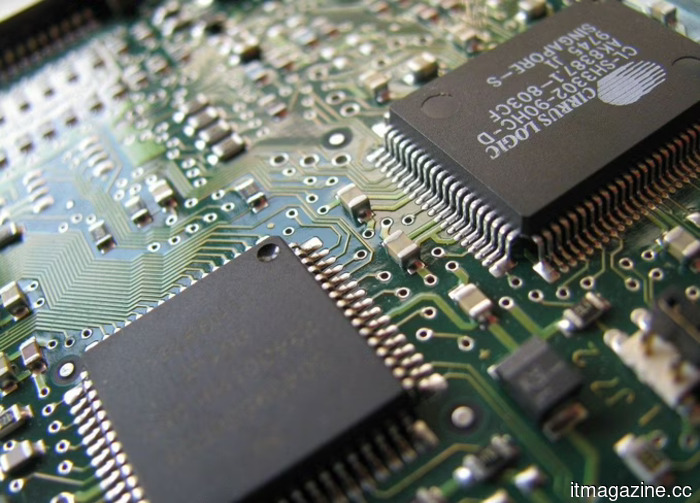
AI chip stocks fell by 12% over two days as investors searched for new profitable opportunities.
**TL;DR** Semiconductor stocks dropped 12% over two sessions while the Dow reached a new high, as investors shifted focus from AI chip manufacturers to enterprise software firms. A disappointing jobs report diminished the chances of a rate hike.
The trend that characterized the first half of 2026, which involved buying assets linked to GPUs, unraveled in the holiday-shortened week preceding Independence Day. The PHLX Semiconductor Index, which had surged over 80% in the initial half of the year, fell by 6.3% on Wednesday and 5.4% on Thursday, marking an approximate 12% decline over those two days.
While semiconductor stocks plummeted, the Dow Jones Industrial Average registered a record close at 52,900 on Thursday, propelled by a 5% rise in Apple following reports from Bloomberg that the company had asked suppliers to prepare for the launch of 10 million foldable iPhones this autumn. Despite the shift, all three main indices ended the week in positive territory.
**Details of the Decline**
Micron Technology led the downturn with a drop of over 10% on Wednesday alone. SanDisk, Applied Materials, and Lam Research also saw declines around 10%, while Intel and Marvell lost approximately 9%.
The selling pressure increased after news that SK Hynix was decelerating its expansion in high-bandwidth memory production, signaling a potential equilibrium between supply and demand in the AI infrastructure boom. Equipment manufacturers ASML, KLA, and Applied Materials experienced declines of 5% to 6%, indicating investor concerns regarding a slowdown in chip-factory orders.
This decline in semiconductor stocks occurred amid broader economic uncertainty. June's nonfarm payrolls arrived at only 57,000, about half of the anticipated 110,000, with revisions to April and May projecting a loss of 74,000 jobs.
The unemployment rate dropped to 4.2%, albeit because the labor force participation rate fell to 61.5%, the lowest since March 2021.
**Where the Investment Went**
The shift in investment was not a retreat from AI but rather a revaluation of potential returns. Enterprise software stocks, particularly ServiceNow, Snowflake, and Palantir, were the main beneficiaries, with the iShares Expanded Tech-Software ETF climbing 35% from its low in April. Snowflake’s stock surged by 36% in late May after reporting robust earnings, gaining 616 net new customers and increasing its million-dollar account total to 779. ServiceNow, Oracle, and Palantir each saw gains of 6% to 8% thereafter.
The reasoning is clear: Investors spent two years paying high multiples for companies providing AI infrastructure and are now seeking assurance that these investments are generating revenue for the companies that utilize it. Palantir reported Q1 revenue of $1.63 billion, an 85% increase year over year. ServiceNow forecasts $30 billion in subscription revenue by 2030, with approximately one-third attributed to its AI offering, Now Assist.
**Valuation Considerations**
The first half of the year left the three major indices in good standing: The S&P 500 increased by 9.6%, the Nasdaq by more than 12%, and the Dow by 8.9%, marking its best first-half performance since 2021.
However, the Shiller CAPE ratio stands at 38 to 40, trailing only the dot-com peak of 44, and market concentration in the largest technology stocks has surpassed levels seen in 2000. Proponents argue that the difference this time is that these companies are among the most profitable in corporate history, with Nvidia reporting net income exceeding $120 billion for fiscal 2026.
Critics contend that profitability at the top does not ensure profitability lower down the supply chain. Hyperscalers are projected to spend over $650 billion on AI infrastructure in 2026, raising concerns about whether companies below Nvidia in the hierarchy will be able to achieve returns justifying their valuations.
**Impact of Fed Changes**
The weak jobs report significantly altered the interest-rate landscape. The likelihood of a Fed rate hike at the July 29 meeting plummeted to about 22%, with a hold becoming the favored option at 78%. Fed Chairman Kevin Warsh described the jobs situation as "steady" and reiterated his commitment to the 2% inflation target, without providing clear guidance on future rate movements. A Fed that maintains its stance reduces one reason for equity markets to decline but simultaneously removes a catalyst that had been boosting bank stocks and the dollar earlier in the quarter.
**What to Monitor**
As the market reopens on Monday, the upcoming Q2 earnings season approaches. Key results will come from the AI software layer: whether Snowflake’s customer growth accelerates, if Palantir’s commercial pipeline translates into success, and whether ServiceNow’s AI attachment rate remains consistent with its projections.
Should
Other articles
 This flower identification app transforms each stroll into a Pokémon Go experience for plants.
Flormie transforms flower identification into a more relaxed collection experience similar to Pokémon Go, encouraging iPhone users to scan, save, and appreciate real flowers on their daily walks, all without the typical chaos of social games.
This flower identification app transforms each stroll into a Pokémon Go experience for plants.
Flormie transforms flower identification into a more relaxed collection experience similar to Pokémon Go, encouraging iPhone users to scan, save, and appreciate real flowers on their daily walks, all without the typical chaos of social games.
 The Chevy Silverado EV is among the finest electric trucks ever made, yet why are sales so low?
Last year, GM sold about 14,000 Silverado EVs, whereas the gasoline version sells ten times that amount each quarter, and a more affordable battery is still two years off.
The Chevy Silverado EV is among the finest electric trucks ever made, yet why are sales so low?
Last year, GM sold about 14,000 Silverado EVs, whereas the gasoline version sells ten times that amount each quarter, and a more affordable battery is still two years off.
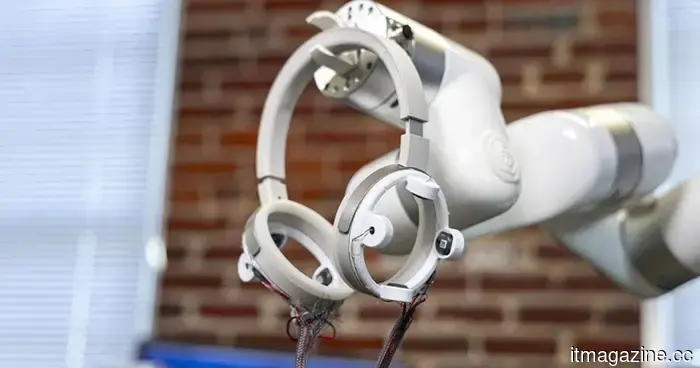 Horror films use music to signal impending danger. These headphones employ a similar technique to protect you from robots.
Researchers at Georgia Tech created Spherephones, a wearable headset that transforms the movement of nearby robots into spatial lo-fi music, alerting factory workers before they even need to glance up.
Horror films use music to signal impending danger. These headphones employ a similar technique to protect you from robots.
Researchers at Georgia Tech created Spherephones, a wearable headset that transforms the movement of nearby robots into spatial lo-fi music, alerting factory workers before they even need to glance up.
 npm packages associated with North Korea are masquerading as Rollup polyfill tools to extract sensitive information from developers.
Malicious npm packages that imitate Rollup polyfill tools are stealing browser data, cryptocurrency wallets, and credentials for AI tools in a campaign linked to Lazarus.
npm packages associated with North Korea are masquerading as Rollup polyfill tools to extract sensitive information from developers.
Malicious npm packages that imitate Rollup polyfill tools are stealing browser data, cryptocurrency wallets, and credentials for AI tools in a campaign linked to Lazarus.
 This plant identification app transforms each stroll into a Pokémon Go experience for flora.
Flormie transforms flower identification into a more tranquil collection experience similar to Pokémon Go, providing iPhone users with an opportunity to scan, save, and appreciate actual flowers during their daily strolls, all without the typical frenzy of social gaming.
This plant identification app transforms each stroll into a Pokémon Go experience for flora.
Flormie transforms flower identification into a more tranquil collection experience similar to Pokémon Go, providing iPhone users with an opportunity to scan, save, and appreciate actual flowers during their daily strolls, all without the typical frenzy of social gaming.
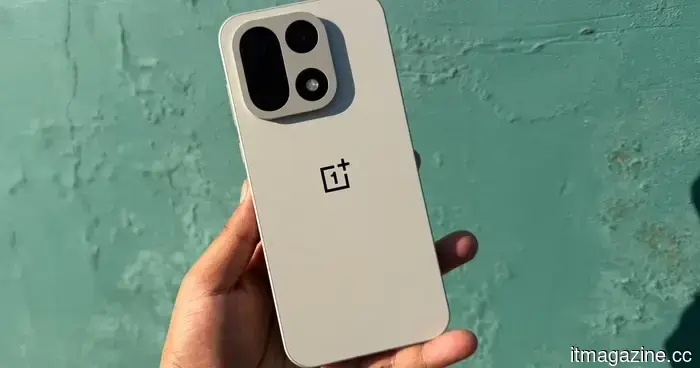 OxygenOS contributed to what made OnePlus phones unique. Now, it could potentially disappear for good.
OxygenOS and Realme UI are said to be phased out, with ColorOS set to take their place worldwide, while OnePlus is also concentrating its efforts more on India and China.
OxygenOS contributed to what made OnePlus phones unique. Now, it could potentially disappear for good.
OxygenOS and Realme UI are said to be phased out, with ColorOS set to take their place worldwide, while OnePlus is also concentrating its efforts more on India and China.
AI chip stocks fell by 12% over two days as investors searched for new profitable opportunities.
The PHLX Semiconductor Index dropped 12% over two trading days, while the Dow reached an all-time high. As Q2 earnings come closer, investors are shifting their focus from AI chips to software.