
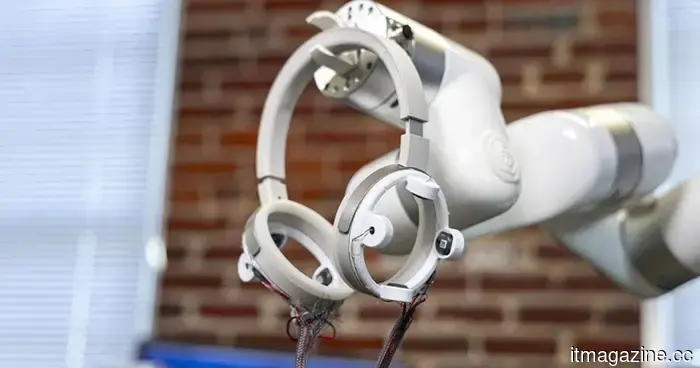
Horror films use music to signal impending danger. These headphones employ a similar technique to protect you from robots.
Spherephones replaces traditional factory alarms with music that indicates what is approaching and from which direction.
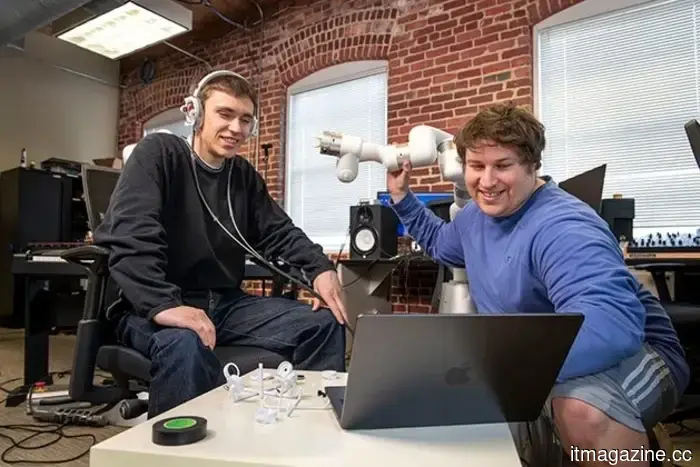
The ear has always discerned incoming sounds before the eye can. In horror films, the score foreshadows impending doom. Researchers at Georgia Tech have adopted this concept to enhance safety for factory workers near robots.
They have developed a wearable headset named Spherephones that transforms the movement of robots into spatial music, alerting users before machines approach too closely. This system allows wearers to remain aware without diverting their focus.
Spherephones converts robot movements into music that you can perceive
The initiative began due to a challenge present on factory floors, where humans increasingly work alongside robots. Conventional alarms may signal a problem but fail to indicate the direction or speed of the threat, leading to desensitization among workers.
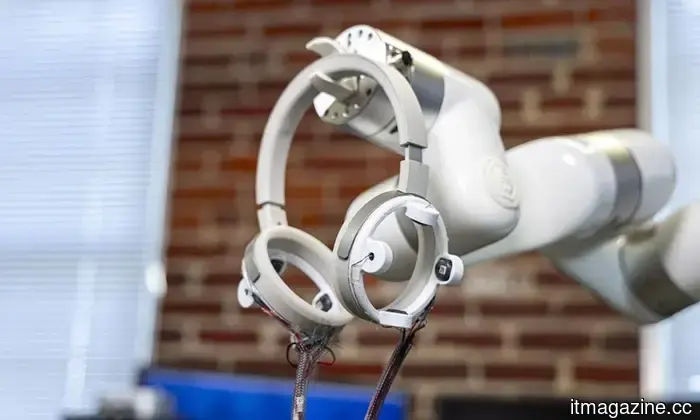
This is why Spherephones employs a novel technique. It features an open-ear headset equipped with four speakers positioned around each ear—front, back, above, and below. The speaker beneath is essential, as most headphones cannot deliver sound from that direction.
As a robot approaches, a simple melody begins to play. The sound adjusts according to direction, distance, and speed, enabling users to anticipate the robot's arrival without losing sight of their tasks. In preliminary tests, participants continued their assembly and sorting activities while monitoring robot movements through sound alone.
Spherephones could serve various purposes beyond factory environments
The team quickly recognized the wider applicability of these headphones. They conducted a virtual reality test where users heard spatial sounds coming from behind them without any visual cues, causing them to physically react. This demonstrated that the same principle can be applied in any context where spatial audio is significant.
Spherephones are currently being explored for use in gaming, offering audio cues from above, behind, and below—capabilities that standard headphones cannot provide. Researchers also see promise in aiding navigation for visually impaired individuals and even in PTSD treatment.
The concept is innovative as it leverages an instinct that the brain already comprehends. In movies like Jaws and Psycho, the music creates tension before the visuals solidify the fear. Spherephones simply channels that instinct into a new application.





Other articles
 Alibaba prohibits Claude Code due to concealed tracking of Chinese users.
Alibaba categorized Anthropic's Claude Code as high-risk software following researchers' discovery of steganographic markers that identified Chinese users based on their timezone and proxy.
Alibaba prohibits Claude Code due to concealed tracking of Chinese users.
Alibaba categorized Anthropic's Claude Code as high-risk software following researchers' discovery of steganographic markers that identified Chinese users based on their timezone and proxy.
 AI chip stocks fell by 12% over two days as investors searched for new profitable opportunities.
The PHLX Semiconductor Index dropped 12% over two trading days, while the Dow reached an all-time high. As Q2 earnings come closer, investors are shifting their focus from AI chips to software.
AI chip stocks fell by 12% over two days as investors searched for new profitable opportunities.
The PHLX Semiconductor Index dropped 12% over two trading days, while the Dow reached an all-time high. As Q2 earnings come closer, investors are shifting their focus from AI chips to software.
 Why developing AI for educational institutions is more challenging than creating a chatbot: an overview of Smartschool's strategy for exam preparation.
Smartschool, an edtech startup from Palo Alto established by three Polish entrepreneurs, developed a proprietary mathematical reasoning engine that boasts a 99.6 percent accuracy rate for high school mathematics. This technology has been embraced by 30 school districts in the United States, including New York City and Boston.
Why developing AI for educational institutions is more challenging than creating a chatbot: an overview of Smartschool's strategy for exam preparation.
Smartschool, an edtech startup from Palo Alto established by three Polish entrepreneurs, developed a proprietary mathematical reasoning engine that boasts a 99.6 percent accuracy rate for high school mathematics. This technology has been embraced by 30 school districts in the United States, including New York City and Boston.
 A new survey indicates that a majority of Americans prefer children to be off social media until they are 16 years old.
A recent survey conducted by the Pew Research Center revealed that 56 percent of Americans are in favor of prohibiting social media usage for individuals under the age of 16, with backing that spans across different political parties and age demographics.
A new survey indicates that a majority of Americans prefer children to be off social media until they are 16 years old.
A recent survey conducted by the Pew Research Center revealed that 56 percent of Americans are in favor of prohibiting social media usage for individuals under the age of 16, with backing that spans across different political parties and age demographics.
 Palantir's CEO invested $200 million in properties that are untraceable.
Alex Karp purchased a $120 million monastery, a $75 million compound in Miami, and a 500-acre estate in New Hampshire. His company provides surveillance technology to government agencies.
Palantir's CEO invested $200 million in properties that are untraceable.
Alex Karp purchased a $120 million monastery, a $75 million compound in Miami, and a 500-acre estate in New Hampshire. His company provides surveillance technology to government agencies.
 Meta faces criticism after Instagram allowed advertisements related to child abuse in India.
Instagram authorized and showcased ads promoting child sexual abuse material in India before taking them down after an investigation.
Meta faces criticism after Instagram allowed advertisements related to child abuse in India.
Instagram authorized and showcased ads promoting child sexual abuse material in India before taking them down after an investigation.
Horror films use music to signal impending danger. These headphones employ a similar technique to protect you from robots.
Researchers at Georgia Tech created Spherephones, a wearable headset that transforms the movement of nearby robots into spatial lo-fi music, alerting factory workers before they even need to glance up.