
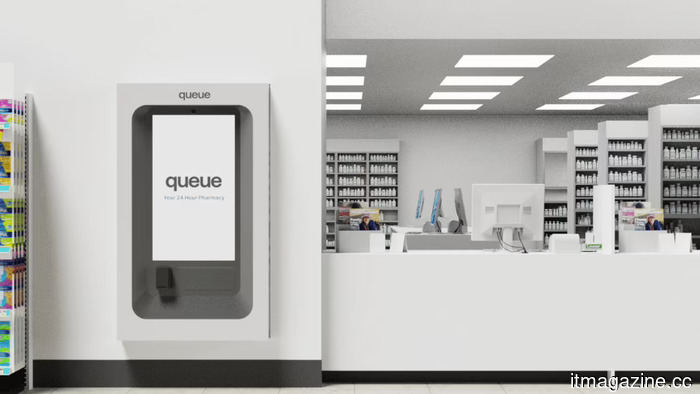
Queue secures $12.6 million for its automated robotic pharmacy.
A Silicon Valley startup claims it has created a pharmacy without a pharmacist present at the counter. Sealed bottles are inserted, and filled and verified prescriptions are dispensed in about a minute.
The company, Queue, emerged from stealth mode on Tuesday with a functioning machine and new funding. It announced a $12.6 million seed round led by AlleyCorp, following a $6 million pre-seed from Riot Ventures less than a year ago, bringing the total raised to $18.6 million. Ubiquity Ventures and House Capital also participated.
Queue describes its product as the world’s first fully autonomous robotic pharmacy in a self-contained box. Sealed wholesale bottles enter one side, while filled and confirmed prescription vials exit the other.
According to Queue, the process requires no human involvement, dispenses up to 600 pills per minute, and contains 250 different medications. The company claims that the unit reduces dispensing costs by 96 percent and delivers prescriptions to patients in 60 seconds or less.
Addressing pharmacy shortages
Queue aims to address a significant issue, stating that one in three pharmacies in the US has shut down, leading to the overburdening of pharmacists in the remaining establishments. Many areas of the country are now classified as pharmacy deserts, with the nearest pharmacy often miles away.
The proposal is that a machine can handle the mechanical tasks of counting and bottling pills, allowing pharmacists to focus on tasks that require their expertise, such as patient counseling and identifying potential drug interactions.
While automated dispensing is not entirely new—hospitals have utilized pill-picking robots for years and retail chains have experimented with kiosk pharmacies—Queue's approach is to completely eliminate the human element and condense an entire pharmacy into a single box that can be placed wherever patients require services.
The founding team has a solid background. Nick Desai has launched six companies and previously managed the house-call service Heal. Co-founder Joshua Liu has experience from Tesla, Waymo, and the delivery-drone company Zipline. The team is currently small, comprising around 20 individuals.
Capitalizing on the robotics trend
Queue enters the market amidst a surge of investment in physical machines. Investors who previously focused on pure software are now pursuing robots that perform real-world tasks. Startups are automating jobs once thought secure, ranging from hair braiding to construction and healthcare, where robots now serve various roles, including companion animals and prescription counters.
Y Combinator has even advised founders to delve into hard technology as the advantages of software diminish. Many of the skilled workers are transitioning from automakers and their self-driving divisions, similar to the paths taken by former Tesla engineers into robotics.
Regulatory considerations
Queue's assertions raise an important question. In many US states, laws mandate that a licensed pharmacist perform the final check before a prescription is handed to a patient. Controlled substances are subject to even stricter federal regulations. A machine claiming zero human involvement must demonstrate to state pharmacy boards that its checks are equivalent to those conducted by a human.
Queue suggests that pharmacists are being liberated rather than eliminated, which may be a crucial aspect of their model. While the robot handles counting, a pharmacist retains the formal responsibility for the final approval.
Additionally, there is a distinction between demonstrating a prototype and deploying a fully operational system. Queue has a functioning unit and a compelling name, but it has yet to display the system operating across multiple locations under real prescription loads for an extended period. The funding provides an opportunity to test this concept. Whether a robotic box can effectively replace a local pharmacy is the challenge that now lies ahead.
Other articles
 Build secures $8.5 million to automate due diligence in data centers.
Build has secured $8.5 million in funding, led by Index Ventures, for its AI technology that reduces data center and infrastructure due diligence by 95%, offered as a service rather than as software.
Build secures $8.5 million to automate due diligence in data centers.
Build has secured $8.5 million in funding, led by Index Ventures, for its AI technology that reduces data center and infrastructure due diligence by 95%, offered as a service rather than as software.
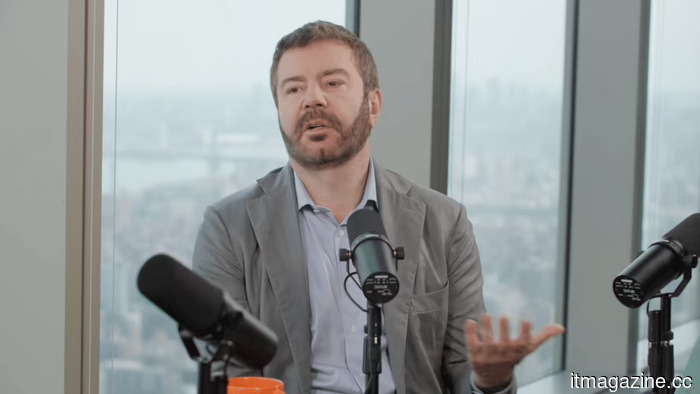 Daniel Dines of UiPath discusses AI, employment, and feelings of anxiety.
Daniel Dines from UiPath asserts that AI lacks discernment, that agents are unable to quickly rectify disorganized processes, and that leaders who indiscriminately reduce their workforce undermine value that they have never assessed.
Daniel Dines of UiPath discusses AI, employment, and feelings of anxiety.
Daniel Dines from UiPath asserts that AI lacks discernment, that agents are unable to quickly rectify disorganized processes, and that leaders who indiscriminately reduce their workforce undermine value that they have never assessed.
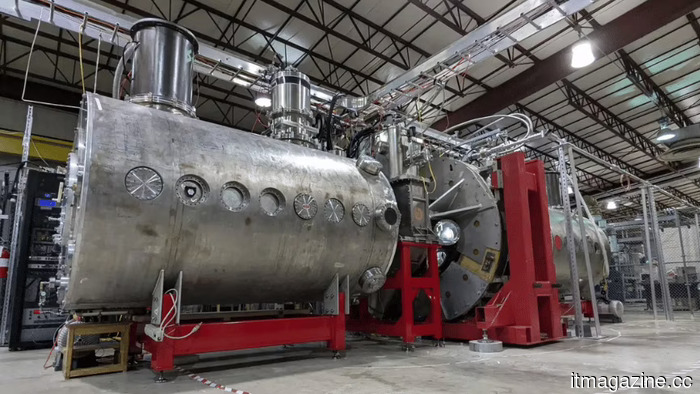 Realta Fusion drives a bulb directly from its reactor.
Realta Fusion claims to be the first commercial fusion company to generate electricity directly from its device. This is a proof of concept but has not yet achieved net power.
Base44 introduces Base1, its proprietary AI model for vibe coding.
Base44 has introduced Base1, the inaugural proprietary AI model from a vibe-coding platform, banking on the idea that having its own model will lead to improved margins and a genuine competitive advantage.
Realta Fusion drives a bulb directly from its reactor.
Realta Fusion claims to be the first commercial fusion company to generate electricity directly from its device. This is a proof of concept but has not yet achieved net power.
Base44 introduces Base1, its proprietary AI model for vibe coding.
Base44 has introduced Base1, the inaugural proprietary AI model from a vibe-coding platform, banking on the idea that having its own model will lead to improved margins and a genuine competitive advantage.
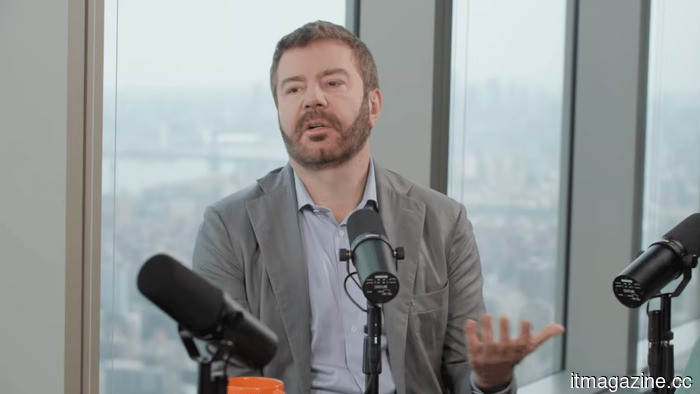 Daniel Dines from UiPath discusses AI, employment, and anxiety.
Daniel Dines from UiPath asserts that AI lacks taste, that agents are unable to quickly rectify disorganized processes, and that leaders who indiscriminately reduce staff are undermining value that they have never assessed.
Daniel Dines from UiPath discusses AI, employment, and anxiety.
Daniel Dines from UiPath asserts that AI lacks taste, that agents are unable to quickly rectify disorganized processes, and that leaders who indiscriminately reduce staff are undermining value that they have never assessed.
 Constructing AI Infrastructure Ethically: ER Steel on the Changing Requirements of Data Center Growth
By 2030, almost 100 gigawatts of additional data center capacity could be available. ER Steel contends that the primary hurdles are not related to computing power but rather to the coordination of construction, access to the grid, and long-term operational strategies.
Constructing AI Infrastructure Ethically: ER Steel on the Changing Requirements of Data Center Growth
By 2030, almost 100 gigawatts of additional data center capacity could be available. ER Steel contends that the primary hurdles are not related to computing power but rather to the coordination of construction, access to the grid, and long-term operational strategies.
Queue secures $12.6 million for its automated robotic pharmacy.
Queue has come out of stealth mode with a $12.6 million seed round led by AlleyCorp, along with a machine they claim is the world's first fully autonomous robotic pharmacy.