
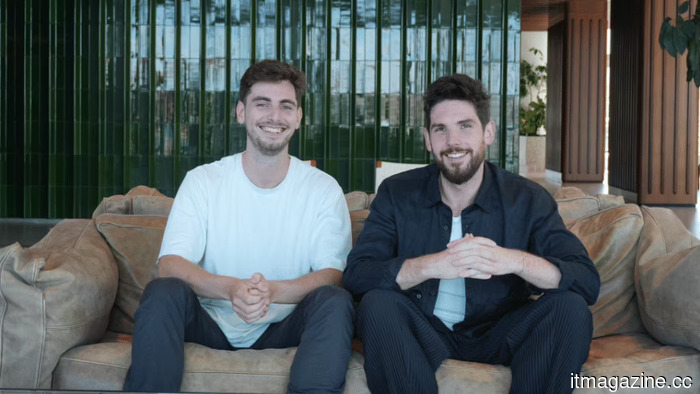
Build secures $8.5 million to automate due diligence in data centers.
The AI boom requires a place to operate. Data centers, power lines, and factories begin with months of paperwork before construction can start. A British-founded startup claims its AI can reduce that workload by 95 percent.
The startup, Build, announced on Tuesday that it secured $8.5 million (€7.4 million) in seed funding, with support from Index Ventures. Other investors include Pebblebed, Puzzle Ventures, Tiny.vc, and a distinguished group of angel investors, such as OpenAI’s chief financial officer Sarah Friar and Blackstone’s chief technology officer John Stecher, as reported to Tech Funding News.
Build is focused on the less glamorous aspects of construction. Before any data center or power plant can be built, consultants spend weeks on-site conducting sourcing, technical due diligence, power assessments, and environmental evaluations.
Build automates this process by utilizing over 1,600 data sources, evaluating planning, power, and political risks simultaneously instead of sequentially. The company asserts this automation reduces due diligence timelines by over 95 percent, transforming what typically takes weeks into mere hours.
Regarding its business model, Build differentiates itself from most AI startups, which tend to sell software licenses. Instead, Build provides the service itself on a monthly retainer, positioning itself as a substitute for consultants rather than just a tool for them.
"We achieve software margins by automating a significant portion of our work, but we prioritize service spending over software spending," co-founder and CEO James Stirrat-Ellis stated to Tech Funding News. Each assessment undergoes a human review before being finalized.
This approach is gaining traction in the property tech sector. Paris-based Davis takes a similar direction by delivering completed feasibility studies rather than offering subscriptions. Build's funding round is part of a larger trend; EU-Startups reports roughly €112 million has been invested in construction and built-environment AI projected for 2026.
The timing of Build's emergence is crucial. The rush to expand AI capabilities has made land, power, and permits significant bottlenecks in the industry. This represents a multi-trillion-dollar infrastructure challenge, with demand outpacing the capacity of traditional developers. Hyperscalers are expected to invest nearly $700 billion in data centers by 2026.
New developments are rapidly emerging, including Europe’s largest constructions and Blackstone’s first AI-focused data-center REIT. All these projects require the foundational work that Build provides.
As a result, Build has quickly attracted significant clients. The company has executed over 100 projects in 15 countries, including work for real estate titan Tishman Speyer and recently landed its first hyperscaler client. Stirrat-Ellis describes this as “the top customer you can get” in the data center sector. The firm remains small, with around 10 employees spanning four continents, and plans to expand its team.
The concept for Build originated from Stirrat-Ellis's frustration. Trained as an architect, he was involved in the S$13 billion expansion of Singapore’s Changi Airport, where he witnessed how lengthy consultant reports and scattered data delayed projects. He left a master's program at Harvard, taught himself to code, and established Build in 2024 with AI researcher Ben McClusky.
Index Ventures, following successful investment rounds such as its $60 million partnership with Conduct, reacted swiftly. Stirrat-Ellis noted, "The round came to us. We received a term sheet within a day." However, whether Build can maintain its lead remains uncertain, as major consultancy firms like CBRE, Arup, and JLL are developing their own AI solutions. Build's strategy is that displacing these incumbents is more advantageous than assisting them, and the company that mobilizes resources the quickest will prevail in the construction race.
Other articles
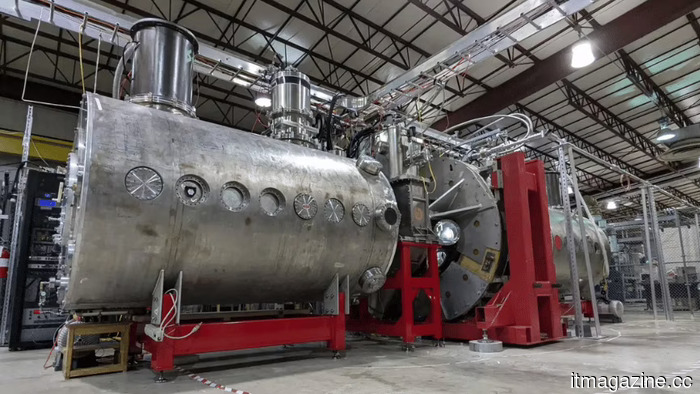 Realta Fusion drives a bulb directly from its reactor.
Realta Fusion claims to be the first commercial fusion company to generate electricity directly from its device. This is a proof of concept but has not yet achieved net power.
Realta Fusion drives a bulb directly from its reactor.
Realta Fusion claims to be the first commercial fusion company to generate electricity directly from its device. This is a proof of concept but has not yet achieved net power.
 I dislike sharing my Mac, but a face-recognition app has ultimately alleviated my privacy concerns.
A newly released free and open-source Mac application named FaceGate allows users to secure individual apps with Face Unlock, Touch ID, or a password, with all processing done locally on the device.
I dislike sharing my Mac, but a face-recognition app has ultimately alleviated my privacy concerns.
A newly released free and open-source Mac application named FaceGate allows users to secure individual apps with Face Unlock, Touch ID, or a password, with all processing done locally on the device.
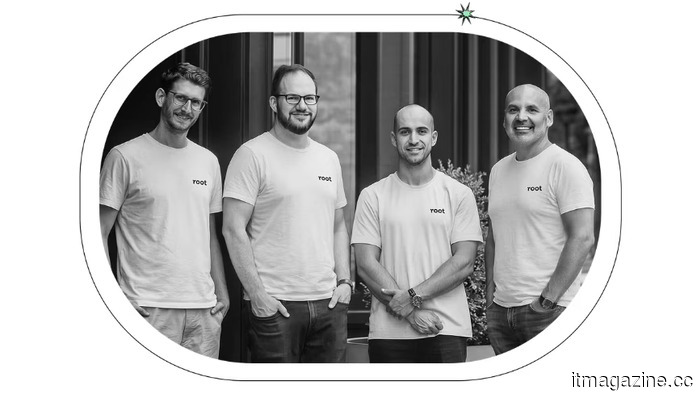 Aikido acquires Israel's Root to enhance open source using AI.
Belgian cyber unicorn Aikido has purchased the Israeli startup Root, which utilizes AI agents to fix open-source vulnerabilities within minutes without necessitating risky upgrades.
Aikido acquires Israel's Root to enhance open source using AI.
Belgian cyber unicorn Aikido has purchased the Israeli startup Root, which utilizes AI agents to fix open-source vulnerabilities within minutes without necessitating risky upgrades.
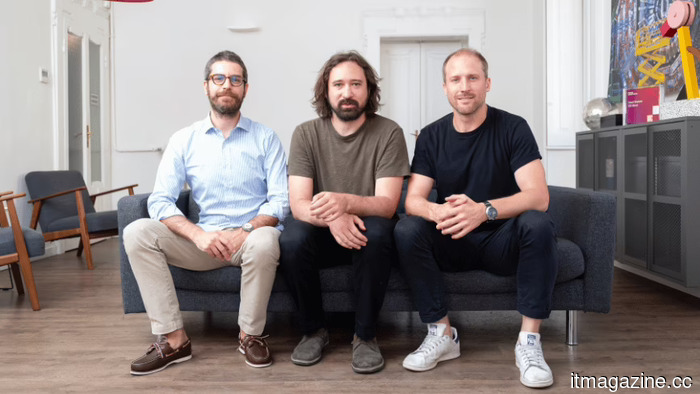 MDOTM secures $27 million for its artificial intelligence wealth management platform.
London's MDOTM has secured $27 million in funding, with Expedition leading the investment, to expand Sphere, its AI platform that currently operates over $100 billion for banks and asset managers.
MDOTM secures $27 million for its artificial intelligence wealth management platform.
London's MDOTM has secured $27 million in funding, with Expedition leading the investment, to expand Sphere, its AI platform that currently operates over $100 billion for banks and asset managers.
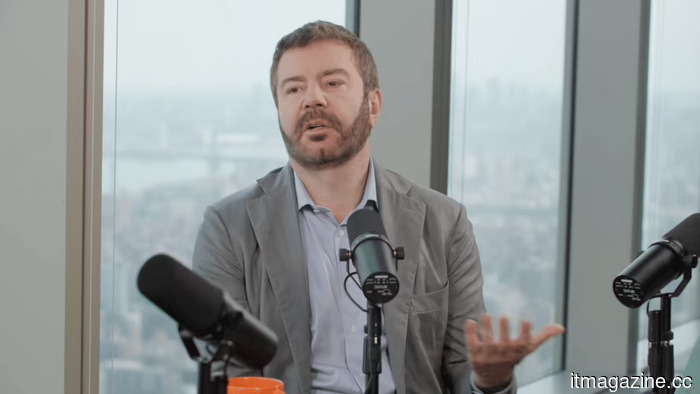 Daniel Dines of UiPath discusses AI, employment, and feelings of anxiety.
Daniel Dines from UiPath asserts that AI lacks discernment, that agents are unable to quickly rectify disorganized processes, and that leaders who indiscriminately reduce their workforce undermine value that they have never assessed.
Daniel Dines of UiPath discusses AI, employment, and feelings of anxiety.
Daniel Dines from UiPath asserts that AI lacks discernment, that agents are unable to quickly rectify disorganized processes, and that leaders who indiscriminately reduce their workforce undermine value that they have never assessed.
 Dominion Dynamics secures CA$139 million for Arctic defense technology.
Ottawa's Dominion Dynamics has secured CA$139 million, marking the largest Series A funding round in Canadian defense history, aimed at developing autonomous drones and software for Arctic command.
Dominion Dynamics secures CA$139 million for Arctic defense technology.
Ottawa's Dominion Dynamics has secured CA$139 million, marking the largest Series A funding round in Canadian defense history, aimed at developing autonomous drones and software for Arctic command.
Build secures $8.5 million to automate due diligence in data centers.
Build has secured $8.5 million in funding, led by Index Ventures, for its AI technology that reduces data center and infrastructure due diligence by 95%, offered as a service rather than as software.