

OCBC plans to increase its annual technology expenditure to over $771 million as the new CEO focuses heavily on AI.
According to Bloomberg, CBC is planning to increase its annual technology expenditure to over $771 million as Singapore's second-largest bank intensifies its focus on AI and digital banking. This increase represents one of the initial strategic indications from Tan Teck Long, who assumed the position of group chief executive on January 1, 2026.
Tan took over from Helen Wong, who retired at the end of 2025 after guiding the bank through an earlier stage of digital investment. The reported amount of approximately $771 million is close to the S$1 billion mark in local currency, a level OCBC has highlighted in several technology commitments in recent years.
The bank has indicated that it will utilize 2026 to integrate AI, digital solutions, and data more thoroughly throughout customer interactions, as stated in its 2025 annual report. The goal is to achieve scale, personalize services, and enhance cost efficiencies, which are typical justifications for increasing technology expenditures in banking.
About 60% of OCBC’s employees have participated in AI, digital, or data training over the past three years, according to the bank. This focus on workforce development is significant because the investment is not only about systems; it is based on the belief that employees throughout the bank can effectively utilize AI tools rather than relying solely on a centralized team.
OCBC has positioned its objectives around AI, digital, and data as an integrated approach rather than separate initiatives. In recent years, the bank has been modernizing its digital core, which, while not glamorous, provides a costly foundation for the customer-facing features it aims to enhance.
Tan has adopted a cautious approach regarding the future outlook, anticipating stable or growing total income for 2026. In this context, a higher technology budget appears to be a strategic reallocation rather than a response to rapidly increasing revenue.
OCBC has been advocating for this strategy for years, committing approximately S$500 million to an innovation hub in Singapore’s Punggol Digital District, expected to be completed in 2027. The bank has also ventured into new areas, recently supporting a $1 billion blockchain-powered commercial paper program in the U.S. Such moves reflect a regional trend where large Singaporean banks compete on technology infrastructure as much as on their branch networks.
Rivals DBS and UOB have also made significant commitments to AI and digital infrastructure in recent years. In this competitive landscape, remaining stagnant is not an option, and a larger technology budget is necessary to stay relevant.
However, this strategy comes with challenges. Increasing technology costs impact the cost-to-income ratio at a time when profit margins in Asian banking are under pressure. Tan must navigate this tension alongside the expectations of OCBC’s influential long-term shareholders, influencing how freely he can allocate funds. Any sustained rise in technology spending must align with the bank’s reputation for cost discipline.
The broader industry perspective supports this approach, with McKinsey estimating that generative AI could create an additional $200 billion to $340 billion in annual value across banking, a significant opportunity that lenders are eager to pursue.
OCBC is not alone in its reliance on technology; competitor HSBC has found that AI still lags behind human wealth managers when it comes to actual financial movement, highlighting the uneven returns. Nevertheless, the trajectory is clear, from banks addressing the trust gap with major tech firms to Singapore’s government promoting blockchain innovation and adoption. For OCBC, the increased budget is the strongest indication yet that its new leader plans to keep pace rather than retreat.
The real challenge will be whether an investment of over $771 million annually translates into measurable improvements in productivity and customer growth, or if it merely allows the bank to maintain its current position.
Other articles
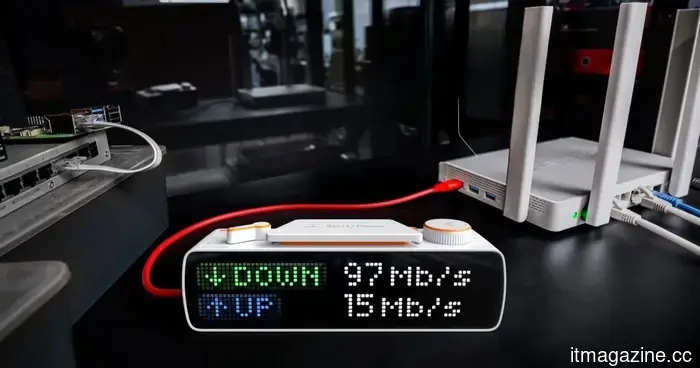 This LED sign priced at $249 aims to improve your work-life balance.
The Busy Bar display is set to be available for purchase in July. It appears to be incredibly efficient, but the price of $249 is quite steep.
This LED sign priced at $249 aims to improve your work-life balance.
The Busy Bar display is set to be available for purchase in July. It appears to be incredibly efficient, but the price of $249 is quite steep.
 Visa, Mastercard, and 140 companies have introduced Open USD, a stablecoin designed to compete with Circle.
A consortium of 140 members, which includes Visa, Mastercard, Stripe, and Coinbase, has introduced Open USD, a stablecoin with shared governance that targets Circle and Tether.
Visa, Mastercard, and 140 companies have introduced Open USD, a stablecoin designed to compete with Circle.
A consortium of 140 members, which includes Visa, Mastercard, Stripe, and Coinbase, has introduced Open USD, a stablecoin with shared governance that targets Circle and Tether.
 EU's tech chief and Tim Cook engage in 'constructive' discussions as Siri AI remains restricted in Europe.
On June 30, Henna Virkkunen and Tim Cook conducted a video call concerning Apple, the DMA, and the launch of a Siri AI that remains restricted on EU iPhones.
EU's tech chief and Tim Cook engage in 'constructive' discussions as Siri AI remains restricted in Europe.
On June 30, Henna Virkkunen and Tim Cook conducted a video call concerning Apple, the DMA, and the launch of a Siri AI that remains restricted on EU iPhones.
 Research indicates that platforms such as TikTok, Instagram, Snapchat, and YouTube are letting children down due to inadequate safety features.
A recent study evaluated 86 child safety features on TikTok, Instagram, Snapchat, and YouTube, revealing that over half were either ineffective, hidden, or completely absent.
Research indicates that platforms such as TikTok, Instagram, Snapchat, and YouTube are letting children down due to inadequate safety features.
A recent study evaluated 86 child safety features on TikTok, Instagram, Snapchat, and YouTube, revealing that over half were either ineffective, hidden, or completely absent.
 Bending Spoons sets IPO price above the expected range to secure $1.68 billion before its debut on Nasdaq.
Bending Spoons, the owner of Vimeo, along with its investors, secured $1.68 billion by pricing shares at $29 above the initial range, marking one of the largest listings in Europe this year.
Bending Spoons sets IPO price above the expected range to secure $1.68 billion before its debut on Nasdaq.
Bending Spoons, the owner of Vimeo, along with its investors, secured $1.68 billion by pricing shares at $29 above the initial range, marking one of the largest listings in Europe this year.
 The OASIS Smart ring conceals a trackpad that enables you to control your computer with whispers.
OASIS has introduced the OASIS 1 smart ring, which includes an integrated microphone and a small trackpad, allowing users to whisper text instead of typing.
The OASIS Smart ring conceals a trackpad that enables you to control your computer with whispers.
OASIS has introduced the OASIS 1 smart ring, which includes an integrated microphone and a small trackpad, allowing users to whisper text instead of typing.
OCBC plans to increase its annual technology expenditure to over $771 million as the new CEO focuses heavily on AI.
According to Bloomberg, Singapore's OCBC intends to increase its yearly technology expenditure to over $771 million, as CEO Tan Teck Long advocates for a greater focus on AI, data, and digital advancements.