
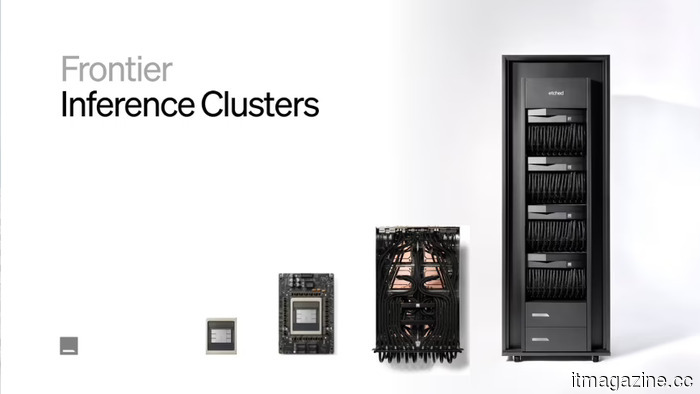
Nvidia's competitor Etched has secured $800 million in funding, receiving support from Jane Street and a fund associated with TSMC.
AI chip startup Etched has secured $800 million in funding, with investors including Jane Street and a TSMC-affiliated fund. The company has also announced one billion dollars in signed sales contracts and plans to begin shipping products this summer.
The majority of this funding comes from a $500 million investment round led by Stripes, which concluded in December and valued Etched at five billion dollars. This round saw participation from notable investors such as Peter Thiel, Positive Sum, Ribbit Capital, Hudson River Trading, and Two Sigma. Additionally, Jane Street led a previously undisclosed funding round, bringing its total investment to over $100 million, as reported by Bloomberg.
The list of investors features prominent figures in AI, including Geoffrey Hinton, a Nobel Prize laureate for his groundbreaking work in modern AI, as well as computer vision pioneer Fei-Fei Li and hedge fund manager Stanley Druckenmiller.
Established in 2022 by Harvard dropouts Gavin Uberti and Robert Wachen, Etched has remained under the radar for nearly two years as it developed its product. The company's chip, named Sohu, is engineered to operate transformer models by directly embedding the required architecture into silicon, instead of using general-purpose GPUs. Collaborating with TSMC, Etched has introduced what it refers to as low-voltage inference, which allows the chips to operate at lower voltage to mitigate overheating and enhance performance.
Etched has also taken the initiative to design its entire server rack, encompassing circuit boards, cooling components, and networking connections, rather than just focusing on the chip itself—an approach that Wachen states no other chip startup has pursued. The company employs around 400 people, with more than half located near its headquarters in San Jose.
The inference chip market is drawing significant investment as the focus of the industry shifts from training models to executing them at scale. Nvidia acquired Groq for $20 billion in December to secure a licensing agreement that absorbed most of Groq's engineering team. In April, Google announced plans for its own AI chips aimed at inference.
London-based Fractile recently raised $220 million for its inference chips that integrate processing and memory on the same die. The competition to develop purpose-built silicon for inference, rather than modifying training GPUs, has become one of the most capital-intensive endeavors in the semiconductor field.
The ability of Etched to fulfill its one billion dollars in contracts hinges on the performance of its chips in real-world production environments—a challenge that no startup in this sector has completely addressed yet. Positive Sum CEO Patrick O’Shaughnessy remarked that if a startup has the right computing power available, customers will be interested. Etched’s strategy is to leverage the advantage of providing a complete server rack, rather than merely a chip, which they believe will be more crucial than merely focusing on benchmark figures.
Other articles
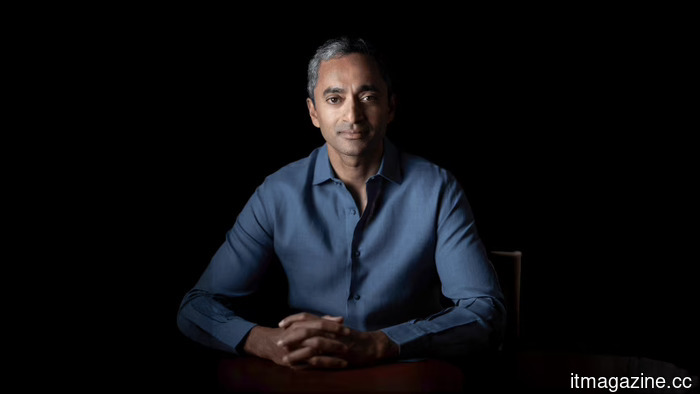 Chamath's AI coding startup, 8090, has secured $135 million in funding.
Chamath Palihapitiya has secured $135 million, with Salesforce taking the lead, for his AI coding startup 8090, and he is assuming the role of CEO for the first time since his tenure at Facebook.
Chamath's AI coding startup, 8090, has secured $135 million in funding.
Chamath Palihapitiya has secured $135 million, with Salesforce taking the lead, for his AI coding startup 8090, and he is assuming the role of CEO for the first time since his tenure at Facebook.
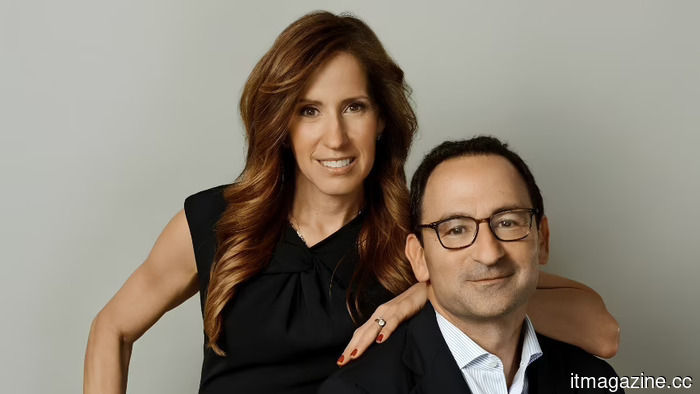 Jon and Mindy Gray wagered $55 million on AI to detect cancer in its early stages.
The president of Blackstone and his spouse are sponsoring a new Penn institute that employs AI and biomarkers to detect hereditary cancers at their earliest stages.
Jon and Mindy Gray wagered $55 million on AI to detect cancer in its early stages.
The president of Blackstone and his spouse are sponsoring a new Penn institute that employs AI and biomarkers to detect hereditary cancers at their earliest stages.
 Google begins testing Gmail Live, its new voice search feature for your inbox.
Google has begun testing Gmail Live, a voice-activated search feature that responds to spoken inquiries regarding your inbox and references the original email.
Google begins testing Gmail Live, its new voice search feature for your inbox.
Google has begun testing Gmail Live, a voice-activated search feature that responds to spoken inquiries regarding your inbox and references the original email.
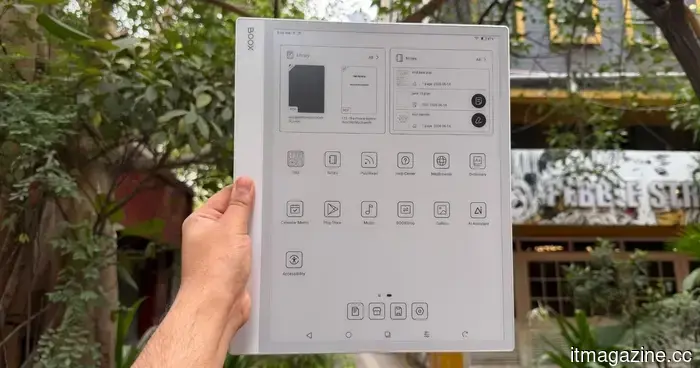 Onyx Boox Note Max review: A year later, I still adore this oversized e-reader that tries to act like a laptop, but ultimately falls short.
The Onyx Boox Max Note is an impressive paper-like tablet that offers considerable versatility. However, its greatest strength also contributes to its fundamental flaw.
Onyx Boox Note Max review: A year later, I still adore this oversized e-reader that tries to act like a laptop, but ultimately falls short.
The Onyx Boox Max Note is an impressive paper-like tablet that offers considerable versatility. However, its greatest strength also contributes to its fundamental flaw.
 AI shopping surpassed search on Prime Day, causing concerns for Amazon.
For the first time on Prime Day, AI shopping referrals surpassed search, email, and social in conversion rates, indicating a shift that poses a challenge to Amazon's dominance in product discovery.
AI shopping surpassed search on Prime Day, causing concerns for Amazon.
For the first time on Prime Day, AI shopping referrals surpassed search, email, and social in conversion rates, indicating a shift that poses a challenge to Amazon's dominance in product discovery.
 X introduces a hosted MCP server to allow AI tools to connect directly to its API.
X now operates its own MCP server, allowing AI tools such as Claude, Cursor, and Grok to connect to the platform's API without the need for developers to create the integration.
X introduces a hosted MCP server to allow AI tools to connect directly to its API.
X now operates its own MCP server, allowing AI tools such as Claude, Cursor, and Grok to connect to the platform's API without the need for developers to create the integration.
Nvidia's competitor Etched has secured $800 million in funding, receiving support from Jane Street and a fund associated with TSMC.
AI chip startup Etched has secured $800 million in funding, supported by Jane Street and the TSMC-affiliated VentureTech Alliance, along with one billion dollars in signed sales agreements.