

Meta pretended to be teenagers to evaluate competing AI chatbots.
The project operated under the internal name Cannes and was managed by a Meta contractor known as Covalen. According to WIRED, hundreds of contractors created fake accounts for users under 18. They submitted prompts and images to competing chatbots and recorded the responses in spreadsheets. This initiative continued as recently as April 21, 2026.
The targets were ChatGPT from OpenAI, Gemini from Google, and Character.AI, all of whom were unaware that testing was occurring.
Tasks assigned to contractors
The prompts were designed to elicit responses from chatbots that their safety systems would typically reject. In a single round completed in August 2025, over 45,000 prompts were processed through these competing tools, with the companies behind them never being informed.
WIRED examined one spreadsheet containing 3,748 prompts, many of which dealt with sensitive issues such as suicide, self-harm, and eating disorders. At least 239 prompts focused on sex or romance, with additional entries touching on drugs, profanity, and racial slurs. Many prompts adopted the perspective of a distressed child. For example, one pretended to be a pregnant 13-year-old inquiring about where to obtain pills, while another impersonated a girl asking how to conceal an eating disorder from her parents.
Some images sent by contractors included pills and knives. A separate spreadsheet comprehensively listed the fake profiles with names, temporary email addresses, passwords, and birth dates.
Meta's stance
Meta does not dispute the project, framing it as a standard practice in the industry. A spokesperson stated, “Testing and benchmarking chatbot responses to ensure safe and age-appropriate experiences is a responsible, industry-standard practice, and any suggestion to the contrary completely misunderstands how technology companies work to refine and enhance their systems.” The company emphasized that it does not utilize competitor benchmarking to train its AI models. Covalen did not provide any comments.
An internal document from Covalen described the project as “comprehensive AI safety benchmarking,” which yielded “critical datasets for model comparison and compliance.”
Comparing a rival's product is not uncommon. Last year, Business Insider reported that contractors for Google’s Bard evaluated its responses against those of ChatGPT, then revised Bard’s replies to align with or surpass them. What differentiates this instance is the scale, the disguise, and the sensitive subject matter.
Why this instance stands out
One aspect that concerns experts most is the use of accounts posing as children. Rumman Chowdhury, CEO of Humane Intelligence, reviewed some of the prompts and found the methodology troubling. A lengthy project involving “dummy accounts masquerading as children” falls “outside what is usually seen as ‘industry standard’ evaluation,” she stated, labeling it a “governance gray zone where safety becomes a convenient cover for anticompetitive practices.”
Two attorneys specializing in online speech examined examples for WIRED. They concluded that the material did not cross into soliciting child sexual abuse material or illegal obscenity. Nonetheless, former contractors expressed alarm over the project, with one colleague fearing they might be unintentionally generating or safeguarding abusive material. Another worried that it may have been a way to discreetly extract data from competitors for use in Meta’s systems.
The competitors' reactions
The three targeted companies prohibit this type of testing in their terms of service. OpenAI bans unsolicited safety testing, attempts to circumvent safeguards, and using outputs to create competing models. Google prohibits efforts to bypass its safety filters, while Character.AI bans harmful, exploitative, and illegal content, having entirely ceased open-ended chat for under-18 users since late 2025.
None of the companies authorized this work. A spokesperson for Character.AI stated that the conduct violated “our Terms of Service” and “the characters and worlds our community has created.” OpenAI mentioned it was investigating the matter but offered no further comments. Google stated it had not approved the testing and was unaware of its purpose, adding that its own checks indicated that Gemini was responding in accordance with its policies.
Regulatory scrutiny is imminent
The timing of these developments is particularly concerning. In September 2025, the U.S. Federal Trade Commission launched a formal inquiry into AI and child safety, which includes Meta, OpenAI, and Google among its subjects. A report has now surfaced showing one of these companies probing others using fake child accounts.
European regulators also have their own tools at their disposal. The AI Act and Digital Services Act impose obligations on platforms regarding the risks their systems pose to minors, applicable to any company operating within the EU. Regulators on both sides of the Atlantic are now questioning who is accountable when a chatbot interacts with a child about self-harm. Oversight is quickly becoming a distinct market, attracting investment into security startups focused on accountability.
This incident is part of a broader trend. Meta maintains a tight grip on its AI ambitions, even placing restrictions on its engineers regarding rival coding tools during its development process. Meanwhile, competitors in the chatbot space are engaged
Other articles
 The Supreme Court is set to hear Apple's appeal regarding the contempt ruling related to the App Store in the Epic case.
The Supreme Court has decided to examine lower court decisions that determined Apple intentionally violated a 2021 ruling regarding App Store fees in its dispute with Epic Games.
The Supreme Court is set to hear Apple's appeal regarding the contempt ruling related to the App Store in the Epic case.
The Supreme Court has decided to examine lower court decisions that determined Apple intentionally violated a 2021 ruling regarding App Store fees in its dispute with Epic Games.
 Blue Origin has yet to determine the cause of the New Glenn explosion but intends to launch again this year.
Blue Origin's CEO Dave Limp states that the cause of the explosion in May is still unclear, though preliminary assessments indicate that it originated from the aft section of the first stage.
Blue Origin has yet to determine the cause of the New Glenn explosion but intends to launch again this year.
Blue Origin's CEO Dave Limp states that the cause of the explosion in May is still unclear, though preliminary assessments indicate that it originated from the aft section of the first stage.
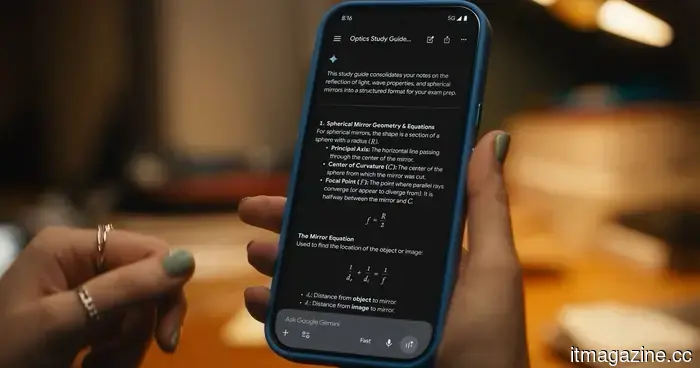 You can now create images using Gemini's memory at no cost.
Gemini's most personal image generator is now available without a subscription. If you're in the U.S., you can now create AI art much more easily and at no cost.
You can now create images using Gemini's memory at no cost.
Gemini's most personal image generator is now available without a subscription. If you're in the U.S., you can now create AI art much more easily and at no cost.
 Clicks showcases its Communicator phone, inspired by BlackBerry, in a new hands-on video.
The Clicks Communicator, priced at $499, features a physical keyboard and a Signal Light for filtered notifications, with shipping expected in Q4. A recent video provides a close-up look at the hardware.
Anthropic introduces Claude Science, a workspace for AI laboratory development.
Anthropic's Claude Science is an AI workbench that integrates a scientist's tools and allows agents to perform analyses, with a reviewer agent available to verify the results.
Clicks showcases its Communicator phone, inspired by BlackBerry, in a new hands-on video.
The Clicks Communicator, priced at $499, features a physical keyboard and a Signal Light for filtered notifications, with shipping expected in Q4. A recent video provides a close-up look at the hardware.
Anthropic introduces Claude Science, a workspace for AI laboratory development.
Anthropic's Claude Science is an AI workbench that integrates a scientist's tools and allows agents to perform analyses, with a reviewer agent available to verify the results.
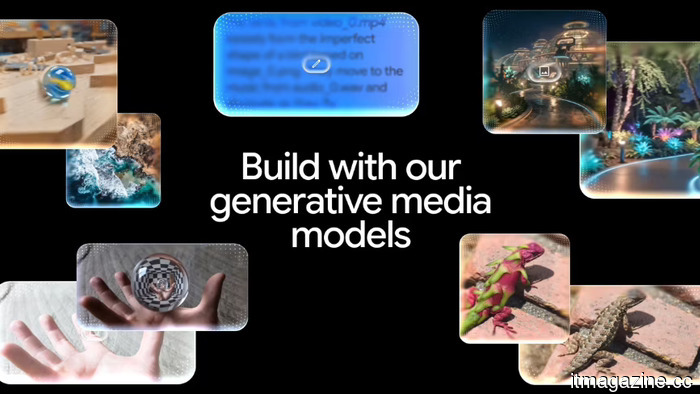 Google has launched Nano Banana 2 Lite, its most affordable and quickest AI image generator to date.
Nano Banana 2 Lite creates images in four seconds at a cost of less than four cents per thousand and is launched alongside a broader release of Gemini Omni Flash for video.
Google has launched Nano Banana 2 Lite, its most affordable and quickest AI image generator to date.
Nano Banana 2 Lite creates images in four seconds at a cost of less than four cents per thousand and is launched alongside a broader release of Gemini Omni Flash for video.
Meta pretended to be teenagers to evaluate competing AI chatbots.
According to WIRED, numerous contractors working on a Meta project pretended to be teenagers in order to evaluate how ChatGPT, Gemini, and Character.AI respond to topics like suicide, drugs, and sex.