
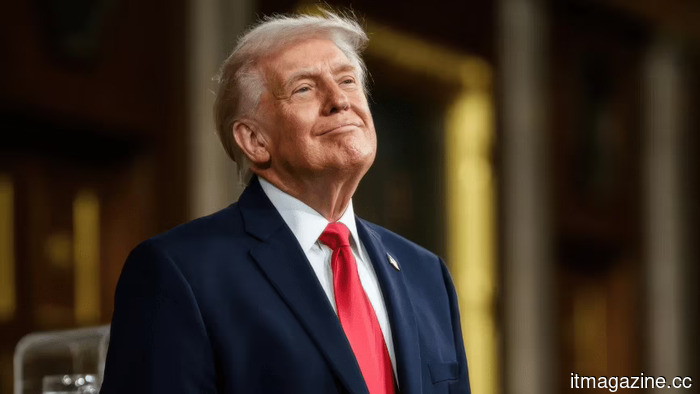
Trump warns of imposing 100% tariffs in response to digital services taxes.
The ink had just dried. The EU had finalized a trade agreement with Washington, and the next day, Trump issued a warning that could jeopardize it.
On Friday, the president shared this threat on Truth Social, stating that any country imposing a digital services tax on American companies would incur “a 100% TARIFF on any and all Goods sent to the United States.” He added that this would “supersede Trade Deals,” regardless of whether they were implemented or signed.
The timing was significant. Just the day before, the EU had granted final approval for the Turnberry trade deal, which limits most tariffs on European exports to 15%. Trump's warning suggests it could be negated as soon as any member state enacts a digital tax.
Understanding the digital services tax
A digital services tax (DST) is a charge on the local revenue generated by major tech companies, most of which are American. Nations like France, Italy, Spain, and the UK have implemented such taxes, targeting companies like Google, Apple, Amazon, and Meta, which generate substantial sales in Europe but show little taxable profit there. Trump’s perspective is straightforward: he believes these taxes discriminate against U.S. companies and has vowed to penalize any nation that enforces them.
Brussels remains resolute
The response from Brussels was notably strong. The European Commission asserted that taxation is a “sovereign right.” They argued that their taxes were “non-discriminatory by design” and applied uniformly to all large enterprises, regardless of their origin. They warned that they would “respond swiftly and decisively” if pressured, as reported by Bloomberg. The EU continues to prefer a global solution for taxing the digital economy.
This defiance is significant. Europe has dedicated years to affirming its authority to tax tech giants, and the Digital Markets Act is part of this initiative to regulate them. Backing down now would undermine the entire endeavor. European tech organizations have also cautioned that new U.S. tariffs would adversely affect both hardware and software on both sides of the Atlantic.
A diminished threat than before
However, there is a limitation for Trump—his tariff options are somewhat restricted. The U.S. Supreme Court invalidated his “reciprocal” tariffs earlier this year, ruling that he could not impose them unilaterally. It remains uncertain which legal authority would allow him to enforce a 100% tariff on numerous countries without Congressional approval. He managed to find a workaround for a temporary 10% global tariff, but implementing a broad new levy poses a greater challenge.
Nonetheless, the threat is serious. Just this month, Trump warned France of a 100% tariff on its wines unless it rescinded a tax. Last year, Canada eliminated its own digital tax under similar pressure. This method has proven effective in the past against those willing to concede.
Now the question is who will give in first. Canada backed down, but the EU has just entered a hard-negotiated trade agreement and is protective of its digital sovereignty, signaling its intent not to yield. The next action will determine whether Europe's right to tax Big Tech can withstand the impact of Trump’s tariffs.
Other articles
 OpenAI might postpone its IPO until 2027 in pursuit of a $1 trillion valuation.
OpenAI is said to be considering postponing its IPO until 2027 as Sam Altman aims for a $1 trillion valuation, a decision that has impacted SoftBank and the banks.
OpenAI might postpone its IPO until 2027 in pursuit of a $1 trillion valuation.
OpenAI is said to be considering postponing its IPO until 2027 as Sam Altman aims for a $1 trillion valuation, a decision that has impacted SoftBank and the banks.
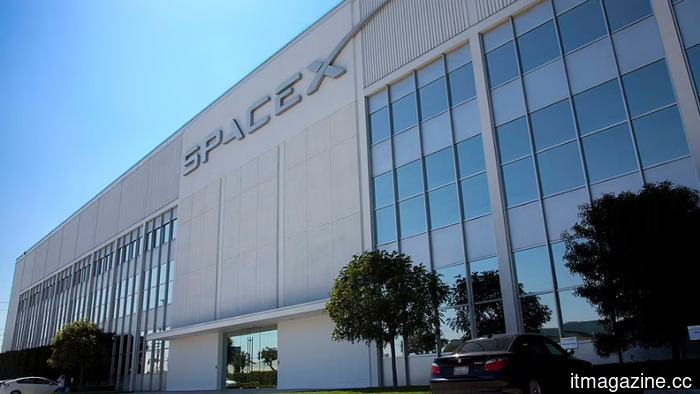 SpaceX's Starpipe: a natural gas pipeline for Starship
SpaceX is proposing Starpipe, an 8-mile natural gas pipeline to Starbase, to facilitate a quicker Starship launch rate and gain greater control over its supply chain.
SpaceX's Starpipe: a natural gas pipeline for Starship
SpaceX is proposing Starpipe, an 8-mile natural gas pipeline to Starbase, to facilitate a quicker Starship launch rate and gain greater control over its supply chain.
 AI chatbots may sometimes reinforce your misconceptions. Researchers suggest that you should watch for three indicators.
Researchers have suggested a new framework that explains how AI chatbots can strengthen delusional thoughts, emphasizing three behaviors that could lead to an "amplification spiral."
AI chatbots may sometimes reinforce your misconceptions. Researchers suggest that you should watch for three indicators.
Researchers have suggested a new framework that explains how AI chatbots can strengthen delusional thoughts, emphasizing three behaviors that could lead to an "amplification spiral."
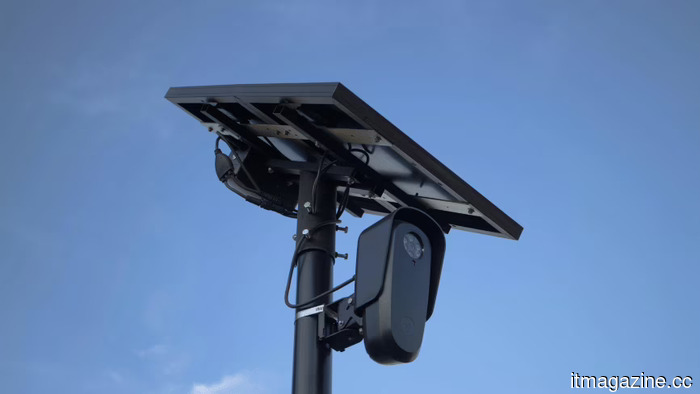 Flock surveillance cameras are being deployed throughout the United States.
More than 100,000 Flock surveillance cameras are currently keeping an eye on drivers in the US, raising concerns about security vulnerabilities, misuse by law enforcement, and the unexpected installation of poles in residential yards.
Flock surveillance cameras are being deployed throughout the United States.
More than 100,000 Flock surveillance cameras are currently keeping an eye on drivers in the US, raising concerns about security vulnerabilities, misuse by law enforcement, and the unexpected installation of poles in residential yards.
 Google earthquake alerts notified 11.4 million people in Venezuela.
Google's earthquake alerts notified 11.4 million Android users just seconds before the earthquakes in Venezuela, transforming phone sensors into a network for seismic warnings.
Google earthquake alerts notified 11.4 million people in Venezuela.
Google's earthquake alerts notified 11.4 million Android users just seconds before the earthquakes in Venezuela, transforming phone sensors into a network for seismic warnings.
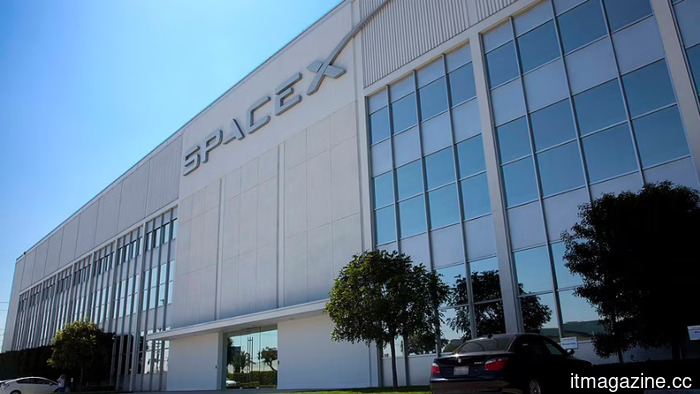 SpaceX's Starpipe: a gas pipeline designed for Starship.
SpaceX is developing Starpipe, an 8-mile natural gas pipeline to Starbase, in order to increase the frequency of Starship launches and gain greater control over its supply chain.
SpaceX's Starpipe: a gas pipeline designed for Starship.
SpaceX is developing Starpipe, an 8-mile natural gas pipeline to Starbase, in order to increase the frequency of Starship launches and gain greater control over its supply chain.
Trump warns of imposing 100% tariffs in response to digital services taxes.
Trump warns of imposing a 100% tariff on any nation that enacts digital services taxes targeting US tech companies, just a day after the EU finalized a trade agreement. Brussels remains steadfast.