
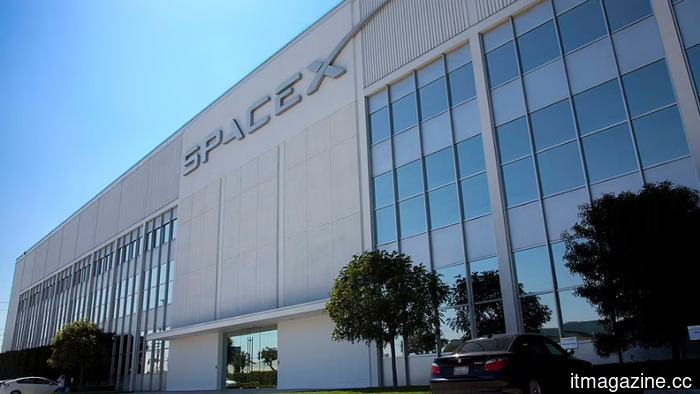
SpaceX's Starpipe: a natural gas pipeline for Starship
Most rocket companies purchase their fuel, but SpaceX aims to transport it through a pipeline. Filings in Texas indicate that the company intends to construct its own natural gas pipeline, which is an atypical decision for a space organization, and one that holds significant implications.
SpaceX has dubbed the pipeline Starpipe. It will extend eight miles, or approximately 13 kilometers, to Starbase, which is SpaceX's operational hub on the Texas coast, supplying fuel for the next-generation Starship rocket. According to Reuters, which referenced county filings, construction is expected to commence next month.
An affiliate of SpaceX, Lone Star Mineral Development, submitted the project proposal last month to the Texas Railroad Commission, as per documents reviewed by Reuters. Starpipe is anticipated to become operational by January 26. The Rio Grande Valley Business Journal was the first to report on the pipeline.
The main driver behind this initiative is logistics. Starship consumes around 630,000 gallons (approximately 2.4 million liters) of liquid methane for each launch. Currently, the fuel is transported by hundreds of tankers moving slowly, a process that cannot sustain Elon Musk’s future plans.
Since 2023, SpaceX has conducted 12 Starship test flights. Musk envisions scaling up to dozens, hundreds, and eventually thousands of launches. A pipeline would streamline fuel delivery significantly, akin to the difference between fueling a car at a pump and carrying fuel in buckets.
The pipeline is just one visible aspect of a wider strategy. According to land records reviewed by Reuters, SpaceX has spent years investigating gas drilling around Starbase and throughout Texas. Since 2023, the company has secured over 100 oil and gas leases with landowners in the state.
On the day SpaceX went public, President Gwynne Shotwell outlined the company’s strategy on CNBC, which included building pipelines, processing its own fuel, and possibly exploring gas drilling. For a rocket manufacturer, such ambitions represent a remarkable expansion, transitioning from extracting gas from deep underground to producing methane for rocket fuel.
Drilling for gas would indeed be a significant challenge. Texas oil and gas consultant Stan Lindsey remarked that while it is not impossible, SpaceX has no prior experience in this area. He also noted that if drilling efforts fall short, Starpipe could serve as a "fallback position."
The layout of Starpipe is becoming clearer. The pipeline would begin at an 83-acre site at the Port of Brownsville, and SpaceX is in discussions to lease that land for 50 years, according to a port official as stated by Reuters. Plans submitted to the US Army Corps of Engineers reveal that SpaceX intends to establish a liquefaction facility to convert gas into liquid methane at Starbase.
Interestingly, SpaceX may not even need to engage in drilling to supply the pipeline. Lindsey suggested that they could connect to Enbridge’s nearby Valley Crossing pipeline expansion. Enbridge did not provide a comment. Regardless, SpaceX would maintain ownership of the supply line all the way to the launchpad, reflecting a growing trend among tech companies to secure their own energy resources.
A single figure indicates the scale of the project: the 16-inch diameter of Starpipe suggests a fuel demand exceeding 25 launches annually, which is the current limit imposed by the Federal Aviation Administration. The pipeline is designed for a future in which SpaceX cannot yet legally operate.
That future is expansive. Starship underpins the Starlink project, the proposed AI data-center satellites, and Musk’s aspirations for lunar and Martian exploration. SpaceX’s prospectus envisions a network of thousands of solar-powered AI satellites capable of harnessing power equivalent to nearly one-fifth of the US energy grid.
Starpipe serves as an unconventional first step towards these ambitions: a space company adopting the mindset of an oil and gas enterprise. Whether regulations and practical realities will allow such ambitions to materialize remains the unanswered question concealed within the eight-mile pipeline.
Other articles
 AWS GPU prices rise by 20% due to memory shortages.
AWS GPU prices have increased by approximately 20%, marking the second increase this year, as the AI memory shortage impacts the cloud and provides hyperscalers with pricing leverage.
Prosus profits nearly double as its investments in e-commerce and Tencent stake yield positive results.
Prosus announced approximately $7.3 billion in revenue for the year ending March 2026, with headline earnings per share increasing by 91–100% due to improved performance in e-commerce and Tencent.
AWS GPU prices rise by 20% due to memory shortages.
AWS GPU prices have increased by approximately 20%, marking the second increase this year, as the AI memory shortage impacts the cloud and provides hyperscalers with pricing leverage.
Prosus profits nearly double as its investments in e-commerce and Tencent stake yield positive results.
Prosus announced approximately $7.3 billion in revenue for the year ending March 2026, with headline earnings per share increasing by 91–100% due to improved performance in e-commerce and Tencent.
 Germany is promoting its AI implementation as a solution to its labor shortages.
Germany is presenting the rapid adoption of AI as a partial solution to its shortage of skilled workers, which amounts to hundreds of thousands annually.
Germany is promoting its AI implementation as a solution to its labor shortages.
Germany is presenting the rapid adoption of AI as a partial solution to its shortage of skilled workers, which amounts to hundreds of thousands annually.
 Tesla FSD: settlement concludes one case while investigation continues.
Tesla discreetly reached a settlement regarding a lawsuit stemming from a deadly FSD crash, yet the NHTSA investigation into Tesla's FSD that might lead to a recall remains ongoing.
Tesla FSD: settlement concludes one case while investigation continues.
Tesla discreetly reached a settlement regarding a lawsuit stemming from a deadly FSD crash, yet the NHTSA investigation into Tesla's FSD that might lead to a recall remains ongoing.
 400 newspapers file a lawsuit against OpenAI and Microsoft regarding AI.
Almost 400 local newspapers in the US are pursuing legal action against OpenAI and Microsoft, claiming that their articles were used without compensation to train ChatGPT and Copilot.
400 newspapers file a lawsuit against OpenAI and Microsoft regarding AI.
Almost 400 local newspapers in the US are pursuing legal action against OpenAI and Microsoft, claiming that their articles were used without compensation to train ChatGPT and Copilot.
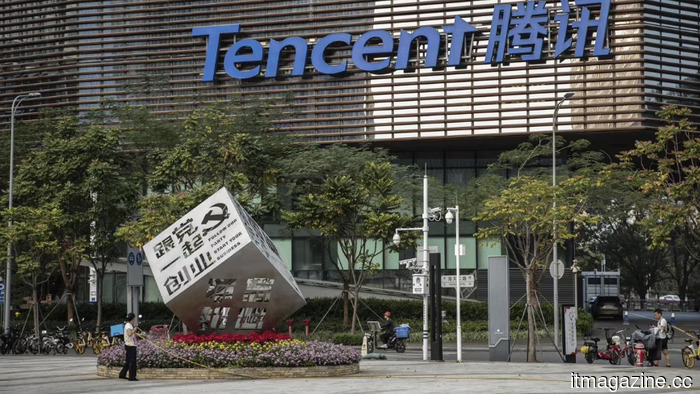 China's CXMT reportedly secures a $3 billion memory contract with Tencent.
CXMT has reached an agreement to provide Tencent with approximately $3 billion worth of memory chips, according to two sources who spoke to Reuters, further advancing China's goal for self-sufficiency in memory production.
China's CXMT reportedly secures a $3 billion memory contract with Tencent.
CXMT has reached an agreement to provide Tencent with approximately $3 billion worth of memory chips, according to two sources who spoke to Reuters, further advancing China's goal for self-sufficiency in memory production.
SpaceX's Starpipe: a natural gas pipeline for Starship
SpaceX is proposing Starpipe, an 8-mile natural gas pipeline to Starbase, to facilitate a quicker Starship launch rate and gain greater control over its supply chain.